

Scaling EduPrime from a Growing Platform to an Enterprise-Ready Digital Examination Ecosystem
Executive Summary
When EduPrime engaged us, they had already validated market demand. Students were enrolling, courses were active and growth momentum was building.
However, their platform architecture and learning infrastructure were not designed for scale.
Two critical strategic risks emerged:
The absence of a fully integrated Learning Management System (LMS) limited engagement, tracking and retention.
The infrastructure was not capable of reliably handling high-volume concurrent users during live examinations.
For an education platform, system failure during exams is not a technical issue, it is a brand credibility crisis.
Our mandate was clear:
Transform EduPrime into a scalable, high-performance learning and examination platform capable of handling 1,500+ concurrent users without disruption while improving usability, engagement and long-term operational efficiency.
The Business Context: A Growth Inflection Point
EduPrime had reached a pivotal stage:
- Product-market fit was validated.
- Exam participation volumes were rising.
- User acquisition was increasing.
- Student expectations were evolving.
But the internal system maturity had not caught up with external demand. Without structural upgrades, growth itself would become the bottleneck.
This was not about improving aesthetics. This was about preparing the business for scale.
The Core Challenges
01 LMS Capability Gap
The platform lacked a structured learning framework that could support:
- Course progression tracking
- Student performance monitoring
- Assessment integration
- Completion visibility
- Centralized learning dashboards
This limited both student engagement and administrative efficiency.
02 High-Concurrency Risk During Exams
On examination days, hundreds, sometimes thousands, of students would log in simultaneously.
The existing architecture posed serious risks:
- Server overload
- Slow response times
- Session failures
- Data submission errors
A crash during a live exam would directly impact brand trust and operational credibility.
03 Usability & Experience Friction
The platform needed to evolve from “functional” to “intuitive.”
- Clear navigation increases completion.
- Visible progress increases retention.
- Structured dashboards increase confidence.
Usability was not cosmetic, it was strategic.
Our Strategic Framework
We approached this as a platform transformation initiative, not a development task.
Our methodology focused on three pillars:
- 01 Infrastructure Readiness: Model peak-load behavior before it becomes a crisis.
- 02 Structured Learning Ecosystem: Move from content hosting to integrated LMS delivery.
- 03 Experience-Driven Retention: Engineer clarity, not just features.
Strategic Intervention & Execution
01 Full LMS Integration
We implemented a robust, scalable LMS architecture that enabled:
- End-to-end course lifecycle management
- Modular progression systems
- Real-time student progress tracking
- Integrated assessment workflows
- Structured dashboard visibility
This transformed EduPrime into a centralized digital learning ecosystem.
Strategic Impact:
- Increased student engagement
- Improved completion tracking
- Reduced manual administrative effort
- Higher platform stickiness
02 Scalable Auto-Scaling Architecture (Scale-Up & Scale-Down Model)
To eliminate exam day risk, we engineered a dynamic infrastructure model:
- Auto-scaling servers based on load demand
- Load-balanced request distribution
- Optimized database concurrency handling
- Stress-tested simulation of peak exam scenarios
The architecture automatically scales up during high-demand exam periods and scales down afterward, ensuring both performance stability and cost efficiency.
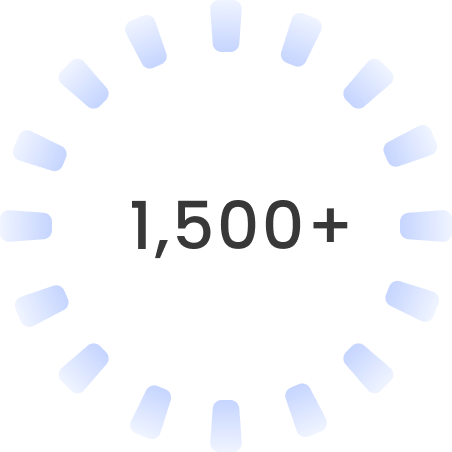
Result: The platform successfully handled 1,500+ concurrent users during live examinations without crashes or performance degradation.
Concurrent Users

For leadership, this meant:
- Zero disruption during critical operational windows
- Protected brand credibility
- Confidence to expand user acquisition
03 Examination Flow Engineering
We designed a fail-safe examination workflow including:
- Controlled login flow management
- Real-time answer submission processing
- Data integrity validation
- Session stability safeguards
This ensured a stable digital examination environment even under peak pressure.
04 UX & Interface Optimization
We restructured the platform experience to prioritize clarity and usability:
Clean information hierarchy
Structured student dashboards
Clear course progression indicators
Reduced cognitive load
Responsive cross-device experience
The outcome was not just a better interface, it was a more confident user journey.
Measurable & Strategic Outcomes
| Capability | Before | After | Strategic Value |
| LMS Functionality | Limited | Fully integrated | Higher engagement & retention |
| Concurrent Exam Capacity | High crash risk | 1500+ users supported | Enterprise-grade reliability |
| Infrastructure Efficiency | Static capacity | Auto scale-up & down | Cost optimization |
| User Experience | Functional | Structured & intuitive | Improved completion confidence |
| Operational Risk | Significant | Mitigated | Protected brand trust |
Transformation Impact:
Risk Mitigation:
Exam-day instability was eliminated as a business threat.
Scalability Readiness:
The platform is now structurally prepared for higher user volumes without re-engineering.
Operational Confidence:
Auto scaling infrastructure ensures performance without unnecessary overhead
Competitive Strength:
EduPrime now operates with enterprise-level system maturity, a major differentiator in digital education.
Broader Strategic Relevance
While this project was in the education sector, the underlying capabilities apply across industries:
- High-concurrency system design
- Elastic infrastructure architecture
- Experience-led platform engineering
- Risk-aware digital transformation
- Scalable SaaS ecosystem development
Any organization facing:
- Flash sales traffic spikes
- Financial transaction surges
- Healthcare portal logins
- Certification or testing systems
- SaaS growth inflection
Faces similar structural challenges. The solution is not incremental improvement. It is strategic architecture.
Conclusion
EduPrime came to us with two fundamental concerns:
- How do we implement a powerful, structured LMS?
- How do we handle high-volume concurrent examinations without system failure?
We delivered:
- A fully integrated learning ecosystem
- A resilient, auto-scaling cloud architecture
- A stable, high-performance examination framework
- A platform engineered for long-term growth
The result is not just improved functionality It is operational confidence at scale.
Architecting robust solutions for a digital-first world.
If your organization is approaching a growth ceiling due to scalability, infrastructure risk or usability limitations, the right intervention is not patchwork development.
It is a strategic system engineering aligned with business ambition.
We build platforms that don’t just function. They perform under pressure.
Let’s architect your next stage of growth, before scale becomes your bottleneck.