A crucial component of any firm is product development. To make sure a product can be offered at a competitive price and satisfy the needs of its target market, thorough planning, research, and analysis are necessary. But what is the price of creating a new product?
While creating a new product is a thrilling trip, it’s also a difficult process with many expenses. The usual costs of New Product Development (NPD) and how they are distributed over the different phases of the design process will be discussed in this blog. Understanding the software development lifecycle helps clarify how these costs are allocated across each stage.Our extensive experience enables us to handle any unexpected and maintain your project on schedule, even if costs might vary greatly based on the kind of product and complexity of the project. Our expertise also enables us to finish tasks in a highly efficient manner, guaranteeing that your idea moves seamlessly from conception to production.
Each step of your product design process is quoted separately, and payment is typically divided into two parts: 50% up front to begin work and 50% when the stage is finished. This guarantees that expenses are more controllable and enables our clients to advance their projects at a speed that suits them.
Understanding the Cost Breakdown
How much will it cost to develop your product idea? In order to provide more precise estimates, we would need to examine your original concept. However, a straightforward project without any electronics can cost between £15,000 and £20,000 to develop a working prototype, while a project with electronics will likely cost more than £50,000 to complete the design before production.
Here is a description of how NPD costs are usually distributed during the design process to assist you better understand where these costs occur:
➢Workshops
In the process of designing a product, workshops are frequently a crucial initial stage. They offer a chance to compile all the facts required for your project, guaranteeing that everyone is in agreement. These meetings are not only a great method to grasp the scope of your product idea, but they are also an affordable approach to swiftly bring our design team up to speed and possibly generate some ideas or issues that you may not have previously thought of. A workshop might not always be required if you have a clear idea of how your product will function and be created.
➢ Design Stages
Image Source Freepik
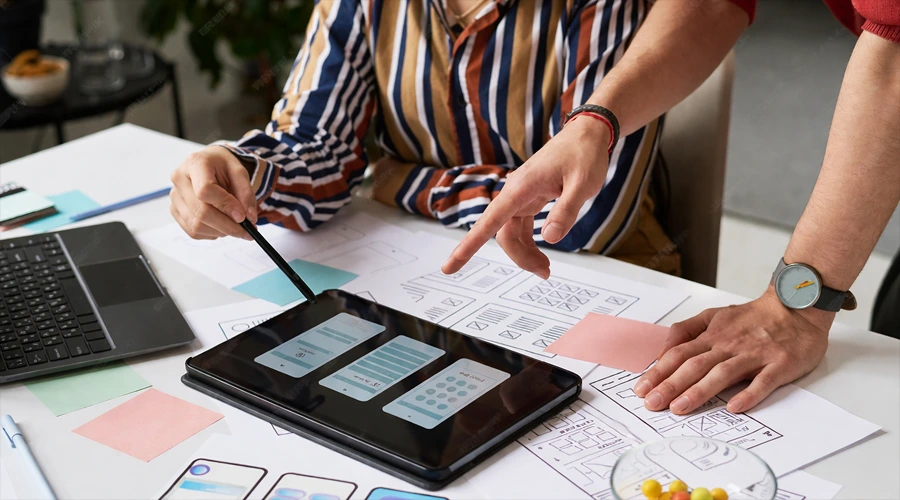
To make your vision a reality, we will investigate a variety of innovative concepts throughout the Concept Design phase. We can move through these phases quickly and effectively while keeping high-quality design solutions because to our experience creating a variety of products. A glossy presentation featuring accurately produced images of the concepts we’ve developed is usually the deliverable of a Concept Design stage, giving you a first glance at how your product can appear with materials and colors applied to it.
➢ Prototyping and Electronics Stages
Particularly for projects involving electronics, prototyping is frequently one of the most costly phases of the design process. However, expenses are typically more controllable for simpler products, like small injection-molded objects. Prototypes are crucial for testing and improving your design to make sure it meets your needs and functions as planned. Construction costs account for the majority of these stages’ expenditures for non-electronic projects. This could include the price of materials, the time it takes for the machine to run, the time we spend creating files, and the time we spend finishing and assembling any prototypes.
The additional steps and expenses of electronics design and development, which frequently take the form of PCBAs, as well as the manufacturing of these electronics, which are then combined into the prototype, are present in electronics projects. Another expense to take into account is the need to finish firmware development in order to guarantee that the electronics have the necessary functionality put in.
➢ Development Stages
Stages of development can occur at nearly any point in the process. Following the Concept Design phase, we usually begin Concept Development, which involves honing the selected concept and engineering it to make it appropriate forprototyping. These phases nearly always entail improving the design and fixing any problems found in earlier phases, including prototyping. Although development frequently necessitates several iterations, the changes and fixes are usually small and can be applied fast. Making these changes is essential to refining your product. Depending on how many updates or modifications are needed, a development stage’s cost will differ significantly.
➢ Preparing for Manufacture
Depending on the product’s complexity, the cost of creating a manufacturing specification could range from £1500+VAT to £4500+VAT. The cost of a future Production RFQ (Request for Quote) stage might be comparable, but the RFQ stage will unavoidably cost more if you need more factories and expenses. A presentation of manufacturing and tooling costs from different factories and suppliers, as well as unit costs at scaling levels and, if relevant, shipping costs, will be the outcome of this stage. Although these factories might be located anywhere in the world, many customers choose those in the Far East since they can provide more affordable prices.
➢ Tooling and Setup Costs
Stages of development can occur at nearly any point in the process. Following the Concept Design phase, we usually begin Concept Development, which involves honing the selected concept and engineering it to make it appropriate for prototyping. These phases nearly always entail improving the design and fixing any problems found in earlier phases, including prototyping. Although development frequently necessitates several iterations, the changes and fixes are usually small and can be applied fast. Making these changes is essential to refining your product.
Pricing models
➢ Cost-Plus Pricing
This kind of product pricing, which uses the simplest approach, is suitable for beginners. With this approach, the cost of producing your goods is only increased by a set profit margin. The team or product owners make all of the decisions about the fixed margin.
For instance, you would sell a handmade candle for ₹100 if it costs ₹80 and you want to make a 25% profit. It’s easy to use and guarantees that you profit from each sale.
➢ Competitive Pricing
Image Source Freepik
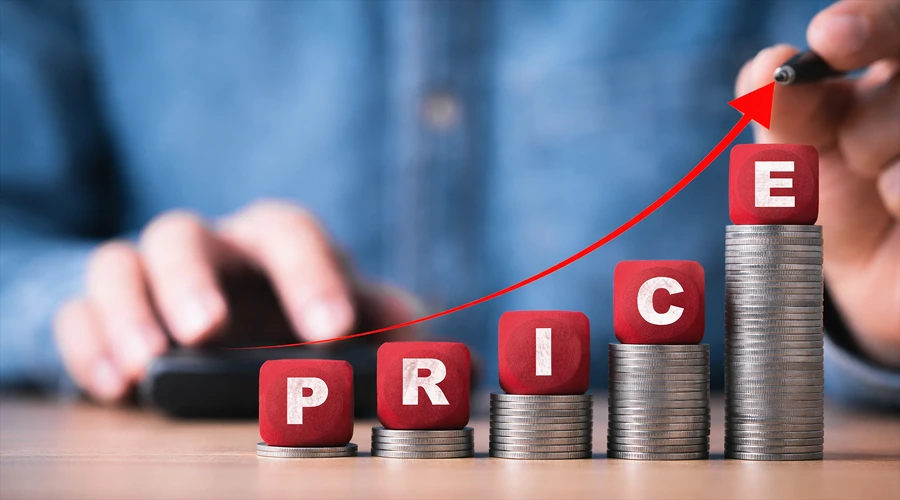
This kind of product pricing places more emphasis on the pricing strategy used by rivals in the same market. You can keep your price between ₹80 and ₹90 to draw in clients if you are new to the market and your rival is charging ₹100 for a similar product. To increase the number of people purchasing your product, you might showcase the discount and promote it as a time-limited deal.
➢ Penetration Pricing
When introducing a new product to the market, this price strategy is frequently employed. In order to rapidly increase market share and client base, owners set a relatively lower price for the product. You can progressively raise the price of your product after you are in a strong position and receive enough attention.
➢ Skimming Pricing
In contrast, this pricing strategy sets a relatively higher price for the new product at launch with minimal discounts. You can reduce the price and recoup your initial investment as time goes on and competitors enter the market or demand declines.
➢ Value-Based Pricing
With this approach, the price of the product is determined by the buyers’ perception of its value. Customers may be prepared to pay you even a little bit more than the cost of production if they adore your product and it quickly sells out.
Factors Important In Product Pricing
There are several factors that influence how you decide to price a product. Check out some of them below:
➢ Costs
Image Source Freepik
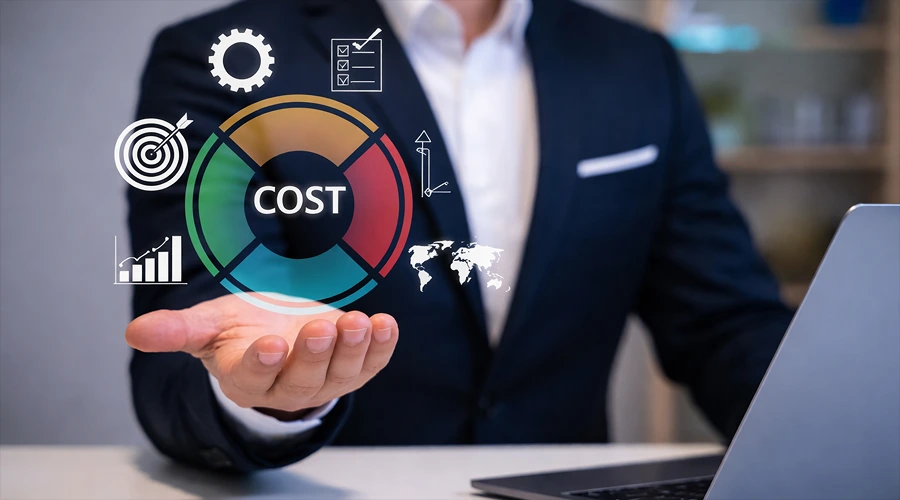
Ensure that the price of the product is higher than the cost of production. This is crucial to maintaining the company’s operations. Product development, manufacture, shipping, allocation, product revision, and other expenses are a few of the significant charges.
➢ Market Demand
Understanding market demand can assist determine how much customers are willing to pay for the goods and adjust prices appropriately.
➢ Target Audience
The people who genuinely require your product are your target market. Make sure the costs are reasonable for your target market and support the use cases of your product.
➢ Distribution Channels
Companies must think about how best to distribute their goods in the market. There are numerous channels, such as direct-to-consumer (D2C) platforms, online merchants, digital stores, and more.
Roadmap strategies should be closely combined with Agile planning to optimize the work being done in order to prevent a promising product vision from faltering in the face of significant obstacles and challenging work. Let us at WeeTech worry about the hard part so you can focus on just making your product better.