The way businesses develop and manage software has changed significantly over the past decade. Gone are the days when applications were developed as large, single systems. Today, organizations build flexible and scalable applications using cloud-native technologies. Unlike traditional software, cloud-native applications are easy to update and maintain. The two technologies that have gained traction in the past few years include microservices and serverless computing. These technologies enable businesses build easily manageable applications that are quicker to launch and more capable of meeting changing customer needs.
In 2026, more and more companies are now using these two technologies to reduce cost, improve security and accelerate innovation. If you want to know the latest cloud-native microservices & serverless trends in 2026, then read this post. Here, we have shared some of the most important cloud-native microservices and serverless trends shaping 2026 and their impact on businesses and developers. So, without any further ado, let’s get started…
Understanding Cloud-Native Development – What is it?
Cloud-native development simply means to build applications for cloud environments. Rather than adapting traditional software to run in the cloud, businesses now prefer developing cloud-native applications directly. It mainly focuses on scalability, flexibility, automation, faster updates and improved reliability.
In this kind of development, developers do not rely on a single large application; instead, the development happens in chunks. Cloud-native systems are divided into smaller components so that it is easier to develop, update and manage them separately. And that’s when microservices and serverless computing come in handy. These two technologies ensure seamless development of cloud-native application.
What Exactly Are Microservices?
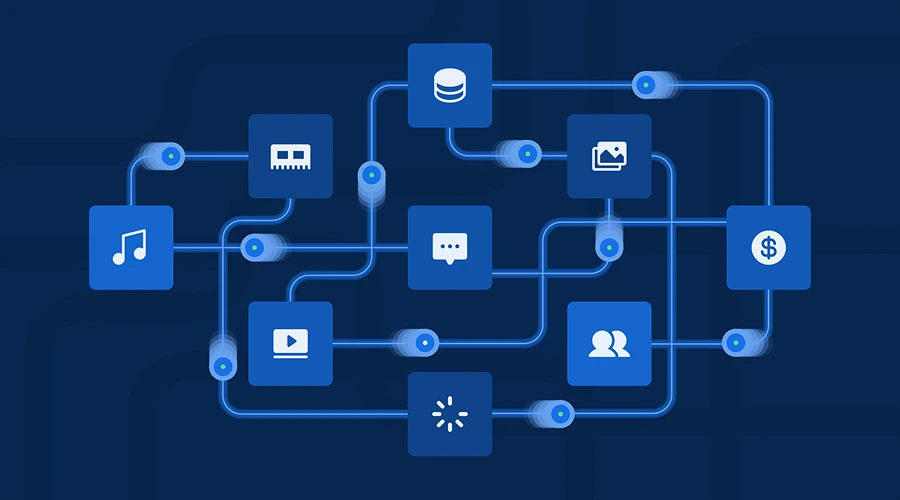
Microservices are a modern software development approach in which an application is divided into smaller services. In a microservice architecture, every part of an application acts as a standalone mini-application, each responsible for a specific function.
Let’s understand this with an example:
Most commonly used food delivery platforms often use separate microservices for:
Customer Accounts
Restaurant Listings
Order Processing
Payment Processing
Delivery Tracking
Notifications and Alerts
Each service here performs a specific task and communicates with the others whenever it is needed. The best thing about using microservices architecture is that each of them can be updated independently without affecting the entire application. That’s the reason 2026 is seeing a significant surge in the use of microservices architecture.
Top 3 Benefits of Microservices
Microservices architecture offers numerous benefits, such as:
1. Faster Development Cycles
Since the development is done in chunks, it allows teams to work on different services simultaneously. Because of this, even organizations can release new features more quickly and respond faster to market demands.
2. Better Scalability
Building scalable applications is the need of this hour. Microservices allow businesses to instantly scale the services experiencing increased demand.
3. Improved Reliability
Reliability is yet another benefit of using microservices architecture. Even if one service experiences an issue, the rest of the application can often continue functioning normally. This reduces downtime and improves customer experience.
What Exactly is Serverless Computing?
Serverless computing has become very popular in this era. However, it does not at all mean to have no servers. It simply means the cloud provider manages the servers for you instead of you managing them. This gives developers the flexibility to focus on building applications while the cloud platform handles setup, maintenance and scaling automatically. Moreover, businesses only need to pay for the resources they use. This makes serverless computing more efficient and cost-effective.
Top 3 Benefits of Serverless Computing
These platforms offer numerous benefits, including:
1. Reduced Operational Burden: Teams spend less time managing infrastructure and more time delivering value.
2. Automatic Scaling: Applications automatically scale up or down depending on demand.
3. Cost Efficiency: Organizations need to play only for the computing resources they actually use.
14 Most Popular Cloud-Native Microservices & Serverless Trends in 2026
Here are some of the latest cloud-native microservices and serverless trends that are shaping 2026. Take a look…
1. AI-Powered App Development
Artificial intelligence is in the mainstream today. More and more businesses are now using AI-powered tools to develop applications. These tools help them in writing code, identifying bugs, optimizing performance and automating routine tasks. Additionally, these tools make sure faster development cycles, improved software quality and reduced manual effort.
2. Serverless Computing Has Become a New Norm
Serverless computing is now widely used across software development process. It specifically makes it easier to create larger and more complex applications. More and more businesses today run more complex applications on serverless platforms. These platforms help businesses with automatic scaling and lower infrastructure management requirements. Moreover, these platforms offer pay-for-use pricing. This helps businesses to focus on building robust products instead of maintaining servers.
3. Microservices Architecture is in High Demand
Large, monolithic applications have become age-old procedures. Now, companies use microservices-based architectures. These architectures allow businesses to update applications, scale services independently and prevent issues in one service from affecting the entire application. In simple terms, microservices architecture helps teams to work on different parts of an application simultaneously and more efficiently.
4. Service Mesh Adoption is in High Demand
The biggest challenge that businesses encounter is to manage communication between microservices when an application grows. And that is when service mesh technologies come in handy. A service mesh is designed to control communication between services, enhance security and track performance. All this together help applications to work more efficiently and reliably.
5. Platform Engineering Is Gaining Traction
Platform engineering is yet another biggest trend in 2026. Managing hundreds or even thousands of microservices is not easy at all. Developers spend too much time on infrastructure management than creating new features. Platform engineering addresses this challenge. It helps create internal platforms that simplify software development. These platforms come with ready-to-use tools, templates and workflows. This makes it easier for developers to create the product faster, reduce operational complexities and focus on creative innovative products.
6. Event-Driven Technology Is Becoming More Popular
Gone are the days of creating application on traditional request-response models. Today applications are built on real-time events. Event-driven architectures ensure improved responsiveness and also allow applications to handle large volumes of activity more effectively. This trend is mainly used for e-commerce transactions, financial systems andIoT applications.
7. Cloud-Native Applications Are Moving to the Edge
Businesses are now combining cloud-native technologies with edge computing to build faster and more efficient applications. As more devices connect to the internet and generate data, businesses are moving cloud-native applications closer to where that data is created. So instead of sending everything to a distant cloud server, data can be processed much closer to users and devices. This helps applications respond faster, reduces delays, lowers network traffic and improves the overall user experience. This trend is mainly used for IoT devices, self-driving vehicles, smart factories and real-time data analysis as these are the places where quick responses are critical.
8. Security Is Becoming Part of the Development Process
Gone are the days when security was taken into account after the full development of the application. Today security is integrated from the start into the software development process rather than implementing it in the final step before deployment. Organizations are even focusing on secure coding practices, automated vulnerability scanning and continuous security testing. This allows businesses to identify and fix issues before they become worse.
9. Smarter Monitoring is the New Norm
Smart monitoring has become a new norm for businesses in 2026. Since cloud-native applications generate massive amounts of data and monitoring these data with traditional tools is a huge task. That’s when smart monitoring comes in handy. Using this monitoring approach, businesses can understand application behavior, detect performance bottlenecks and troubleshoot issues faster than ever. In the long run it leads to improved reliability and better user experiences.
10. Automated Optimization
Now businesses don’t manage cloud resources manually; they do it using AI. Artificial Intelligence handles the job automatically for businesses. Moreover, AI does not even need constant manual adjustments. AI checks how resources are being used and accordingly it adjusts them as needed. This helps businesses save time and money while ensuring their applications run smoothly and efficiently.
11. Multi-Cloud and Distributed Deployments Are Now Commonly Used
In 2026, organizations are no longer relying on a single cloud provider for all their computing needs. They are instead using multi-cloud and distributed deployment strategies to improve flexibility and resilience. Using services from multiple cloud providers allows organizations to avoid vendor lock-in, reduce the risk of service disruptions and choose the best tools for specific workloads. Additionally, distributed deployments allow applications and services to run from multiple locations. This helps businesses provide faster and more reliable experiences to users worldwide. All in all, this approach reduces reliance on a single provider, strengthens disaster recovery capabilities and allows workloads to be optimized more effectively.
12. Automated Security Checks Are Becoming Common
With cyber threats growing immensely, businesses are now choosing to use automated security checks. These checks allow them to identify and fix vulnerabilities before they become serious problems. They mainly check vulnerabilities, misconfigurations, dependency risks, compliance violations and identity-based security. In addition, stricter authentication and authorization mechanisms have also become common in 2026. This proactive approach not only reduces risks but also help businesses maintain development speed.
The Bottom Line
So, these are the 12 most popular cloud-native microservices and serverless trends in 2026. In 2026, cloud-native development has become the mainstream. It ensures faster, scalable and reliable software development. Modern businesses are now focusing on optimization, automation, security and operational efficiency to ensure their applications remain reliable, scalable and cost-effective while meeting growing customer demands. Besides these 12 trends, businesses are also becoming more conscious of their environmental impact when making technology decisions. That’s the reason more and more businesses are now using resources that make cloud operations more sustainable. It is safe to say that these trends are not optional in today’s time. Businesses that are embracing these trends are already building faster, more reliable and future-ready applications. If you also want to stand out, then it is wise to follow these trends to stay ahead.