

Machine learning is one of the fastest-growing areas of technology today. This technology powers many of the digital services that we use on a daily basis, including navigation apps, voice assistants, online shopping suggestions and so on. The coolest thing about Machine Learning is that it learns from data and get better over time, instead of simply relying on fixed instructions. Algorithm is the base of each Machine Learning system. An algorithm is nothing but a set of rules that helps a computer learn from data, find patterns, make predictions or solve problems.
Different algorithms do different jobs. Some are there to group data into categories, while others predict future results or discover hidden patterns. If you are new to the subject, then this post is for you. In this post, we will share with you the top 10 Machine Learning algorithms that should know even if you are just beginning with ML. So, without any further ado, let’s get started…
Top 10 Machine Learning Algorithms To Get Started With
Here are the 10 most popular Machine Learning algorithms for everyone to know and get started effortlessly. Take a look…
1. Linear Regression
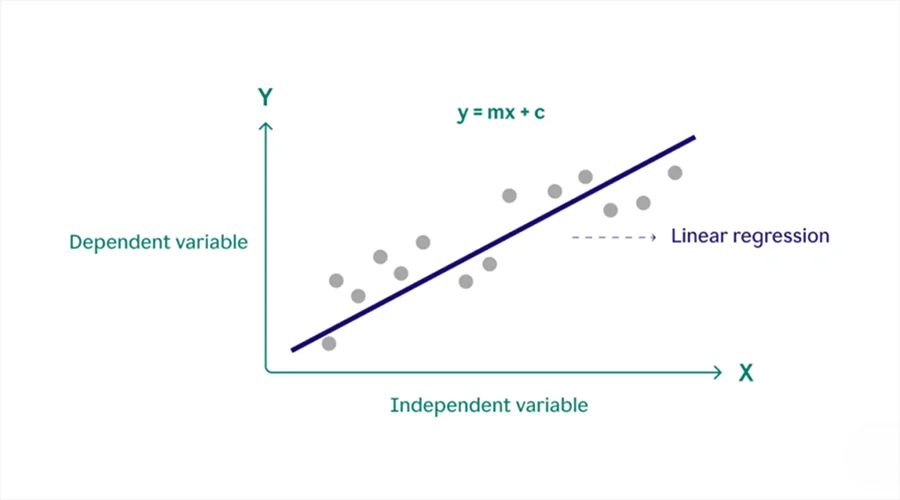
Linear Regression is one of the most popularly used machine learning algorithms. It is mainly used to predict numerical values by studying the relationship between different pieces of data. The coolest thing about this algorithm is that it is very simple to use. The algorithm relies heavily on historical data patterns. Using these patterns it makes future predictions.
The best thing about Linear Regression is that it is easy to understand, which makes it ideal for beginners. Even though it is simple, it remains useful in many real-world situations.
Companies that are already using Linear Regression include, Amazon, Netflix, Uber, Walmart and so on.
Real estate companies, retail stores and others can easily use Linear Regression. It common uses include, forecasting sales, house price prediction, business planning, weather analysis and so on.
Ideal for: predicting numbers like prices or sales
2. Logistic Regression
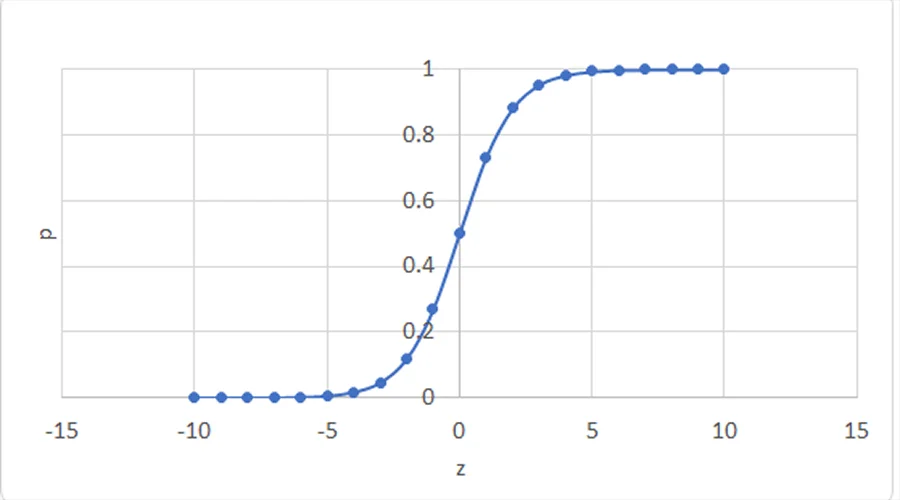
Another most commonly used machine learning algorithm is Logistic Regression. It is mainly used for classification rather than prediction of numbers. It helps answer questions with only a few possible outcomes, such as “Yes or No” or “True or False.” This algorithm usually calculates the probability of each possible outcome and chooses the most likely one. It is often used for spam detection, fraud detection, medical diagnosis, customer churn prediction and so on.
Companies like Amazon, Netflix, PayPal, American Express and others are already using Logistic Regression. They use it is simple, fast and reliable for binary classification problems or for making yes/no predictions. It predicts the probability of an event, such as whether a customer will buy a product or whether a transaction is fraudulent.
Ideal for: questions with two possible answers.
3. Decision Tree
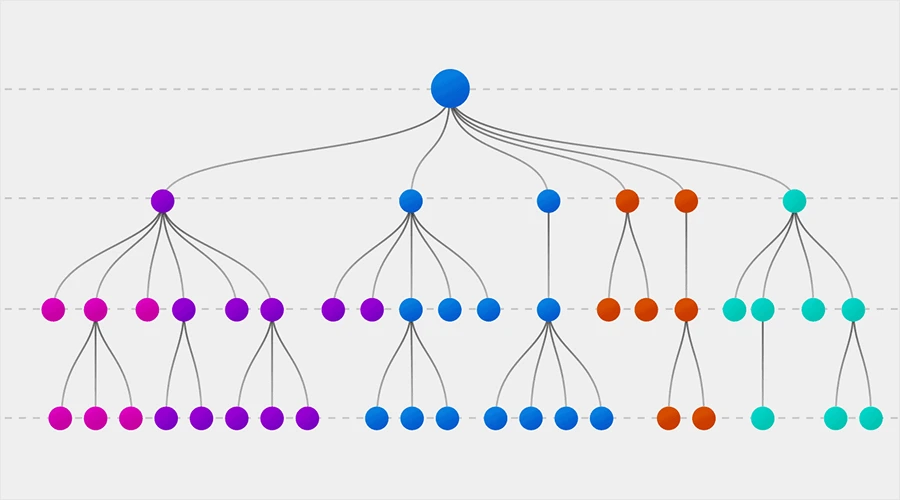
Then there is a Decision Tree algorithm. It works more or less like people make everyday decisions. It starts with a simple question, then follows a series of yes-or-no questions until it reaches a final decision or answer, thus the name.
Here is an example of how a banking institute decides whether to approve a loan application or not.
The decision tree asks a series of simple questions, such as:
Does the applicant have a stable income?
- No → Loan Rejected
- Yes → Go to the next question
Is the applicant’s credit score above 1000?
- No → Loan Rejected
- Yes → Go to the next question
Does the applicant have a low debt compared to their income?
- Yes → Loan Approved
- No → Loan Rejected
This step-by-step process helps the bank make a quick and consistent decision.
Decision Tree algorithm is mainly used for customer segmentation, loan approval, medical diagnosis, product recommendations and so on. Besides that, they are also useful when explaining results to people without a technical background.
Banks, eCommerce Platforms, Insurance Companies, Telecom Companies, Manufacturing Companies, Healthcare Facilities often use Decision Tree Algorithms.
Ideal for: when you need easy-to-understand results.
4. Random Forest
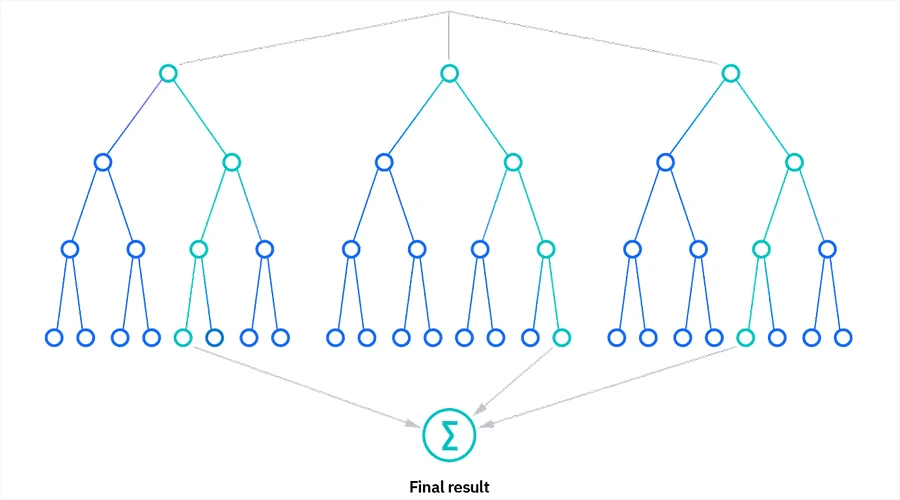
Random Forest is yet another popularly used machine learning algorithm. This supervised machine learning algorithm works by combining the results of many decision trees to deliver more accurate and reliable predictions. It is commonly used for both classification (predicting a category) and regression (predicting a number or value).
It is similar to taking advice from ten experienced people rather than depending on the advice of just one person. This approach helps people to make more accurate decisions confidently.
Think of asking ten experienced people for advice instead of just one. The final decision is usually more balanced and accurate.
This algorithm is commonly used by banks for credit scoring, hospitals for disease prediction, financial firms for stock market analysis, and businesses to understand and predict customer behavior. Each tree makes its own prediction, and the algorithm selects the answer supported by the majority. Businesses rely on Random Forest because it provides better accuracy than a single Decision Tree and significantly reduces chances of making incorrect predictions.
Ideal for: better accuracy across many prediction tasks.
5. Support Vector Machine
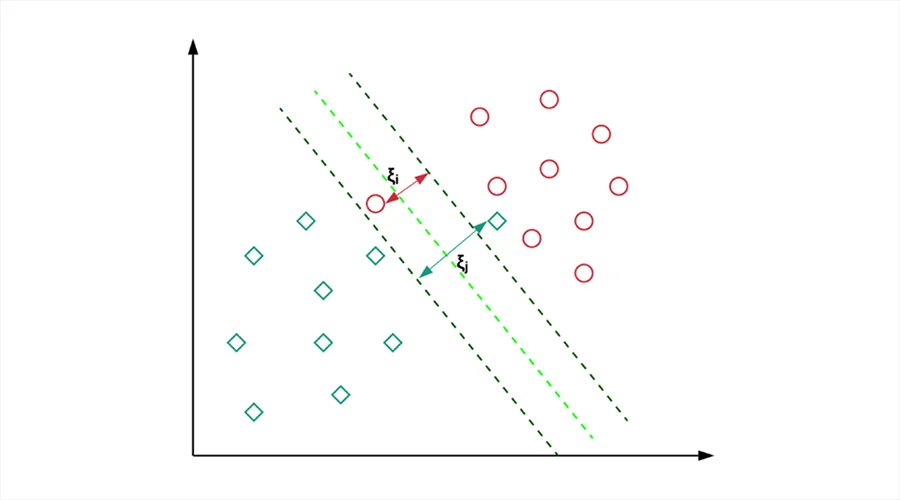
Support Vector Machine, also known as SVM, is yet another powerful classification algorithm. Its main task is to separate data into different groups in a clear and accurate way, making it easier to classify new data correctly.
Let’s understand this with an example:
An email service can use a Support Vector Machine to classify emails as Spam or Not Spam. The algorithm looks at features such as suspicious words, links, attachments and the sender’s details and learns from thousands of previously labeled emails. Based on that it draws a clear boundary between spam and genuine emails. So, whenever there is a new email, the algorithm checks which group it belongs to and marks it as spam or not spam.
SVM is mainly used for face recognition, image recognition, text classification and cancer detection. It often comes in handy when it comes to solving complex classification problems. However, it works well when data can be clearly divided into different groups.
Ideal for: for classification problems with clearly defined categories.
6. K-Nearest Neighbors
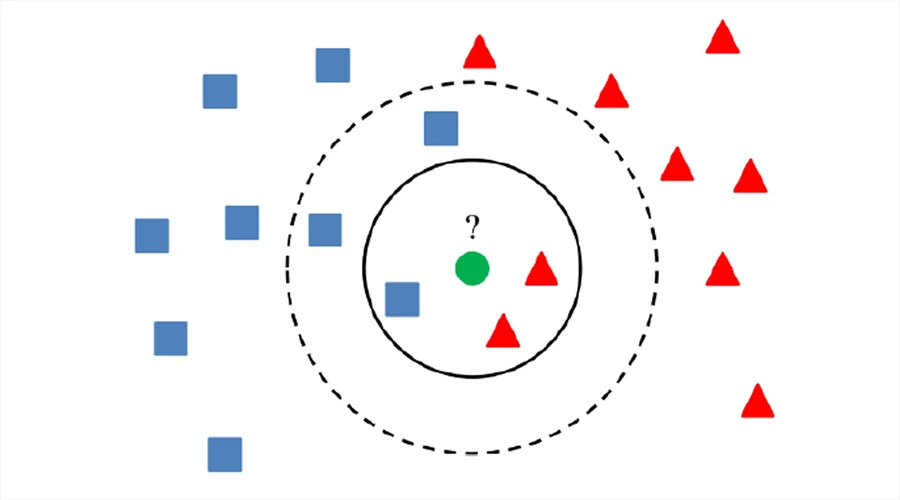
K-Nearest Neighbors, also known as KNN, is yet another simplest machine learning algorithm. It is a supervised machine learning algorithm and is used for both classification and regression tasks. It works by comparing a new data point with similar existing data and making predictions based on the closest matches.
Here is an example:
A streaming platform like Prime Videos can use the K-Nearest Neighbors algorithm to recommend movies.
Basically, the system first looks at the movies you have watched and liked. Then, it finds users with similar viewing habits and checks which movies those similar users have enjoyed. Based on the data it recommends those movies to you too.
Instead of creating a complicated model, KNN makes predictions by looking at the closest and most similar data. This makes it one of the most effective algorithms for classification tasks.
Its main uses include recommendation systems, customer segmentation, image recognition and pattern recognition. If you are a beginner learning machine learning concepts, then KNN can be a good option to kickstart your journey.
Ideal for: working with similar examples.
7. K-Means Clustering
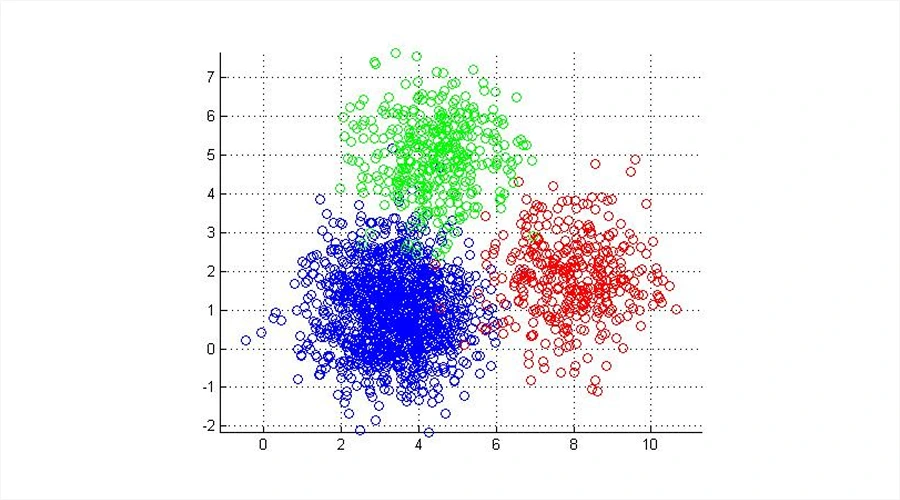
Unlike previous algorithms, K-Means Clustering is an unsupervised machine learning algorithm. It is mainly used to group unlabeled data into K distinct, non-overlapping clusters based on feature similarity. It groups similar data together. Each group has a center point called a centroid. The algorithm keeps adjusting these center points to make sure the data in each group is as similar as possible.
For example:
An eCommerce platform using K-Means Clustering to group customers with similar shopping habits.
The algorithm looks at factors such as purchase history, spending and browsing behavior. Based on the information, it groups customers with similar habits into different clusters. This makes it easier for retailers to send personalized offers and recommendations to each group.
It is mainly used for customer segmentation, market research, image compression, social network analysis and so on. Brands like Amazon, Spotify, Uber, Netflix, Airbnb are already using K-Means Clustering for marketing and customer analysis.
Ideal for: grouping similar data without predefined labels.
8. Naive Bayes
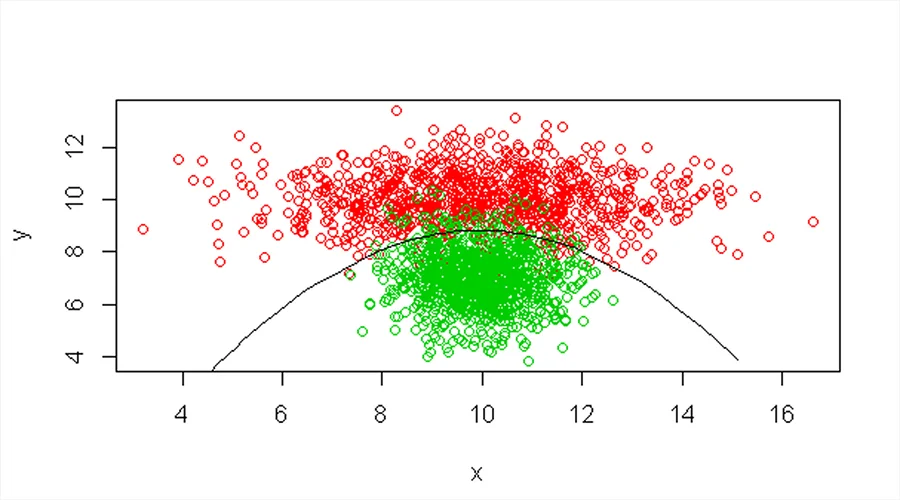
Naive Bayes is yet another very fast and efficient classification algorithm. It predicts the most likely outcome by analyzing the available information. Built on Bayes’ Theorem, Naïve Bayes is often used for text analysis, sentiment classification and spam filtering.
Here is an example:
An email service can use Naïve Bayes to filter spam emails.
When filtering spam emails, the algorithm checks whether certain words frequently appear in unwanted emails. If enough matching patterns are found, the email is marked as spam.
It is mainly used for spam filtering, news classification, sentiment analysis and document categorization. Yahoo, Google, Amazon, Gmail, Meta, Microsoft and other brands are already using Naïve Bayes for text classification. It works well for text-based applications and delivers quick results even when handling large amounts of data.
Ideal for: text classification and spam detection.
9. Neural Networks
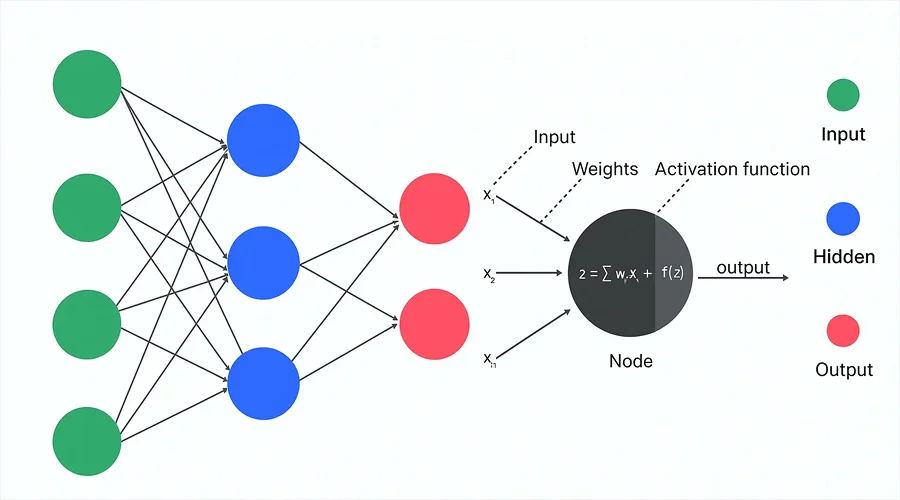
At number 9, we have Neural Networks. Inspired by the way the human brain processes information,
Neural Networks are made up of connected nodes called artificial neurons. These artificial neurons are arranged in input, hidden and output layers. Instead of relying on simple rules, they learn from data by finding patterns and improving their predictions over time.
Neural Networks power many modern AI applications, including voice assistants, image recognition, language translation and chatbots. They are mainly used for Speech recognition, language translation, image generation, self-driving vehicles and virtual assistants.
Neural Networks algorithms are designed to solve highly complex problems that simpler algorithms cannot solve. This makes them one of the most important technologies for brands like, Google, OpenAI, Spotify, Amazon, Microsoft and so on.
Ideal for: advanced tasks like image or speech recognition.
10. Gradient Boosting
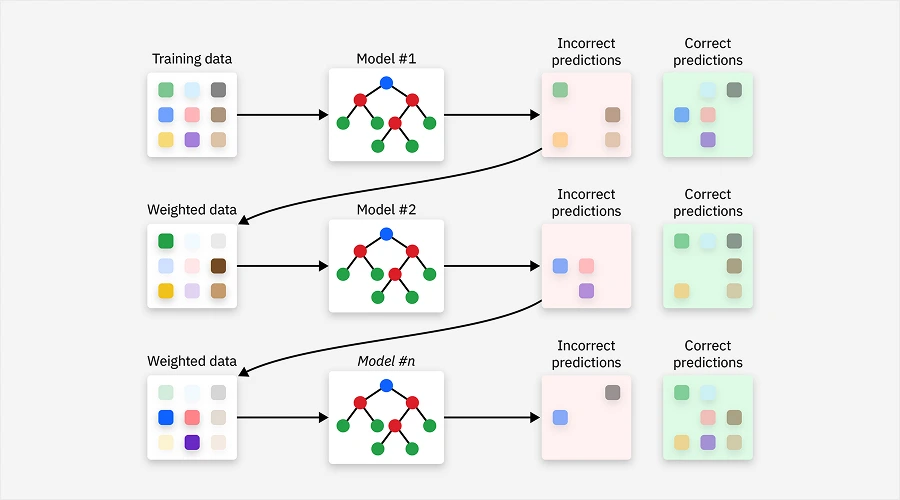
Last but not least is Gradient Boosting. It builds many small decision trees one by one. Each new tree learns from the mistakes of the previous ones, making the final prediction more accurate. This process continues until the predictions become much more reliable. This machine learning algorithm is mainly used for risk assessment, credit scoring, search ranking, customer behavior prediction and sales forecasting.
Gradient Boosting is widely used in business applications and machine learning competitions because it delivers highly accurate results.
Here is an example:
A banking institute can use Gradient Boosting to detect fraudulent credit card transactions. The algorithm learns from past transactions. It checks details like the amount, location, time, and spending habits. It keeps improving by learning from its earlier mistakes. When a new transaction happens, it decides whether it is real or fraudulent.
Brands like Amazon, Uber, Netflix and Airbnb are already using Gradient Boosting for prediction and classifications tasks.
Ideal for: to achieve high prediction accuracy is your priority.
Read ahead for the best tips to choose the right machine learning algorithm. Here we go…
Tips to Choose the Right Machine Learning Algorithm
There is no single machine learning algorithm that can resolve all problems. Hence, it is crucial to choose the right algorithm depending on your end goal and the type and the amount of data you have. Here are some practical tips to make the right choice of machine learning algorithm. Take a look…
- Decide why do you want an algorithm. It is to predict a value, classify data, or find hidden patterns.
- Check the type, quality and amount of data you have before choosing an algorithm.
- Start with simple algorithms before you move to more advanced ones.
- Consider your dataset size because not each algorithm requires the same amount of data to perform well.
- Balance accuracy and speed by choosing the model that fits your needs.
- Compare different models to see which gives the best results for your data.
- Think about explainability and accordingly choose the model to achieve your goals.
- Keep improving and retraining your algorithm as you collect more data and your requirements change.
Putting it all together…
So, this is all about the 10 most popular machine learning algorithms. Machine learning has become an essential part of modern technology. It not only helps businesses to make smarter decisions, but also to improve digital experiences for users. There are numerous algorithms; however, the ten outlined in the post are the ones that are ideal for beginners. They are simple, reliable and effective machine learning algorithms that you should be aware of. You can start by understanding these algorithms and their workings, and gradually can move to more advanced ones. Whether you’re a student, developer or data enthusiast, learning these machine learning algorithms is an excellent first step toward understanding one of today’s most exciting technologies.
FAQs
1. What exactly is a machine learning algorithm?
A machine learning algorithm is a set of rules that helps a computer learn from data, recognize patterns and make predictions or decisions without being programmed for every task.
2. Which machine learning algorithm is the easiest to learn?
Decision Tree is one of the easiest algorithms to learn. It is considered ideal for beginners because it is very simple to understand and use.
3. How do supervised algorithms differ from unsupervised ones?
Supervised algorithms use labeled data to make predictions. Unsupervised algorithms, on the other hand, finds hidden patterns or groups in data without labeled answers.
4. Which algorithm is best for predicting future values?
Linear Regression is one of the best algorithms for predicting continuous values, such as house prices, sales revenue or future demand.
5. Which algorithm is best for customer segmentation?
K-Means Clustering is the best for customer segmentation. Many eCommerce brands are already using this algorithm for customer segmentation.
6. Do I really need to have programming knowledge to learn machine learning algorithms?
It would be great if you do have some basic programming knowledge, especially in Python. However, you can still choose to understand the concepts of machine learning algorithms before learning to code them.
Also Read: Post-Quantum Cryptography Algorithms