AI Agents – you must have come across this term a lot of times since 2023. And why not? AI Agents have garnered immense traction since then. According to a report, 2026 is going to see a significant proliferation of Agentic AI in organizations. Probably that’s the reason more and more companies are now investing heavily in AI Agent development. So, if you want to learn more about AI agents and the process of their development, then this post is for you. Here, we will walk you through everything about an AI Agent development, and let you know why businesses and developers are so interested in it. So, without any further ado, let’s get started…
What Exactly Is an AI Agent?
An AI agent is a software program that is designed to achieve specific goals. It can observe, think and act to achieve those goals. In simple words, AI agents are kind of digital assistants that can understand a situation, make decisions and take actions without constant human input. Some of the most common examples include, a chatbot that answers customer questions, a recommendation system on shopping apps (such as Amazon’s Rufus), a virtual assistant(like Siri or Google Assistant), a smart home system that adjusts temperature automatically and so on. AI agents work behind the scenes, supporting customers by providing quick, accurate assistance, improving overall user experience, and helping businesses deliver more personalized and efficient services.
Key Components of an AI Agent
Knowing the key components is essential before you indulge in AI agent development. The three main components of AI agents include:
1. Perception (Input)
AI agents receive information via perception or input, which could be in any form, including text, voice commands, images or data.
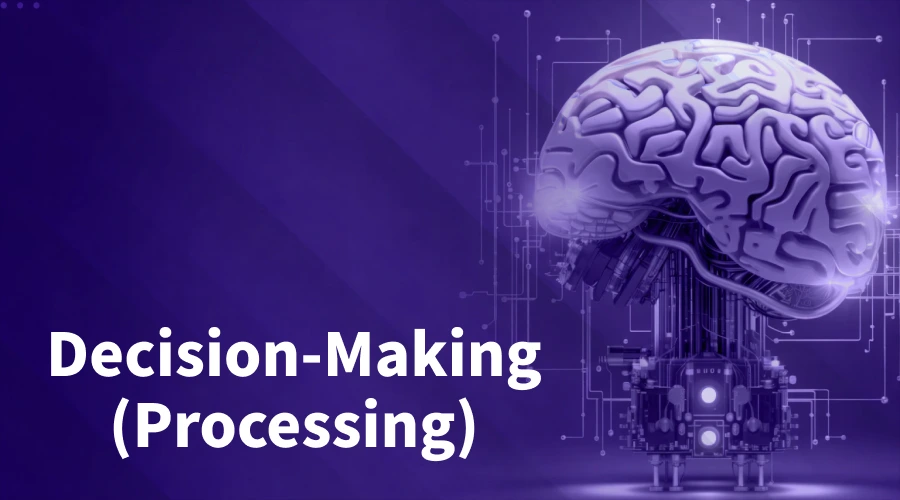
2. Decision-Making (Processing)
Image Source MoogleLabs
After receiving the information, the AI agents analyse it so that appropriate action can be taken. That’s when AI models and logic play a crucial role.
3. Action (Output)
After analysing the information, agent finally respond to the query or takes action. It could include, simply replying on customer query, making a recommendation or performing a specific task.
Let’s now understand the AI agent development in detail. Here we go…
What Is AI Agent Development?
Image Source Rlogical Techsoft
AI agent development is the process of building an AI assistant that can perform tasks without human involvement. AI agent development involves several steps, such as designing how the agent will behave, training it with data, integrating it with systems, testing it for performance and finally deploying it for performing its tasks. These are smart systems able to “think” and “act” on their own. And that’s the reason more and more companies are now investing in the development of AI agents. They automate most of the tasks and allow teams to focus on core activities.
Different Types of AI Agents
There are different types of AI agents for businesses to choose from according to their needs. Take a look…
1. Simple Reflex Agents
Simple reflex agents are very basic. They react to current input only and include no memory of past actions. A basic chatbot with fixed responses is the classic example of simple reflex agents.
2. Model-Based Agents
These are advanced AI agents that are designed to keep track of past interactions and user memory to make better decisions. Example, smart home systems or self-driven car.
3. Goal-Based Agents
Image Source Linkedin
Goal-based AI assistants are designed to achieve specific goals. They first different options before acting or responding. Example: A GPS navigation system.
4. Learning Agents
Learning agents are the ones that improve over time using data. They usually learn from user behaviour and feedback. Example: Amazon’s Rufus.
Understanding Beginner vs Advanced AI Agents
Beginner-Level Agents are often rule-based, include limited responses (chatbots with fixed responses are the classic example). These agents are easy to build as they require limited training. A beginner chatbot that answers FAQs with fixed responses.
Advanced AI Agents on the other hand, are more complex. They use large AI models and are designed to understand context deeply. They are mainly developed to perform complex tasks, learn and adapt over time. Learning agents are the best example of advanced AI agents. They require specialised training to achieve specific goals. Advanced AI agents are designed to handle full customer conversations, bookings and support.
AI Agent Architecture – What Is It
AI agents are built using tools and memory. Tools, such as APIs, databases or external software allow the agent to interact seamlessly with the outside world.
Memory, on the other hand, allows agents to understand context, learn from experience and improve over time. When we say memory, it includes working memory (that handles what the agent is currently doing); episodic memory (that stores past interactions); semantic memory (that holds general knowledge and facts); and procedural memory (that captures learned processes and workflows). All these together help the agent to give more accurate and personalized responses.
Technologies Used in AI Agent Development
Here are the different technologies used for building AI agents; take a look…
Steps to Follow for Successful AI Agent Development
Here are the steps you will need to follow to build an AI agent from the start. Take a look…
Step 1: Define the Purpose
The first step to AI agent development is to figure out why you want to develop an agent. Begin by asking yourself questions, such as what problem do you want the agent to solve? Who will be the user? These questions will get you the idea or the reason why you want an agent.
Step 2: Choose the Right Tools
After you know why you want to build an AI agent, the next step is to choose the tools, such as AI frameworks, pre-built APIs and no-code/low-code platforms. Clearly describe, what each tool does, when to use it, input and output format. Having clear description allows agents to perform better.
Step 3: Create the System Prompt
It’s now time for creating the system prompt by clearly defining how your AI should behave, what it should do and how it should respond. It is like giving the AI a role, rules and boundaries so that it performs within them.
Step 4: Design the Workflow
Designing how your agent will receive input, process data and respond to users is the next step in the process.
Step 5: Train the Model
You will need to train the agent so that it knowns exactly how it has to respond to users’ queries.
Step 6: Test the Agent
After the development and training of the model is complete, it is the time to test it for performance. Check it for accuracy, speed and user experience.
Step 7: Deploy and Improve
If everything goes well, then don’t wait for deploying the model. Deploy it and make sure to keep improving it based on feedback.
Both the beginner level and advanced level agents’ development include the same step, except for the complexity. Advanced AI agents need better thinking strategies to deliver better results. These strategies let agents process information more effectively and make smarter decisions promptly.
Also, it is crucial for teams to invest in testing AI agents as they are different from testing traditional software. Here, you evaluate not just the functionality, but also how well the agent performs tasks. You will need to test them for task completion, accuracy, tool usage, speed, cost and safety to ensure better performance. You should also test different scenarios.
Besides that, after deploying the agent, continuous monitoring is very important. You will have to keep track of success rates, errors, costs, user satisfaction and overall performance. Doing so ensure the system runs smoothly.
What Makes AI Agents Different from Automated Systems?
There is a huge difference between automation systems and AI agents. Automated systems are rule-based designed to follow rigid, linear rules to complete predictable tasks. They work only within predefined steps and they fail if something unexpected happens. However, that’s not the case with AI agents. AI agents are more like problem solvers. Here’s what sets them apart:
Autonomy: They are able to make decisions without human intervention. Once you give them a goal, they are able to figure out how to achieve it on their own.
Integration: They are created to integrate with existing systems seamlessly.
Tools: They are created using advanced tools to perform tasks smoothly.
Memory: They can remember past interactions and based on that information they can make better decisions.
Reasoning: They are designed to break complex tasks into smaller steps and solve them logically.
Adaptability: Finally, they are capable of handling unexpected situations and adjust without stopping.
All these are not possible with conventional automated systems.
Security and Responsible AI
AI agents are powerful tools and it is imperative to maintain security and responsibility at all times. Having robust security features can help businesses prevent misuse and protect sensitive information. Security practices to keep in mind when developing an AI agent, include validating inputs, protecting against prompt injection, limiting access permissions and so on. Besides that, responsible AI is crucial too. Make sure to be transparent with users, avoid bias, follow privacy laws and ensure all agents are controlled by humans.
Benefits of AI Agent Development
There are numerous benefits of AI agent development, including:
1. Available Round the Clock: AI agents work round the clock without breaks, making it easier for companies to respond to customer queries all day long without any human intervention.
2. Cost Efficient Investment: They are cost-efficient investments as they reduce cost significantly by eliminating the need to depend on large human teams for handling calls and customer queries.
3. Faster Responses: They are designed to work 24x7x365, this allows companies to instantly handle customer queries and improve user experience.
4. Better Performance & Scalability: AI agents can handle multiple users at the same time and are also easy to scale as company evolves.
5. Deliver Personalized Experience: Delivering personalized experience becomes a breeze for brands with advanced AI agents as they respond based on user behavior.
Challenges in AI Agent Development
Definitely, AI agents are robust tools that help organizations grow exponentially, but at the same time, they come with certain challenges, such as:
1. Data Quality: Data has to be of high quality as poor data leads to poor performance.
2. Accuracy Issues: If not tested for accuracy, agents may even give incorrect or incomplete answers.
3. Security Concerns: Handling user data safely is very important in this age of increasing digital crimes.
4. High Initial Setup: Advanced agents require both high investment and a lot of time to develop and deploy.
Use Cases of AI Agents in Real-World Scenario
AI agents can be used in various industries, including
E-Commerce
Healthcare
Education
Finance
Construction
Banking & Investment
Marketing
Content Creation
Retail
Manufacturing
Energy
Legal Services
Human Resources
Customer Service
AI Agent Development – What the Future Holds
According to experts, AI agent development is going to grow in the future. More and more organizations are already developing agents for different uses and purposes. Future agents are expected to become more advanced. They will be able to offer human-like conversations, make decisions on their own, work together with other AI agents and provide deeper personalization across platforms. It is fair to say that future AI agents will go beyond simple assistance and help users manage everyday tasks more effortlessly.
The Bottom Line
So, this is all about AI agent development. Undoubtedly, AI agents have changed how businesses operate and how users interact with technology. They are not just tools, they are becoming digital partners that can think, act and improve. If you are also planning to build an AI agent, then follow the steps outlined above to ensure successful development. Also, you are advised to begin with a simple use case and gradually scale it based on your needs. Investing in AI agent development is one of the wisest decisions you will make today!