Building software is not just limited to writing code and launching it. It is more about the steps taken in the process until the product is either retired or replaced. Every application goes through different stages, including planning, designing, testing, improving, regular maintenance and so on. The success of an app relies heavily on how these stages are managed by teams. And that’s when Application Lifecycle Management, or ALM, comes into play.
ALM helps teams handle the complete life of an application, beginning from the ideation to the development and even beyond. It helps developers, testers, project managers and businesses have clear process to work without confusion. To understand ALM better, keep reading this post. Here, we will explain everything you need to know about Application Lifecycle Management, including its main stages, benefits, challenges, best practices and uses. So, without any further ado, let’s get started…
What Is Application Lifecycle Management (ALM)?
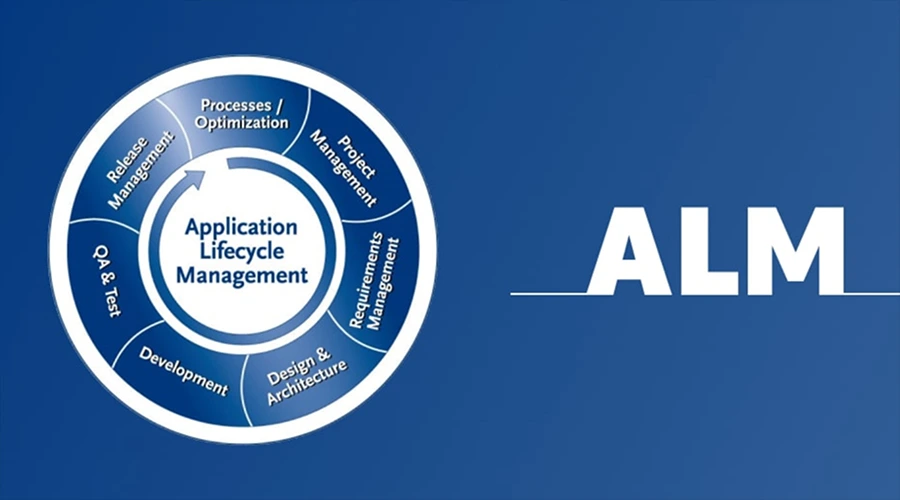
In today’s fast-moving digital world, businesses focus on creating applications that are reliable, flexible and easily scalable. Improper management can negatively impact the timing, quality, budget and customer experience. That is when Application Lifecycle Management becomes imperative.
ALM creates a process for teams to manage an application from start to finish (typically from ideation to execution and beyond). It covers everything including, planning, requirement gathering, designing, development, testing, deployment, maintenance, updates and retirement or replacement. In simple words, ALM is like a roadmap that guides teams manage software from start to finish. It helps ensure that the application works properly, meets business goals and stays useful for users all its life.
Why Is ALM Important?
More often than not, businesses consider that the process of software development ends with its launch. But that’s not how it is! Launching an application is the beginning of the process. Any software needs to be updated on regular basis, which include bug fixes, security checks and performance improvements. This is done to ensure customers expectations are met and businesses stay competitive. Without proper lifecycle management, problems can quickly grow.
ALM helps businesses stay organized, deduce development mistakes, improve communication, deliver better software faster, track progress, control costs and most importantly, improve customer satisfaction. With ALM, teams can deliver better and more reliable products.
7 Main Stages of Application Lifecycle Management
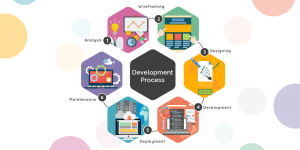
Here are the 7 main stages of ALM that play a major role in building successful software. Take a look…
1. Requirements Management

The entire process starts with understanding the project requirements. In this stage, teams focus on gathering and defining requirements for the application. The process includes teams talking to clients, users and stakeholders to understand their expectations from scratch. They usually ask:
- What problem will the application solve?
- Who is it for (the users)?
- What features are important?
- What business goals should it support?
This is one of the most important stages of application development. Gathering clear requirements are very important. Mistakes at this stage can affect the entire project. Beginning with clear intentions can help save time, money and effort in the process.
2. Design and Planning
After gathering clear requirements, teams move forward to the designing and planning stage. It mainly includes the answer to the question “how the application will be built.” This is the stage when teams create a strong foundation for an application development. This includes, system design, user interface planning, database structure, workflow creation, timeline planning and resource allocation.
3. Development
Then comes the development stage where the actual magic happens. Developers write codes and build the actual application in this stage. This is the stage when plans are turned into working features based on the approved requirements. In this stage, teams work in steps in order to improve speed and make problem-solving easier. Codes are regularly reviewed during this stage to ensure everything stays on track.
4. Testing and Quality Assurance

After development, the application is tested for performance. Testing is one of the most important steps in the process. It helps identify and fix bugs, improve performance, address security issues, enhance user experience, and ensure smooth compatibility across different devices and platforms. All this is done to ensure the application works correctly before it is launched for users. Quality assurance is not just about fixing errors; it also makes sure the product meets expectations and provides a smooth user experience. Any ignorance or mistake in this stage can lead to expensive problems later.
5. Deployment
Deployment is the next stage of ALM. This is the stage where application is released for actual use. It often includes, launching a mobile app, publishing a website, releasing business software or installing internal company systems. Deployment should be handled very carefully as that’s when actual users start interacting with the real product. Smooth deployment can reduce downtime and improve user trust. Most businesses these days prefer deploying products gradually where they release updates in steps instead of deploying it all at once.
6. Maintenance and Support
After deployment the product, actual work begins. Yes, an application needs to be continuously maintained in order to stay useful and secure at all times. Teams handle tasks like bug fixing, performance improvements, security updates, feature upgrades, customer support and system monitoring in this stage. This is to ensure that the application or software remains useful and competitive even when technology evolves. This is one of the longest stages in ALM as it continues as long as the software stays active.
7. Retirement/Replacement
The last stage of ALM is retirement or replacement (whatever the business decides). After a point any application reaches the stage where it is either replaced or retired. This usually happens when new technology is introduced, business needs change, maintaining an app becomes too expensive, security risks increase or need to build better solution arise. Whatever the case – this stage should be planned very carefully to ensure users data is protected and is moved smoothly to the next system.
ALM vs SDLC: Are They the Same?
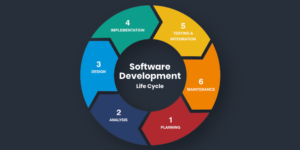
People often confuse Applications Lifecycle Management (ALM) with Software Development Life Cycle (SDLC). However, it is worth noting that these two are absolutely different processes. SDLC, as the name says, only focuses on the development stages, which include planning, coding, testing and deployment.
Whereas, ALM is a broader concept. It includes every step, from ideation to SDLC and retirement. The various stages of ALM include, business management, team collaboration, project tracking, long-term maintenance, governance and retirement planning. In a nutshell, SDLC focuses on building software, while ALM focuses on managing the entire life of software, which also includes SDLC. Read ahead for the benefits of ALM. Here we go…
Top 5 Benefits of Application Lifecycle Management
Application Lifecycle Management offers numerous benefits, such as:
1. Better Team Collaboration:
ALM creates a process for teams (including designers, developers, testers, project managers and businesses) to work together in collaboration. It creates a shared process where everyone understands their role, thereby reducing confusion and improving teamwork.
2. Faster Problem Solving:
App development is a long journey with numerous stages. Errors or problems can arise any time in the process. Tracking each stage properly, allows teams to identify and fix issues easily and save a lot of time and prevent repeated mistakes.
3. Improved Product Quality:
When each stage is managed properly, quality of product automatically improves. Testing, monitoring and continuous updates help maintain strong software quality, which makes an app more stable, secure and user-friendly. Remember that improved product quality can only help gain customer trust and build business reputation.
4. Better Cost Control:
Improper planning often leads to budget problems in the later stages. With ALM, teams can reduce unnecessary spending and improve decision making. Proper planning help businesses control cost. Yes, fixing a mistake during planning is much cheaper than doing it after launch.
5. Easier Compliance and Documentation:
Only developing a reliable software is not just enough. Complying with security standards is also crucial. ALM comes in handy here. It helps maintain proper records for everything, including changes, updates, testing reports, security checks and user approvals. This is specifically important for finance, government services, defence and healthcare industries.
Read ahead for the challenges ALM. Here we go…
Common Challenges in ALM
Undoubtedly, ALM offers numerous benefits; however, it also includes some challenges that teams must be aware of to prepare better. These challenges include:
➢ Changing Requirements:
Sudden change in requirements often becomes a problem. Yes, sometimes clients change their expectations during development. Frequent changes often create delays and confusions in the process. Clear communication is necessary to manage things properly.
➢ Poor Communication Within Teams:
Problems occur when there is no proper communication. Poor or improper communication between teams often leads to mistakes and negatively impact the whole project. That’s when strong collaboration tools and regular meetings become crucial.
➢ Lack of Proper Tools:
Without proper tools it becomes difficult for teams to handle large projects. Teams may struggle with deadlines, testing, and documentation in the absence of proper tools. That’s when choosing the right ALM platform becomes imperative.
➢ Resistance to Change:
Problems can even occur when teams resist to change with new systems. Modern ALM often requires process improvement, which may take time for people to accept. That’s when training and leadership support play a crucial role.
Most Important ALM Tools
There are numerous software tools available to manage ALM more effectively. The most important ones include:
- Microsoft Azure DevOps
- Jira
- GitHub
- IBM Engineering Lifecycle Management
- Atlassian tools
- ServiceNow
- Rally Software
These tools help teams track tasks, control versions, manage testing, collaborate efficiently, report seamlessly and plan efficient deployment. However, it is crucial for teams to choose the right tools. The choice of the right tool depends on the size of the business, project needs and team structure.
Steps to Choose the Right Tools & Software to Achieve Successful ALM
Here are the steps you need to follow in order to choose the right ALM tools. Take a look…
- Understand your business needs and project goals before selecting an ALM tool.
- Choose software that supports the full application lifecycle, from planning to maintenance.
- Look for a system that can easily be integrated with your existing systems or tools (like testing, development and deployment tools).
- Choose a user-friendly tool so teams can adopt it quickly without confusion.
- Select the tool with strong collaboration features to improve communication between teams.
- Choose a tool with good reporting and tracking features.
- Look for the system that offers strong security and compliance support.
- Consider cloud-based options for better flexibility and easier scaling.
- Compare pricing, licensing and long-term maintenance costs to make mindful choice.
- Last but not least is to choose a trusted provider that offers reliable customer support and regular updates.
Let’s now take a look at the ALM best practices to ensure proper management. Here we go…
ALM Best Practices
Here are the Application Lifecycle Management best practices for you to keep in mind. Take a look…
- Align ALM with Agile and DevOps for faster development and timely releases
- Prioritize design, testing and quality for better software performance
- Focus on maintenance and scalability to keep applications updated and secure
- Use the right tools for better visibility, tracking and overall project management
- Lastly, focus on governance and management to improve control and ensure compliance
It’s now time for one of the most important questions and that is how much does ALM costs. Read ahead to know…
Application Lifecycle Management Cost
The cost of Application Lifecycle Management (ALM) very much depends on the size of the project, the tools used, complexities, development methods, security requirements, setup and the level of maintenance and on-going support required. Prices varies significantly based on the different software needs of businesses and industries. ALM costs can also increase with the changed software needs due upgrades, new features and system improvements. You are advised to speak to the company you are getting your software developed from regarding cost and other details to have clarity on cost from the beginning itself.
How AI Is Changing Application Lifecycle Management?
Artificial Intelligence (AI) has become an integral part of modern Application Lifecycle Management. AI-powered tools make ALM smarter and more efficient. With more complex software systems, it becomes crucial for teams to use AI-powered ALM tools to manage speed, quality and performance, which is not possible with traditional ALM.
AI helps teams to improve planning, testing, monitoring and problem-solving throughout the application lifecycle. It is designed to study past project data, system performance and user behavior. Based on the insights teams can make faster and better decisions. Aside from that, AI also helps detect risks early, improve software quality, reduce deployment failures and support better application management. All in all, AI strengthens ALM by making processes faster, smoother and more reliable.
How Does ALM Helps in Modern Agile Development
More and more businesses now rely on Agile development instead of traditional long development cycles. Agile development helps deliver faster, improve better and update seamlessly. ALM and Agile work well together as they both are designed to support continuous progress. These two allow teams to regularly update and improve software based on user feedback. This saves a lot of time that otherwise goes in waiting for one large release. Moreover, these two together make the entire software development process faster, smarter and more flexible.
Putting it all together…
So, this is all about Application Lifecycle Management (ALM). Hopefully, this guide answers all your questions pertaining to ALM in software development. ALM is an integral part of modern software development. It helps businesses stay in control of the entire software journey by making planning, building, testing, launching, improving and eventually replacing an application a breeze. Without proper lifecycle management, a project can turn out to be a great failure or an expensive endeavour.
However, ALM helps teams work together, allowing them to deliver a stronger and reliable product so that businesses can seamlessly achieve long-term success. Whether you are a startup planning to build your first app or a large company looking for ways to manage complex systems, understanding ALM is crucial to make the most out of it.
FAQs
1. What exactly is Application Lifecycle Management (ALM)?
Application Lifecycle Management (ALM) is the process of managing an application from start to until it is retired or replaced. It includes several important stages, such as gathering ideas, planning, designing, development, testing, deployment, maintenance and updates until the product is retired.
2. Why should businesses prioritize ALM?
Prioritizing ALM is important for businesses as it helps them launch a reliable software and significantly reduce errors, control costs and ensure smoother teamwork. Also, it keeps the entire development process organized and seamless.
3. How is ALM different from SDLC?
SDLC is limited to the software development process, which mainly includes planning, coding, testing and deployment. ALM is broader concept as it includes long-term maintenance, governance, collaboration, application retirement, in addition to SDLC. In a way, SDLC is a part of ALM.
4. Can AI help in ALM?
Yes, Artificial Intelligence or AI comes in handy in modern ALM. AI help improve ALM as it allows teams to plan smarter, automate testing, detect risks early on, monitor performance, solve problems faster and make better decisions. All in all, AI in ALM reduces manual work and allows teams to save a lot of their time that they can utilize in developing a stunning product.
5. Which industries should use ALM?
ALM is meant for almost every industry, especially the ones who wish to deliver high-quality, secure and reliable software. Main industries include, automation, healthcare, finance, retail, education, manufacturing, IT services and so on.
6. How much does ALM cost?
The cost of ALM varies significantly based on the size of your project, complexity of project, tools used, security needs and ongoing maintenance requirements. ALM in small projects may cost comparatively lesser than large enterprise systems as such projects demand huge investments because of the complexity involved.