Software as a service rules software purchasing and consumption processes among businesses. The global software-as-a-service market size is expected to grow from US$375.57 billion in 2026 to US$1.48 trillion by 2034, at a CAGR of 18.7 percent. Today, 80 percent of businesses utilize some type of SaaS applications. The good news, however, is accompanied by a caveat: those SaaS firms that grow by only 20 percent per year have less than 8 percent survival chances. Read on to know more about the process of building an effective product.
Building a SaaS product is not a matter of coding but of solving people’s problems with payment willingness. In most cases, startups fail because of founders who spend months developing software without verifying the presence of problems and willingness to pay for them in people first. The guide is focused on providing a comprehensive development life cycle from idea validation to building to launching.
SaaS Product Development: Why It Matters
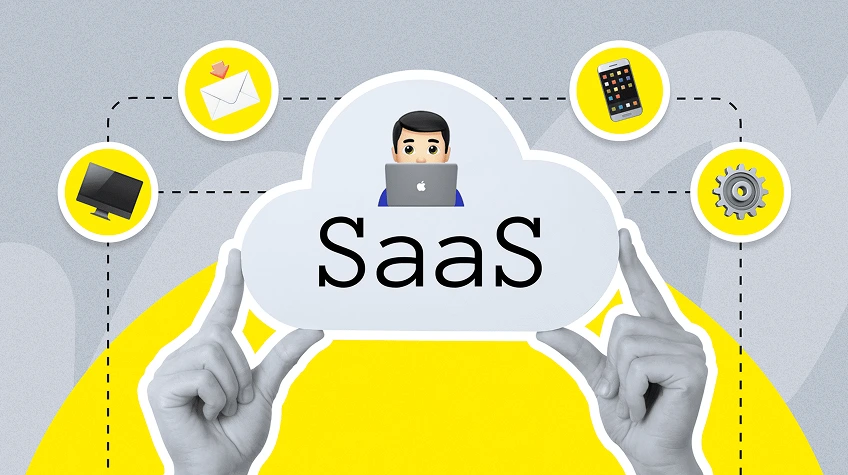
SaaS (Software as a Service) is an innovation that involves moving away from ownership and opting to rent your software instead. Instead of paying a fee to purchase a license, under which you would become the owner of the code, a SaaS-based company makes money using a model of monthly, quarterly, or yearly subscriptions. The subscription-based model of making money is truly revolutionary, and all because it ensures that the interests of the SaaS company and its clients align. The income of a SaaS company depends entirely on the value it provides to its customers.
This model provides various advantages to vendors, among which one can mention recurring revenues, low cost of delivery due to cloud services, as well as no need to have clients install anything. In addition to that, due to its cloud architecture, SaaS allows scaling without making any changes to the source code of the product, thus allowing serving both individuals and enterprises with the same solution, as well as easy access from any internet-capable device.
For customers, using SaaS solutions means getting rid of most of the inconveniences of traditional software, such as complicated installations, a non-uniform update schedule, and difficult server maintenance. It is all the responsibility of SaaS providers.
Clearly, the market appreciates the benefits of SaaS, for example, because Gartner expects software to emerge as the category of IT spending growing at the rate of 14.7 percent year on year in 2026.
In today’s world of ever-increasing artificial intelligence, it is not surprising at all that close to 100 percent of SaaS vendors are now incorporating artificial intelligence into their SaaS applications.
The SaaS Product Development Process
There are many stages in the development of an effective SaaS product.
➢ Research & Idea Validation.
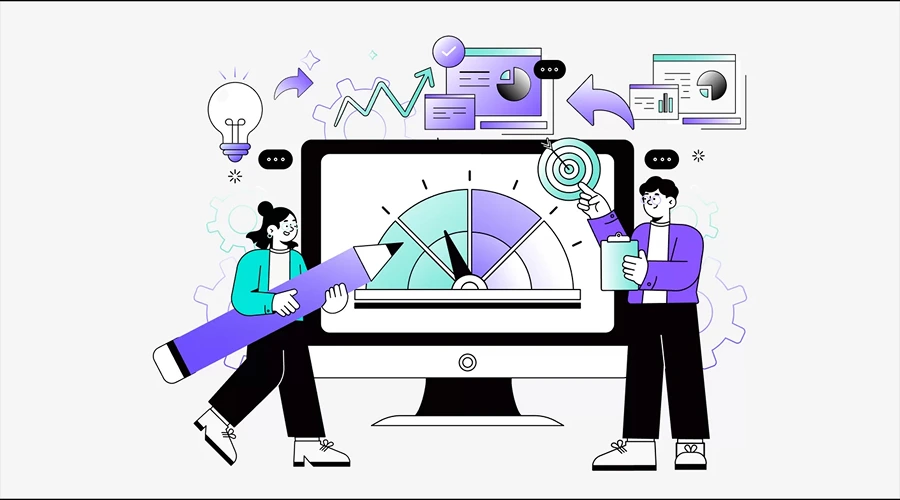
The most critical mistake one can make while developing a SaaS product is to miss out on validating it, which is also referred to as “skipping the line”. According to studies, 42% of failures in startups happen due to the absence of market demand. The most important part of validation is to understand whether there is an answer to this fundamental question: “Will they use it?”
Ask yourself: “Is this a legitimate problem that my potential users would be ready to spend money solving?
What is the smallest possible result I could achieve to show the product’s value?
Who are the people who are going to use this product and why?” At this stage, it is essential to find out whether the problem is worth solving and whether the suggested solution is relevant to the existing demand in the market.
Methods such as user interviews and surveys give clear data, and a proper landing page helps to determine the level of interest in the product.
Speaking with 20 people who have experienced this problem before writing a line of code can be extremely beneficial for you. It is vital to create a map of the whole journey of the customer first.
➢ Project Discovery
This phase is further based on validation to carry out an extensive analysis of user needs, market conditions, and technical feasibility. Identify user personas, define use cases, and make sure all stakeholders have their eyes set on the same objectives.
This will eliminate any surprises and avoid costly redesigns in the future.
The Software Requirement Specification (SRS) carefully captures the desired behavior of your software application in detail, including functional and non-functional requirements. The cost involved in correcting errors after implementation of the software can be a whopping 100 times more expensive than discovering them in the design phase.
➢ MVP & Product Strategy
Minimum viable product (MVP) isn’t your idea in the small form but rather the tiniest possible product that you can create, which will offer the benefit to your target audience and which will help you to gather valuable information.
Find out what feature your target audience was ready to buy immediately, according to your research and that feature is your MVP.
Limit your MVP scope to one customer group, one use case, and one workflow. The budget for creating an MVP will vary from $5,000 to $30,000 for an individual and from $150,000 and above for a funded startup. Time needed for the creation of MVP varies between two and six months; time required for the product launch is six to twelve months.
Product strategy is the way to your success. Thousands of products compete for customers’ money in the SaaS market. Find out your competitive advantage: be it better user experience, better pricing, better integrations, or focus on a niche market ignored by others.
➢ UI/UX Design & Architecture
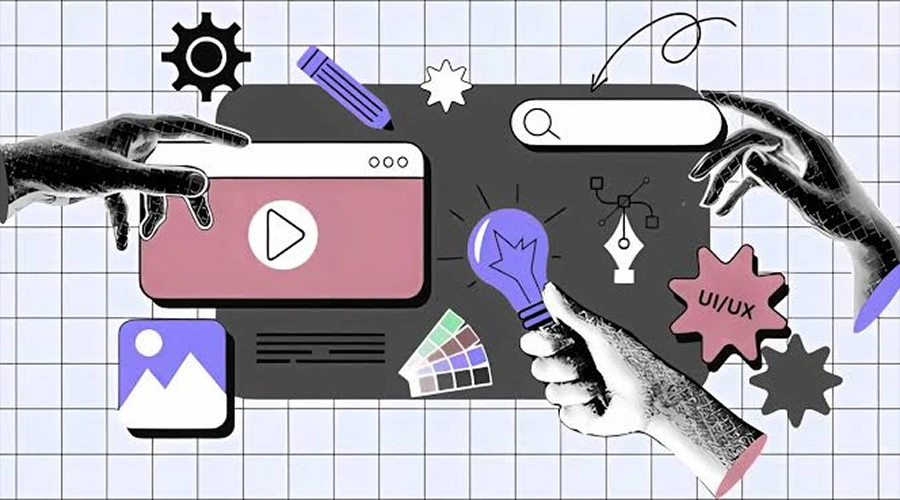
Great design goes way beyond just being aesthetically pleasing. It is all about providing the most comfortable, intuitive, and effective user experience. Return on investment for good designs is considerable; each dollar invested into UX can yield a $100 return, while 88 percent of online customers will be less likely to come back to the website due to bad UX. UI (User Interface) design deals with the visual components of your application, such as colors, fonts, buttons, and layout. UX (User Experience) design involves the overall user experience.
It is extremely important to make an interactive prototype before writing a single line of code. This will help you get feedback from the actual users and stakeholders and test the user flow without investing much money into development. You need to build the scalable technical architecture right away. Choose the technology stack that is proven to work and has enough resources: React/Next.js can be used for frontend, Node.js/Python for backend, PostgreSQL for database, and Stripe for payment processing.
➢ Development & Testing
Development involves bringing the designs to reality through coding. It should involve members, including project managers, business analysts, UI/UX designers, backend developers, and frontend developers.
Adopt an agile development approach to develop sprints and ensure you provide working software consistently. An agile approach helps in providing continuous guidance to the project, allowing for timely corrections and avoiding surprises towards the end. Never make testing an afterthought; unit tests are performed automatically in order to test the stability of the system, integration tests check the interconnection of various parts, while user acceptance tests ensure the product complies with business requirements. Security should be inherent in the development process; this includes elements like multi-factor authentication, encryption, and security audits. Enterprise sales depend on trust, and thus, security is very crucial in securing deals.
➢ Launch & Continuous Improvement
Launching is not the finish line; it marks the start of your learning curve. Launch early and learn fast. Iterate on the basis of user data and behavior. Start off by focusing your efforts in a single channel at first that could be an email campaign, Product Hunt launch, or even reaching out to early adopters directly and then move to more channels later. Gather data from day one in order to inform your decision-making process, instead of having to gather and synthesize the data after the fact.
Once you have launched, your main focus should be on how the user onboarding process feels for the user; those first five minutes with your product are crucial for retention.
Make it easier for new users to see the value in what you do right away and make continuous improvements through continuous feedback. Continuous improvement means continuous delivery of seamless updates that allow you to stay up-to-date. Customer retention is key to revenue generation.
Also Read: 8 Smart Ideas To Scale Your SaaS Business
Key Features of a Successful SaaS Product
Successful SaaS products share several common traits. Subscription and recurring revenue are the bedrock of the business model, requiring pricing that clearly aligns with measurable value delivered.
The advantage of using multi-tenancy is that one instance of the application serves several customers, and the data stays isolated from each other. In addition, costs to scale up the infrastructure increase more slowly compared to revenues. Scalability means that the product is ready to accommodate an ever-growing number of users and bigger loads of data without any impact on its performance, and can reach thousands or even millions of users. Automatic updates help users to stay updated with the newest version of the product without any additional effort needed to perform this update manually.
Security and compliance are not only about multi-factor authentication, single sign-on, encryption, and audits, but also the major components of the growth strategy of the company. An intuitive user experience, which consists of simple onboarding and responsive design, keeps users engaged and satisfied. Integration with the tools used by customers becomes an important part of the adoption strategy of the product.
Common Challenges in SaaS Development
Adding unnecessary features without validation, whereby developers end up spending weeks creating functions that go unused, can be mitigated through testing of features among users.
Wrong choice of technology. Adopting technologies whose viability and reliability are yet to be tested adds additional challenges when creating software solutions. Use stable technology that’s proven. Don’t waste your time fixing bugs in the middle of the night.
Architecture neglect. Inadequate investment in the overall architecture creates performance problems, security issues, and slows down feature development since the solutions have to be integrated into the overall solution ecosystem.
Inconsistency between business and engineering teams. Lack of coordination between business and engineering teams can complicate the process of developing features. This challenge is overcome by creating cross-functional teams.
Developing for the peripheral market. One of the most common mistakes among software developers is to build features for peripheral markets while ignoring core market segments.
Performance issues. Features fail to ship on schedule. Developers are always firefighting. The support team is complaining about bugs.
Conclusion
Building a SaaS product is a structured journey from problem validation to continuous improvement. Start by confirming real demand 42 percent of startups fail because no one needs what they built. Define an MVP that delivers one outcome exceptionally well. Design for intuitive user experience and scalable architecture. Develop with security baked in from day one. Launch on one channel and iterate based on real user behavior.
The market is expanding. The opportunity is real. But the discipline to validate before building is what separates success from expensive guesswork. The teams that follow this process build products that last. The ones that skip steps build products that fail.