Running applications on multiple servers reliably was a manual, error prone way of doing things. Kubernetes changed that, automating how software is deployed, scaled and managed, and it now sits at the heart of how modern businesses build and run digital products.
What that means to leaders who are not a technical cliche club card holder is simple. Kubernetes reduces downtime, speeds delivery, and reduces the engineering toil.
Why Businesses Are Rapidly Adopting Kubernetes
The reason businesses are embracing Kubernetes at a rapid pace is that applications need to scale faster and fail less. As more workloads are taken to the cloud, there is less appetite to buy a whole company’s worth of engineers to manage it.
Kubernetes removes the need for manual toil through DevOps automation, allowing teams to automate repetitive infrastructure and deployment tasks.
Key Business Benefits from Using Kubernetes
Image Source Folio3 Cloud Services
Kubernetes enables a number of benefits beyond just tech good stuff. These benefits have a real impact on your bottom line, customer experience, and competitiveness.
➤ Demand based scaling
With Kubernetes, cloud-native businesses can scale their application instances up or down automatically based on real time traffic. In other words, you only pay for the compute resources you need, not the number of instances you have provisioned for peak loads which rarely occur.
➤ Higher availability
If you have a bad container running on a bad node, Kubernetes will immediately replace it. That level of automatic self healing dramatically reduces your applications’ downtime and keeps them available when you need them the most. After all, it can be worth your business to lose customers due to mere minutes of inaccessibility.
➤ Faster iterations
With Kubernetes, you can perform rolling updates and rollbacks that support the development of your application. That means you can push this feature or that bugfix to your application without pulling the entire thing down, shrinking the cycle time between a development release and production-facing production. You’ll get to market faster than with older, slower software deployment models.
➤ Lower costs
Kubernetes’ intelligent cluster management reduces wasted compute capacity by optimally packing workloads on infrastructure. In many cases, that leads to lower infrastructure costs by optimizing compute resources – especially when you are running your workloads on a cloud provider that offers specialized storage and compute resources.
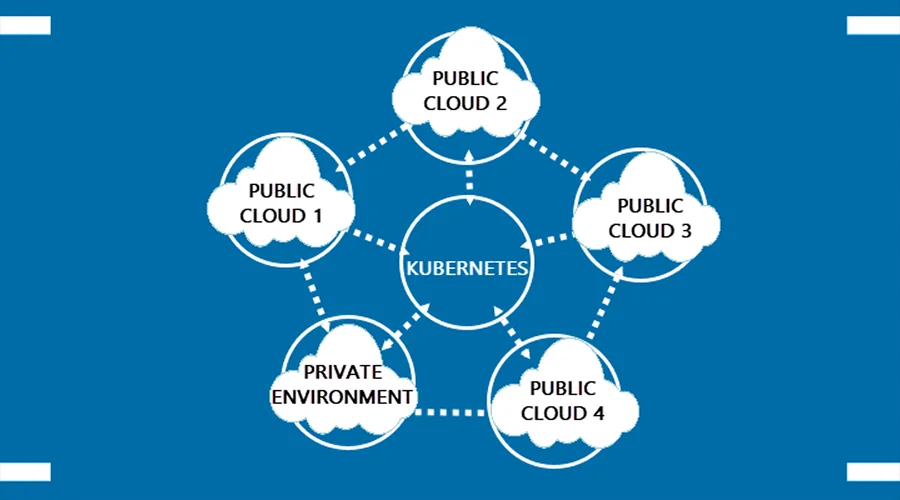
➤ Portability between clouds
Image Source phoenixNAP
Because Kubernetes is an abstraction layer, applications move about the underlying infrastructure whether it’s on premises data centers, private clouds, or public cloud providers. This allows businesses to negotiate more advantageously with their cloud providers and avoid vendor lock in.
➤ Stronger security posture
Kubernetes already has built in features such as role based access control, network policies and secrets management. This provides a consistent pattern for security across all the applications, rather than having an ad hoc approach to each service.
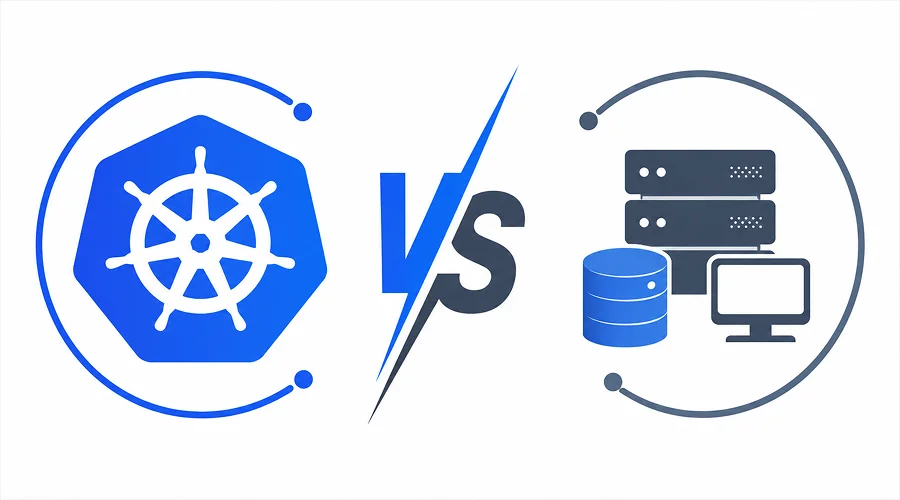
If you’re a systems administrator and you know any way of organisation I’m sure that you’ve spent a lot of time provisioning a server for an application and stuffing in a copy of that application on that particular machine. This is fine, but there are blind spots for this. It doesn’t scale easily, resource utilisation can be very inefficient, and you can spend a lot of time in the event of a failure.
Kubernetes is a different beast. Instead of a server being dedicated to an application, all compute resources are part of a shared pool that are allocated dynamically. The applications run in containers that can be restarted or scaled through any machine in the pool.
In the conventional model, if you are faced with a traffic spike, you typically would have to get an engineer to spin up a new server which can be a very time consuming process. With Kubernetes, new sufficient resources will be located and the application will be moved there automatically in a matter of seconds.
That doesn’t mean conventional infrastructure doesn’t have its uses. For basic, low traffic applications with predictable behaviour, it might be simpler and cheaper. As such, you don’t need to adopt Kubernetes if your application doesn’t deserve it.
Is Kubernetes Right for Your Business?
Not every business needs Kubernetes, and adopting it without a clear reason can create unnecessary complexity. The decision should depend on specific factors unique to each organization.
Businesses running multiple microservices, experiencing variable traffic patterns, or planning aggressive growth typically benefit the most. Kubernetes shines when applications need to scale frequently or when downtime carries a high cost.
On the other hand, a small business running a single, stable application with predictable traffic may find Kubernetes to be more infrastructure than they actually need. In these cases, simpler hosting solutions often deliver similar results with far less operational overhead.
The right question to ask is not whether Kubernetes is powerful, but whether its capabilities match the actual demands of your applications and your team’s technical capacity to manage it.
Common Challenges in Kubernetes Adoption
Despite its benefits, Kubernetes adoption is not without obstacles. Businesses considering the switch should be aware of the following challenges.
Steep learning curve: Kubernetes has a complex architecture with many moving parts, requiring dedicated training or hiring experienced engineers.
Operational overhead: Running Kubernetes clusters requires ongoing maintenance, monitoring, and updates, which can strain smaller teams.
Cost misconceptions: While Kubernetes can lower costs at scale, poorly managed clusters can actually increase spending if resources are not optimized properly.
Security complexity: The flexibility Kubernetes offers also introduces new security considerations that require careful configuration and ongoing attention.
Many of these challenges can be mitigated by using managed Kubernetes services offered by major cloud providers, which handle much of the underlying complexity on the business’s behalf.
Conclusion
Kubernetes has become a foundational technology for businesses that need reliable, scalable, and efficient infrastructure. Its ability to automate deployment, scaling, and recovery makes it a compelling choice for growing organizations, though it is not a universal solution for every business. Understanding both its benefits and its challenges is the first step toward making an informed decision about whether Kubernetes belongs in your technology stack.