Almost every screen you touch has machine learning operating in the background. Only 38% of Americans are aware that nine out of 10 people utilize artificial intelligence on their phones, according to a 2026 study. Read more to find real-world examples of the technology.
You use your face to unlock your phone, browse through movies that have been specially chosen for you, and wake up to a carefully curated news stream. Invisible and automated, machine learning powers each of these ordinary occurrences.
How Machine Learning Powers Everyday Life
➢Personalized Recommendations on Streaming Platforms
With recommendations that seem carefully chosen, Netflix, YouTube, and Spotify keep you captivated on the screen. A hybrid engine that combines content-based and collaborative filtering is the secret. Collaborative filtering finds trends among millions of users. For example, if several viewers of “Stranger Things” also watched “The Crown,” the algorithm logs the connection.
In order to locate related titles, content-based filtering examines the genres, performers, and directors of the shows you have already viewed, as well as your watch history. By 2025, these algorithms began to further improve recommendations by adding contextual elements such as location, time of day, and even the weather. Alpamayo models from Amazon Prime Video can even reason through uncommon situations, such as a mattress on a highway, by dissecting issues step-by-step and then choosing the safest course of action.
➢Spam Filters in Your Email
Image Source WeCloudData
Your inbox is kept tidy bymachine learningclassifiers that process billions of messages each day. Algorithms such as Naïve Bayes, Support Vector Machines, and Long Short-Term Memory networks are used by contemporary systems to examine transmitting behavior, metadata, and word patterns. In the past, spam filters relied on static criteria such as “block sender X.”
Sophisticated models like BERT capture the kind of method that makes a fake “invoice” damaging. Its suppleness is its real strength. In order to stay ahead of spammers who change their tactics, the models automatically adapt. With a total accuracy of over 99%, these filters have attained remarkable precision.
➢Smart Assistants (Alexa, Siri, Google Assistant)
Voice-activated clocks are becoming proactive digital companions. Adaptive routines, such as lowering the lights as you settle in for a movie, are now handled by Siri and Alexa. The technological stack enabling this evolution includes natural language processing to comprehend your words, retrieval-augmented generation to obtain relevant data from other sources, and large language models to deliver coherent responses.
Cars can now recognize when a police officer’s hand gesture overrides a red traffic light thanks to General Motors engineers’ application of Vision Language Action models from this field.
➢Fraud Detection in Banking
Image Source BankersHub
Machine learning safeguards every transaction in the enormous dataset that financial institutions have. Millions of transactions are tracked in real time by HDFC Bank’s machine learning algorithms, which discover the average spending habits of each client.
An instant warning is triggered when a high-value transaction is made in an unexpected place. The technology, which combines supervised and unsupervised learning, strikes a compromise between detecting fraud and preventing false positives that might annoy real consumers. In order to track full transaction graphs and identify criminal networks as they emerge, more recent designs integrate transformer-based models with Graph Neural Networks.
➢Language Translation (Google Translate)
Image Source Publishing Perspectives
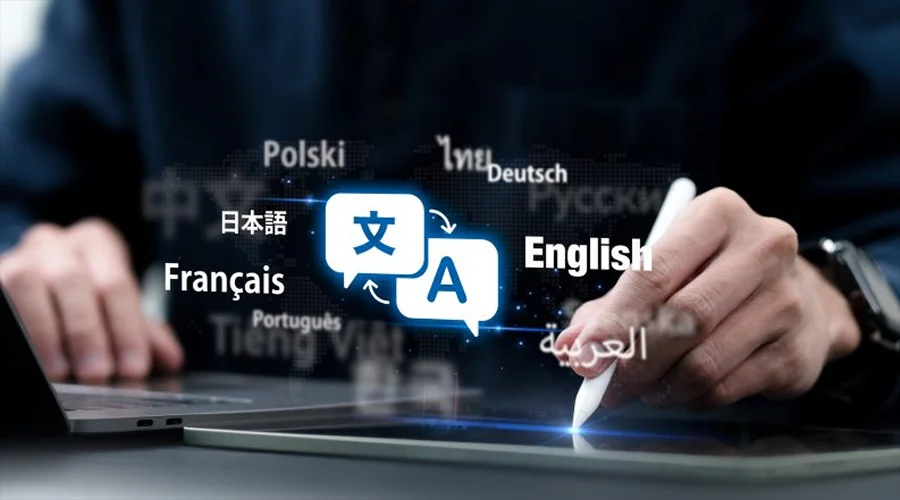
Prior to 2016, Google Translate used statistical machine translation, which often provided odd results by breaking down sentences. After switching to Google Neural Machine Translation, which is based on recurrent neural networks with more than 1,000 nodes per layer, the system was able to translate complete sentences at simultaneously.
These days, a distinct end-to-end model that has been trained on more than 100 million samples is sent to each language pair. The substantial developments in lengthier, more complicated words have made it easier for over 500 million people to communicate globally every day.
➢Social Media Feeds and Content Ranking
Your Twitter timeline, Instagram feed, and TikTok “For You” page are machine learning experiments. By sorting postings based on engagement likelihood rather than recentness, these technologies forecast what material will keep you browsing. To discourage you from getting bored, social media algorithms give priority to innovation and trend discovery, in contrast to streaming platforms that recommend comparable products.
➢Healthcare Diagnostics
Image Source EPT Software
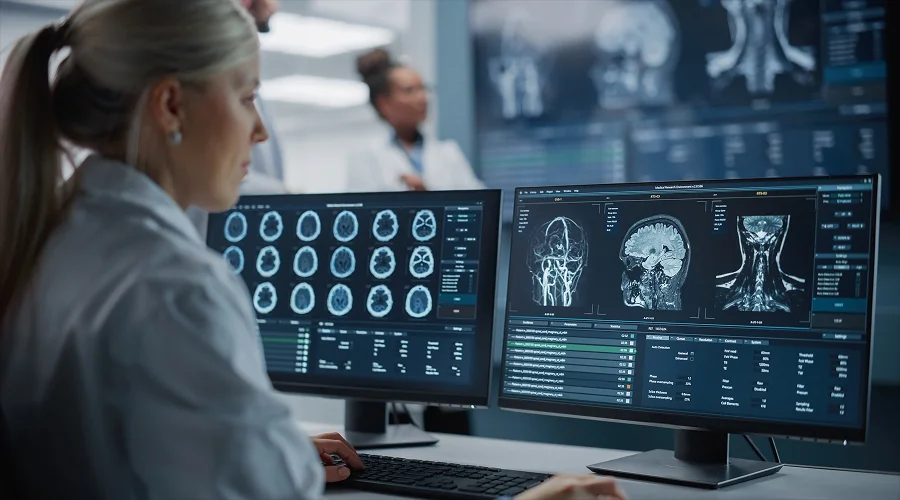
Beginning with 2D X-rays, hospital machine learning has advanced to complex 3D imaging. A Stanford team with NIH backing developed Merlin, an AI tool that can presently predict diagnoses with over 81% accuracy after being trained on over 15,000 CT images. Merlin was able to spot a trend that human radiologists are unable to identify: which healthy people would develop chronic diseases within five years. Since then, UCLA researchers have matched medical expertise in a fraction of the time by matching this performance for MRIs.
➢Self-Driving Cars
Image Source Bernard Marr
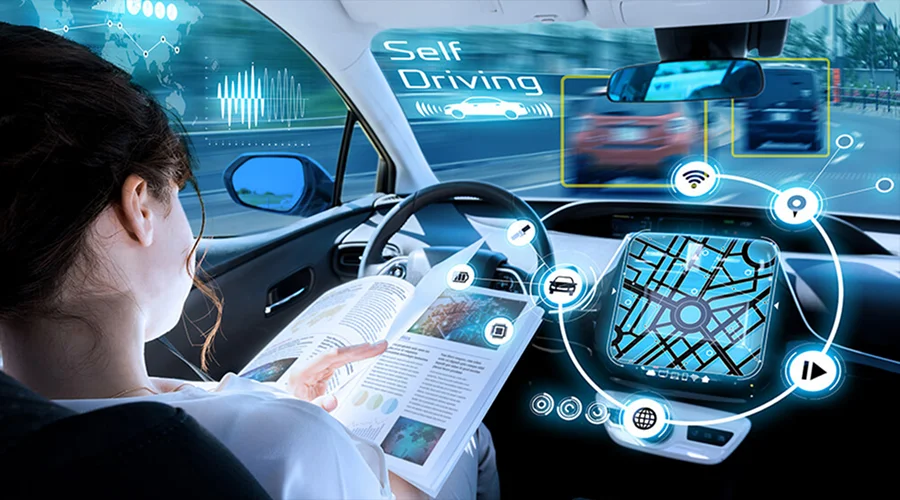
Autonomous vehicles now have human-like thought processes. Nvidia’s 10-billion-parameter Alpamayo model separates complex problems into stages and selects the safest path. To accelerate training, GM employs large-scale simulation, foundation-model-based reasoning, and reinforcement learning. It can function at 50,000 times real-time speed, which is not possible in the actual world.
➢Pricing and Inventory in E-commerce
To rapidly update costs, dynamic pricing algorithms look at inventory levels, demand signals, and competitor prices. In order to keep e-commerce companies operating efficiently, models estimate package dimensions for delivery routing, anticipate hard drive failures in data centers, and address Java resource leaks.
These days, machine learning is not seen in research papers. It resides within your applications, on your street, and in your pocket. In each of these uses, data takes the role of speculation.
Conclusion
Machine learning drives fraud prevention within your bank, route optimization in your map app, and weather notifications on your lock screen. These applications don’t advertise themselves. They simply function.
The adoption figures provide a convincing narrative. Nowadays, 56% of US customers in developed markets utilize an AI model for at least one personal job. Machine learning is used on a daily basis by 34%. Though the tendency is increasing across all age groups, younger people are leading the change.
FAQs
Q: What exactly is machine learning in plain language?
Computers can learn from data and make judgments without explicit instructions thanks to machine learning. Developers feed the system examples rather of creating detailed instructions for every scenario. On its own, the machine recognizes patterns and applies them to novel circumstances.
Q: How is machine learning different from artificial intelligence?
The overarching objective of developing systems that imitate human intellect is artificial intelligence. One particular way to accomplish it is through machine learning. Consider AI as a whole, with machine learning serving as the main driving force behind the majority of contemporary AI applications. While machine learning isn’t used by all AI systems some older systems rely on hardcoded rules nearly every innovation you hear about these days is based on ML.
Q: Do I use machine learning every day without knowing it?
Yes. A 2026 survey found that while nine in ten Americans use AI on their phones, only 38 percent realize it. Weather alerts, spam filtering, facial recognition to unlock your device, route recommendations in Google Maps, fraud detection from your bank all of these run on machine learning. The technology does not announce itself. It just works in the background.
Q: Is machine learning getting more common?
Adoption is climbing fast. Thirty-four percent of people now use AI daily, up from significantly lower numbers just two years ago. Fifty-six percent of US consumers use an AI model for at least one personal task. Younger generations lead the trend, but usage increases across all age groups.