Artificial intelligence is evolving faster than most business roadmaps can keep up with. What felt experimental twelve months ago is now entering production environments at scale. The organisations tracking these shifts early consistently outperform those reacting after trends become mainstream.
Why AI Development Trends Matter for Businesses in 2026
Keeping up with AI trends is no longer optional it’s a business necessity. The rapid pace of AI development in 2026 means that businesses relying on last year’s understanding may already be operating on outdated assumptions. New AI models, deployment approaches, and business applications are emerging every quarter rather than every year.
According to McKinsey’s 2025 State of AI report, 72% of organizations worldwide have adopted AI in at least one business function. As AI adoption accelerates, understanding emerging trends will help businesses prioritize investments, avoid technology dead ends, and build capabilities that deliver long-term value.
Top 10 AI Development Trends Every Business Should Watch
1. Agentic AI Systems
Image Source MIT Sloan
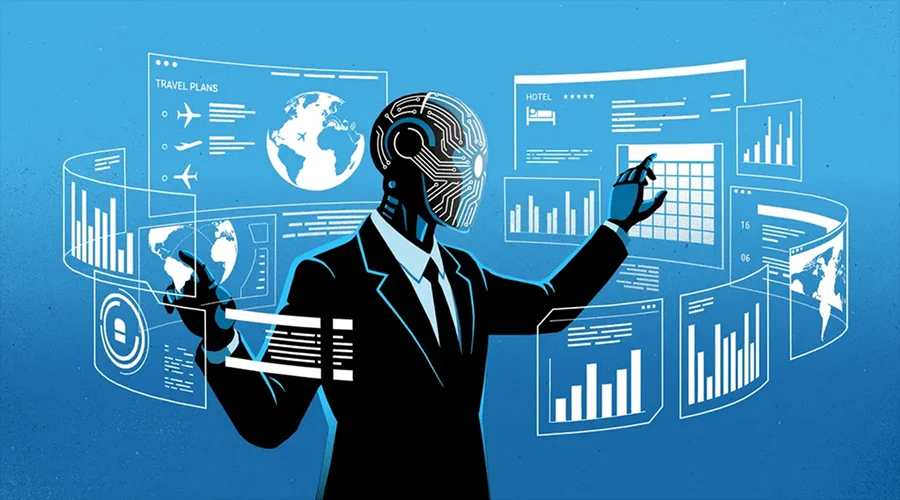
The biggest shift in AI development is moving away from reactive models to agents. Agentic AI refers to systems that autonomously plan, execute and adapt multi step tasks without needing direct human instruction. Rather than answering one question, an AI agent researches a topic, drafts a document, evaluates it against a set of criteria and automatically routes it through an approval workflow.
AutoGen, CrewAI and LangGraph are already available as production ready tools. In 2026, organisations deploying agentic systems are saving a lot of manual effort in coordinating workflows. This explosion is changing the ways entire functions are structured in the coming years.
2. Multimodal AI Models
AI models that are capable of understanding and producing text, images, audio and video all at the same time. GPT-4o, Gemini 1.5 Pro and Claude 3 Opus are all capable of understanding mixed media in one inference call. A customer service application built using a multimodal model can read a complaint together with the image of a product delivering a solution with a single system instead of multiple models each trained on a different set of data.
For businesses, this means less effort on integration and the ability to build more complex, user facing products all on top of a single model.
3. Small Language Models
Image Source InfoWorld
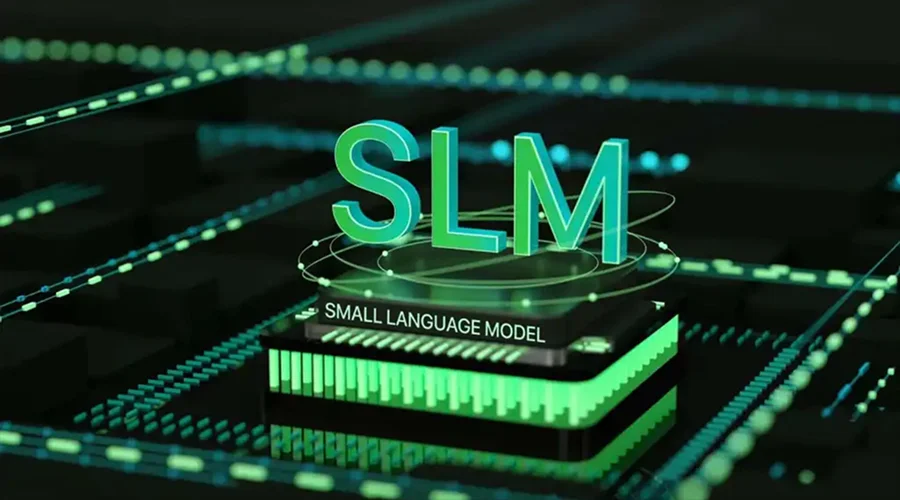
Small language models such as Microsoft’s Phi-3, Meta’s Llama 3 and Google’s Gemma offer frontier or near frontier capability at a fraction of the compute cost. They can run on devices or in edge environments to provide AI where cloud connectivity is unreliable or latency requirements are tough.
Manufacturing, retail and health care businesses that operate from distributed infrastructure are finding small language models more suitable than large, cloud dependent models. Expect strong investments in this space in 2026.
4. Retrieval Augmented Generation
Hallucination is the main barrier to high stakes AI automation adoption in business. Retrieval Augmented Generation, or RAG, is a solution to hallucination. RAG approaches model outputs as answers grounded in up-to-date, verifiable documents retrieved at inference time rather than only from training data. A legal AI assistant with RAG, for instance, can gather up-to-date case law from a legal database before outputting answers. A financial AI tool with RAG might fetch market data before summarying it.
RAG architecture has become the standard approach for enterprise AI deployments where accuracy and traceability are non-negotiable requirements.
5. AI Powered Software Development
Image Source Simplilearncom
AI is going to change how software is written way faster than most engineering leaders expected. GitHub Copilot, Cursor and Devin sit at opposing extremes on the continuum from autocomplete aid to fully autonomous AI agents for code generation. Across a variety of developer productivity research from 2025, we consistently see 30 to 55 percent better task completion speed when engineers use AI coding tools effectively.
The impact of AI development tools is not just on individual productivity but also has the potential to enable compact engineering teams to build products that would have previously required larger headcounts, with huge implications for technology budgets and team composition across any industry.
6. AI Governance and Regulation
The regulatory landscape around AI is becoming much more structured in 2026. The EU AI Act is moving into enforcement phases, the UK has published its AI regulatory roadmap, and India promulgated a governance framework specifically focused on high risk AI applications. Businesses that operate across jurisdictions will need to consider compliance that may involve subscribing to many concurrent regulatory frameworks.
AI governance is no longer optional, its an ethics question. It is now a legal and commercial risk management question. Organisations that design internal AI governance frameworks today are safer than those that potentially have to retrofit compliance into existing deployments in response to external regulatory pressure in the future.
7. Synthetic data Generation
The lack of high quality training data or datasets to be precisely imprecise is still one of the most important bottlenecks to AI development progress. Synthetic data generation uses AI models to create realistic synthetic data from real data which can be used to supplement or replace otherwise hard to obtain data from the real world. For example, synthetic patient data is used to train diagnostic models without the privacy risk involved with real patient data. Financial institutions use synthetic transaction data to train fraud detection models without accessing real customer transaction data.
The gap in quality between real and synthetic data is shrinking rapidly. Companies that have synthetic data capabilities now will be able to develop their AI faster than any company that relies on slow, expensive real world data collection.
8. Edge AI Deployment
Sending data to the cloud is no longer necessary to process AI inference. Applications that are sensitive to latency benefit from running inference locally on devices instead.
AI is now running on smartphones, industrial sensors, autonomous vehicles, and retail point of sale systems to help them operate without round trip communication with the cloud. Apple’s Neural Engine, Qualcomm AI processing units, and NVIDIAedge computing platforms can run sophisticated inference at commercially and technologically realistic cost in 2026.
Companies that are building the product and connected experience need edge AI strategies that cut down on dependence on the cloud, that can deliver highly responsive applications, and that can also meet data privacy requirements that cloud processing makes difficult.
9. AI in Cybersecurity
AI has evolved from being a defensive tool to being an offensive and defensive capability in the cybersecurity realm. Threat actors are employing AI to create more convincing phishing messages, uncover vulnerabilities at scale and evolve attack strategies faster than human security teams can react. AI security systems are responding by performing network behaviour pattern analysis, real-time anomaly detection, and automating incident response.
2026 will see every company with significant digital assets require an AI aware security approach. Classic security tooling based on rules is no longer sufficient against AI empowered attacks.
10. Fine Tuning of Foundation Models
Foundation models have great capabilities, but fine tuning domain specific models invariably wins over generalist models on specialised tasks. Fine tuning uses smaller datasets highly relevant to a specific domain to adapt a pre trained model. A fine tuned customer support model performs better overall than a prompt based general model.
As fine tuning infrastructure becomes more accessible and cost effective, businesses in healthcare, finance, legal, and manufacturing are building proprietary model variants that create genuine competitive differentiation. This trend accelerates significantly throughout 2026.
None of these ten trends stand in isolation. They combine in ways that multiply strategic impact. Agentic systems are more robust when used with RAG architecture. Small language models are more competent when fine tuned on proprietary data. Edge AI is more valuable when paired with multimodal input processing.
Businesses that consider AI strategy in terms of a collection of isolated technology decisions will develop fragmented capabilities that are hard to scale. Those that see how these trends relate to each other can develop integrated AI architectures that mature as each component evolves.
The businesses that realize the most measurable return on investment in AI in 2026 will be the ones that started building internal capabilities in 2024 and 2025. The compounded benefit of early adoption is real and growing. To start later does not mean to start with a more mature technology. It means to start with a greater capability gap to fill.
How Businesses Can Prepare for AI in 2026
Preparation is not about adopting every trend simultaneously. It is about building the right foundations deliberately.
Audit current AI adoption: Identify where AI is already used across your organisation and where significant manual processes could benefit from intelligent automation.
Establish a data strategy: AI capability is fundamentally constrained by data quality and accessibility. Invest in data infrastructure before investing in models.
Build internal AI literacy: Technical teams need hands-on experience with AI tools. Non technical teams need sufficient understanding to identify use cases and evaluate outputs critically.
Prioritise governance early: Implement AI usage policies, output review processes, and compliance monitoring frameworks before scaling deployments.
Start with high impact, lower risk use cases: Internal productivity tools, content generation, and data analysis carry lower risk than customer facing or regulated applications. Build confidence and capability here first.
Engage specialist partners: Most businesses do not need to build every AI capability internally. Identify which capabilities require proprietary development and which are better sourced from specialist providers.
Measure outcomes rigorously: AI investment without clear performance metrics produces unclear returns. Define success criteria before deployment and track them consistently.
Conclusion
The AI development trends shaping 2026 represent a genuine inflection point for businesses across every sector. Agentic systems, multimodal models, edge deployment, and domain specific fine tuning are moving from emerging to essential within compressed timeframes. Businesses that understand these trends, build the right foundations, and invest in measured, strategic adoption will find themselves with compounding advantages over those still evaluating. The time for watching from the sidelines has passed. Informed action is now the only credible response to how fast this landscape is moving.