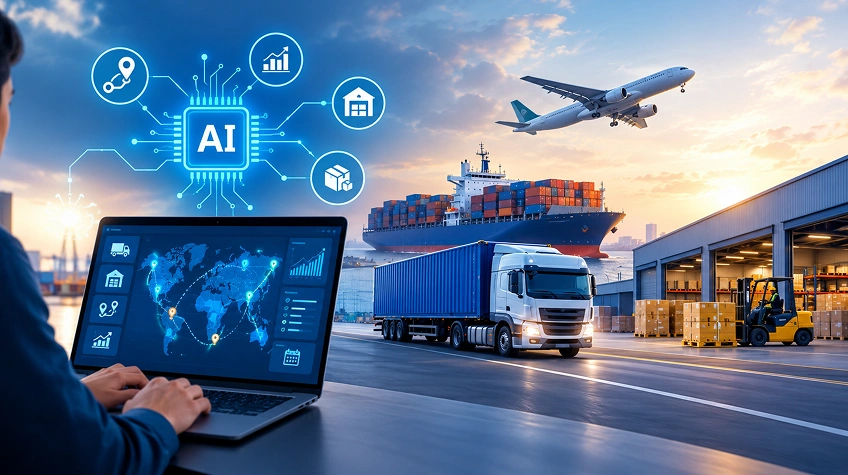
The logistics industry depends on speed, accuracy and good planning. From moving raw materials to factories to delivering products to customers, every step needs to run smoothly and on time. A small delay can increase costs, affect customers and create problems across the supply chain. Traditional logistics software often fails to handle unexpected changes. That’s when Artificial Intelligence (AI) comes into picture. AI helps businesses to predict delays, find better delivery routes, manage inventory and improve warehouse operations. This makes logistics more efficient and flexible. Read this post to understand how AI is revolutionizing logistics software development. Let’s dive in…
AI Is Changing the Way Logistics Software Works
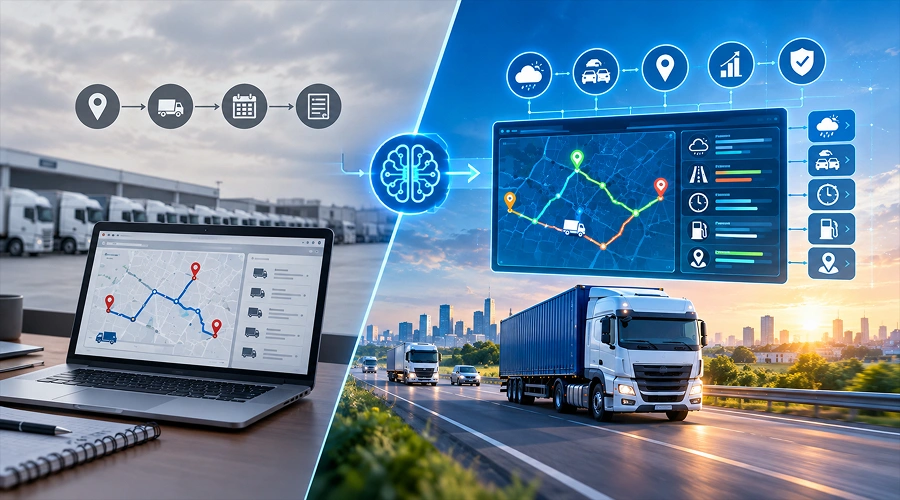
Traditional logistics software is designed to follow fixed instructions programmed into the system. For example, a transportation management system may assign deliveries based on set routes, vehicle availability or delivery schedules. AI-based software works differently. It can look at several factors before suggesting the best option. These may include traffic conditions, weather, past delivery records, vehicle details and customer locations. This allows the system to respond to changing situations instead of simply following the same rules every time. As a result, businesses can make quicker decisions, avoid unnecessary delays and improve the overall delivery process.
How AI-Powered Software Help Logistic Companies
Here is how AI-powered software makes a difference in logistic businesses. Take a look…
➣ Smarter Route Planning
Route planning is one of the most important areas of logistics. AI makes it faster, smarter and more efficient. A delivery route that looks efficient in the morning may not be the right choice during peak hours because of traffic, road closures, accidents or bad weather. Traditional systems cannot handle these changes. AI significantly improves route planning by considering traffic, road closures, weather, delivery deadlines, vehicle capacity and fuel use. It can quickly suggest alternative routes or change delivery orders depending on the conditions. This helps businesses save time and fuel while making deliveries more reliable.
➣ Accurate Demand Forecasting
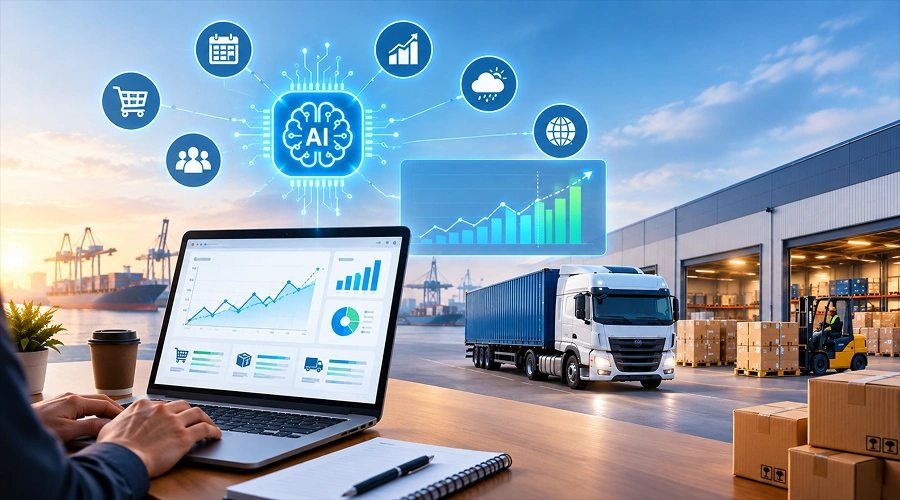
Knowing how much stock customers are likely to need is very important for logistics companies. Keeping too much inventory or too little can be problematic for them. That’s when AI plays a crucial role. It studies past sales, seasonal trends, customer behaviour, market conditions and other useful information. Based on that it accurately estimates future demand. This significantly reduces chances of stock shortages while also preventing unnecessary storage costs.
➣ Better Warehouse Management
Traditional software systems are not capable of managing warehouses like they should be managed. Moreover, managing thousands of products manually is again taxing. AI-powered software comes in handy here. AI-powered software takes warehouse management to the next level. It not only tracks stock, but also suggests where products should be stored and identifies items that may soon run out. Besides that, it can also work with robots and automated machines to speed up picking, sorting and packing while allowing employees to focus on more important tasks.
➣ Predicting Delivery Delays
Delayed deliveries can lead to unhappy customers. Modern customers expect accurate delivery information. Simply saying that an order is “on the way” does not help much. AI solves this issue very smartly. It studies different factors that may affect a shipment and estimate whether a delivery is likely to arrive late. These factors often include traffic, weather, driver schedules, warehouse delays and previous delivery patterns. If the system identifies a possible delay, logistics teams can take action earlier and customers can also be notified on time. This improves communication and gives businesses a better chance of handling problems before they affect customer satisfaction.
➣ Predictive Vehicle Maintenance
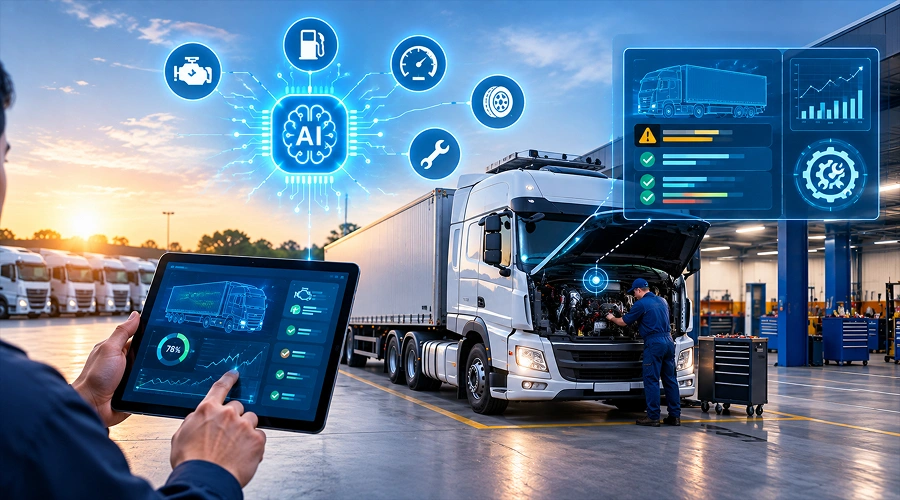
Vehicle breakdowns can be costly for logistics companies. A truck breaking down during delivery can cause unexpected delays, higher repair costs and problems with other routes. AI can help companies spot possible vehicle problems early. This allows businesses to fix them before a breakdown occurs. AI studies information such as mileage, engine performance, fuel consumption and maintenance records, and based on that it can identify signs that a vehicle may need attention. The same information can be used by the maintenance team. They can then inspect the vehicle before a serious breakdown occurs. This significantly improves vehicle availability and reduces unexpected maintenance expenses.
➣ Automating Repetitive Tasks
Logistics involves a huge number of routine tasks, such as updating shipment records, checking order information, creating documents, responding to common customer questions, tracking deliveries and so on. Handling these tasks manually can be time-consuming. AI can automate many of these repetitive tasks. For instance, an AI-powered system can read shipping documents and enter the information into the right software. AI chatbots can answer common questions about order status, estimated delivery times and shipping policies. This level of automation lets employees to spend less time on repetitive tasks and focus on more complex issues.
➣ Improving Customer Experience
AI comes in handy when it comes to improving customer experience. AI-powered systems keep customers updated about their deliveries. It helps businesses provide more accurate updates and faster responses. Moreover, AI-powered customer service systems can answer common questions at any time. If a problem is more difficult, they can pass it to a human employee with the necessary information. This saves time and allows customer service teams to focus on more complex issues.
AI Is Changing Logistics Software Development
AI is not just simply added to existing logistics software. It, in fact, transforms the way logistics software is developed. Development teams can use AI tools for coding, testing, documentation and finding potential issues. AI tools reduce repetitive work and allow developers to focus on core areas, such as system design, security and business needs.
Besides that, AI also helps developers test software in different situations. For example, checking how a logistics platform handles a sudden rise in orders, delivery delays or changes in vehicle availability. This helps identify problems before the software is used in real-world operations.
All in all, AI helps software development teams build more reliable applications. However, AI cannot replace experienced developers. Logistics software handles important business tasks and sensitive information, so human experts are still needed to make key technical and business decisions.
Challenges of Using AI in Logistics
AI offers numerous benefits, but there are challenges too, such as:
- Data Quality: AI systems rely on good-quality information to produce useful results. If the data is incomplete, outdated or incorrect, the system may make poor recommendations.
- Data Security: Logistics software may store customer details, shipment information, business records and financial data. Companies need strong security to keep this information safe.
- Cost of Implementation: Implementing AI into existing systems comes with a huge cost. Smaller businesses may find it difficult to invest in advanced AI systems to streamline their operations.
- Employee Training: Workers should be trained to understand how new systems work and when they should rely on AI recommendations or human judgement. Without training it can become a huge chaos.
The Bottom Line
So, this is how Artificial Intelligence is changing logistics software development. It takes logistics software development to a new level. AI helps developers create logistic applications to handle modern business problems. It helps businesses with smarter routes, improved inventory management, better warehouse operations, predictive maintenance and faster customer support. For logistics companies, AI is not just about automation. It helps them understand large amounts of data and use it to make better decisions.
Also Read: Top 10 Future Trends in Supply Chain and Logistics