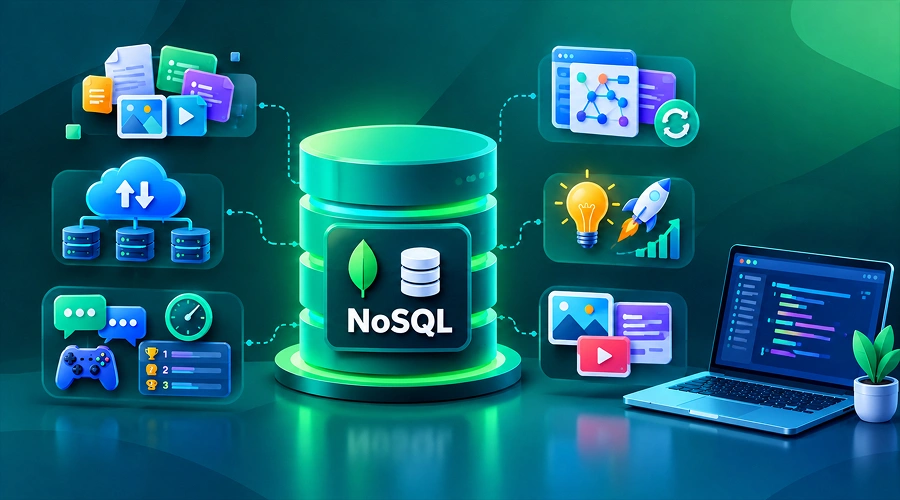
Selecting a database is arguably the most important decision when developing an application. Do it correctly, and your app will be able to scale well. Do it wrong, and you will be battling your database for years to come.
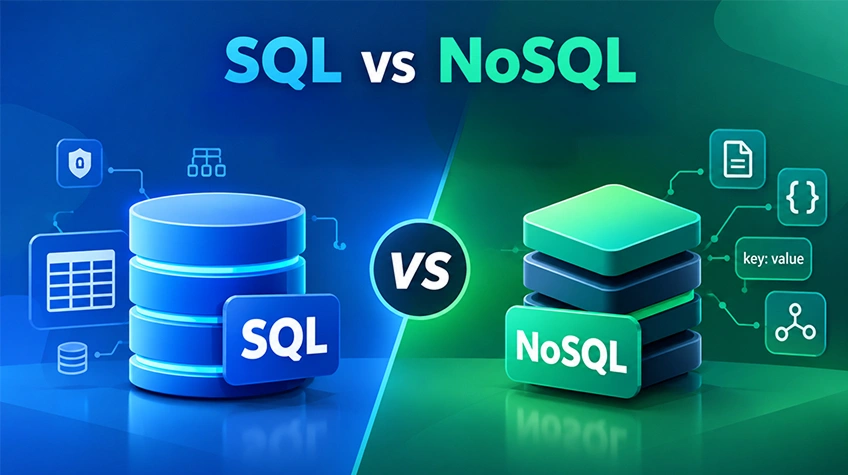
Both SQL and NoSQL databases have rightfully found their place in modern software development by solving specific issues excellently. Here you can find all information about how these databases are different from each other, what advantages they have, and what tasks they should be used for.
What Is a SQL Database
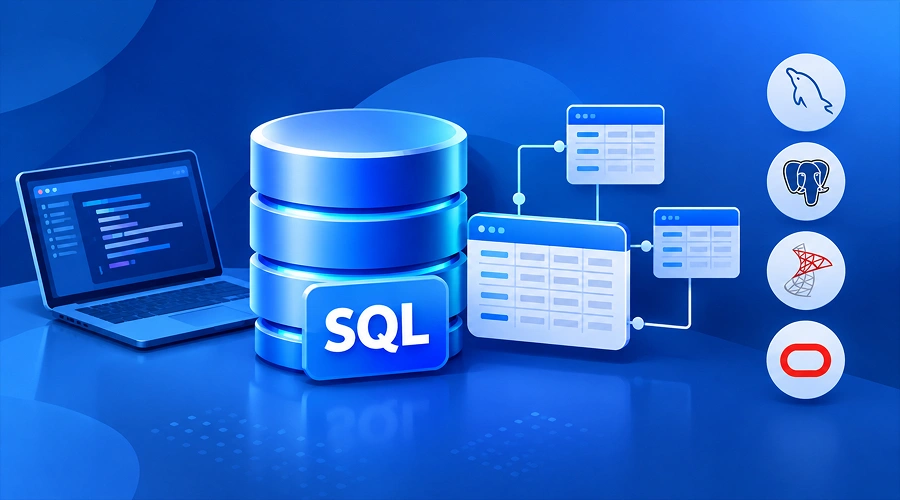
A SQL database, or a relational database, stores data in tables consisting of rows and columns. Tables in a SQL database have a specific schema, which means that the format of the data is established in advance.
Examples of widely used SQL databases are MySQL, PostgreSQL, Microsoft SQL Server, and Oracle Database. They all use SQL, Structured Query Language.
Core characteristics of SQL databases:
Data organized into tables with established relationships among them.
Schemas that ensure the data has strict adherence to certain data type and structure.
Transactions follow ACID properties of being Atomic, Consistent, Isolated, and Durable.
Join queries that facilitate complex querying using more than one table.
It is because of this structure that SQL databases are highly suitable for ensuring integrity of the data. If you have an application where you are dealing with money, tracking inventory, or anything else where accuracy is critical, this feature will be of great help to you.
The downside here is that of flexibility. Modifying the schema once your application goes live might take quite a bit of time and careful planning for large sets of data.
SQL databases typically run on one powerful computer or a small cluster of such computers.
What Is a NoSQL Database
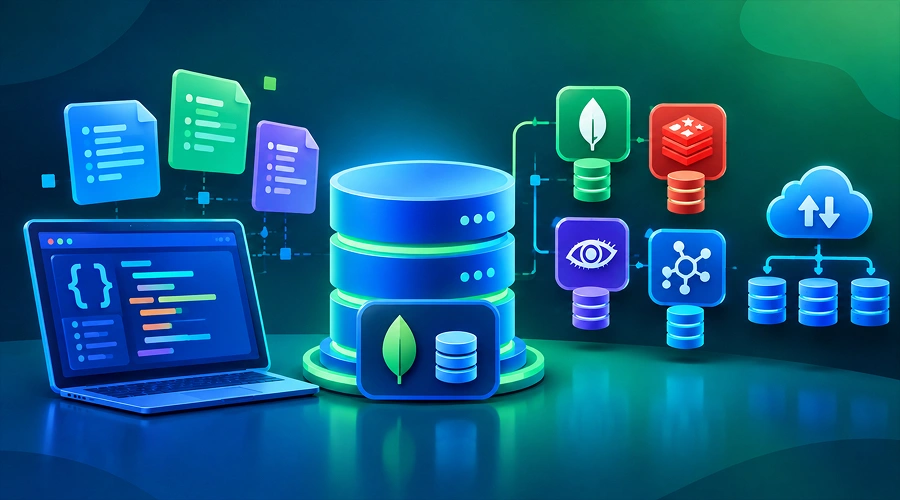
NoSQL databases are built using a totally different design methodology. Rather than confining data to structured tables, they give room for flexible structure evolution based on your application needs.
Initially, NoSQL stood for “non SQL,” but the common interpretation today is “not only SQL,” considering how most NoSQL systems offer some form of query support.
Examples of NoSQL databases include:
MongoDB – which stores data in documents as JSON objects.
Redis – which uses a key-value pair to enable quick lookup of information.
Cassandra – which is built for massive write-heavy workloads.
Neo4j – which is a graph database.
Most NoSQL databases compromise some degree of data consistency in favor of speed and horizontal scalability. The reason is that most NoSQL databases are suitable for applications with unknown or evolving data structure requirements.
Examples of applications that use NoSQL databases include social media, content management, and real-time analytics. These applications need to work with high-volume heterogeneous data sets.
The price to pay here is the lack of a well-defined schema that can be used to enforce data integrity.
Key Differences between SQL and NoSQL Databases
This section will highlight key differences between SQL and NoSQL in order to help you choose one of these depending on your needs.
➦ Structure of data
While the SQL database has to be structured using schema at the very beginning, NoSQL database provides an ability to have dynamically structured databases, which are schema-less.
➦ Approach to scalability
Typically, SQL databases are scaled vertically, which means that you have to increase the hardware capacity of your server. In case of NoSQL databases, there is a possibility to scale horizontally, i.e. to distribute your database among several servers.
➦ Query language
SQL databases have standardized query language, while NoSQL databases can have their own query languages.
➦ Consistency
Strong consistency in terms of ACID is achieved by SQL databases, whereas many NoSQL databases eventually provide consistency.
➦ Data relationships
Relationships between tables in SQL databases are handled easily using joins. NoSQL databases have to be built in such a way that you avoid using joins.
When to Choose a SQL Database
Use of SQL Databases
There are certain conditions in which you should use SQL databases for your application.
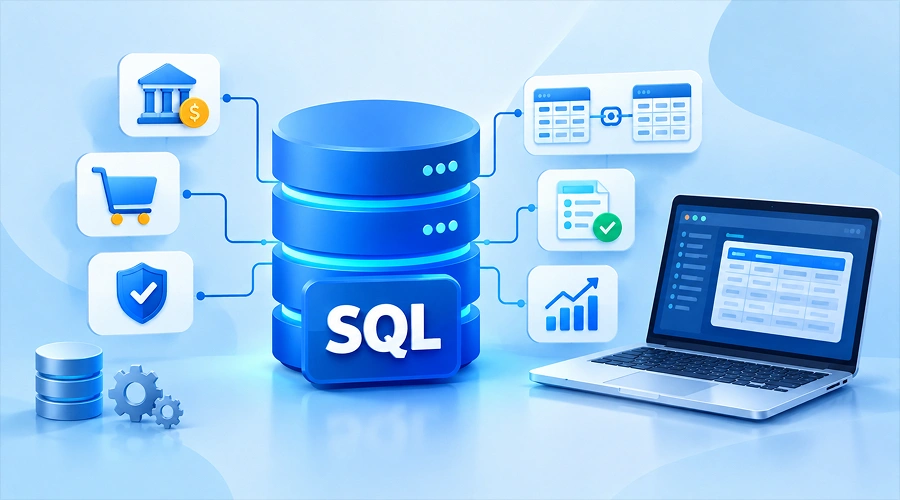
Use cases include:
Applications that require complex transaction handling, such as banking and ecommerce.
Data relationships are essential to the way that the application works.
Where strict validation and integrity of data is important.
Applications that utilize reporting that relies upon complex queries and joins.
If your application has structured data that doesn’t change frequently in its structure, such as customers, orders or employees then SQL is still a robust and proven option.
Additionally, there are decades of tools, documentation and community around established SQL databases.
When to Choose a NoSQL Database
On the other hand, there are certain situations where NoSQL databases are a better option for your application.
Use cases include:
Large amounts of unstructured/semi structured data
Horizontal scaling of application
Applications that operate in real time, such as chat, leaderboards in games, or analytics
Projects where the data model is likely to evolve frequently
Startups building products with rapidly changing requirements often favor NoSQL because schema changes do not require the same rigid migration process.
Content heavy platforms, such as blogs or media applications, also benefit from the flexibility NoSQL offers when handling varied content types within a single collection.
Performance is highly dependent upon your particular use case rather than one database being always faster than another.
SQL databases are extremely fast for read-heavy applications where there are complicated queries run against interconnected tables. SQL databases indexes and query optimization capabilities have evolved throughout decades of use.
NoSQL databases usually work better than SQL databases in write-heavy situations, especially where no complex relationships are required between pieces of data. Horizontal scalability feature makes them more flexible in case of traffic spikes.
Criteria you should consider in making your choice:
Amount of expected data and its future growth
Ratio of reads and writes in your application
Requirement of real-time data processing
Budget for your infrastructure and scaling
A lot of modern apps use different databases at once in what is called polyglot persistence approach.
For instance, an online store can use SQL database for processing orders and payment operations and NoSQL for storing product catalogues or changing session data.
Common Misconceptions to Avoid
There are a few popular myths associated with SQL and NoSQL databases that can result in incorrect decisions.
Myth: NoSQL is faster than SQL
The performance of a database depends on many factors including the nature of queries and the configuration rather than the database type only.
Myth: SQL databases can’t be scaled
Contemporary SQL databases provide such features as sharding and replication that help them scale much further than most people expect.
Myth: NoSQL databases have absolutely no structure
Although NoSQL databases allow for more flexibility in terms of data structure, they still require some level of planned structure.
Myth: One should pick either of them once and for good
Both types of databases can be used together in order to leverage their strengths.
A Quick Note on NewSQL
It is necessary to mention one more type of database that has emerged relatively recently – NewSQL. Systems like CockroachDB and Google Spanner attempt to combine the best aspects of NoSQL and SQL databases.
Why NewSQL matters:
It fits the applications that require high consistency among globally distributed servers
It eliminates the trade-off between structure and scalability
It represents a less popular and smaller type compared to other existing SQL and NoSQL
For most teams starting out, sticking with well established SQL or NoSQL options remains the safer, more practical route. NewSQL becomes relevant mainly for large scale, globally distributed systems with demanding consistency requirements.
Making the Right Choice for Your Application
A decision between SQL and NoSQL databases should be based on your needs.
Consider the following:
Do you have predictable and stable relationships between data that can be structured into tables?
Are you going to change your schema often?
How critical is the strict data consistency compared to performance and availability?
How much do you expect to grow over the next few years?
The small or medium-sized applications with stable data are best suited for SQL databases due to their stability and the presence of the vast ecosystem around. For big applications with unpredictable and fast-growing data, it’s better to use NoSQL.
There is no correct solution, only a correct fit for your project.
Conclusion
There is no comparison between SQL and NoSQL databases because they have been designed to solve different issues. SQL allows for structured and consistent databases, whereas NoSQL helps with scalable and flexible databases.
It is important to know what your program requires in terms of database technology rather than jumping on the bandwagon of what everyone else is using in the industry.