As of February 2026, the market for search engine optimization software has massively grown to over 450 solutions to choose from, leaving marketers unable to make a decision and spoilt of choice. Based on particular use cases, pricing structures, and feature sets, this in-depth guide analyzes the top-ranking content and assesses different platforms in separate categories to determine which SEO tools produce quantifiable benefits.
Every day, a search engine like Google handles around 8.5 billion searches. Every inquiry is a possible chance for companies to get in touch with prospective clients. Whether your content material appears on page once or stays obscure depends on the SEO strategies you use. To assist you in creating a successful search optimization stack, this examination looks at all-in-one platforms, specialist keyword research tools, rank trackers, technical SEO auditors, and AI-powered content optimizers.
There are several types of search engine optimization platforms, each of which has a specific purpose within an all-encompassing SEO strategy.
Keyword research, rank tracking, backlink analysis, site auditing, and content optimization are different aspects of optimizing a website, and all of it is combined into a single interface by all-in-one SEO platforms. Agencies and big businesses handling intricate SEO activities across several domains might benefit from these enterprise-grade solutions.
Best SEO Tools and Platforms
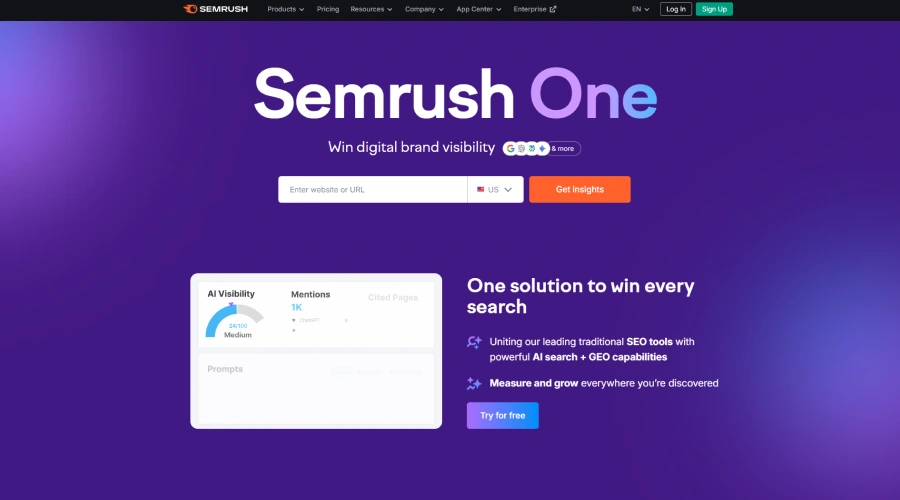
1. Semrush: The Most Comprehensive SEO Suite
There are more than 50 tools encompassing SEO, content marketing, competitor analysis, PPC, and social media management. Semrush is the industry leader in this all-in-one category. 26 billion keywords are processed by the platform, while taking the data from 142 geographical datasets
➢Core features
Semrush’s primary strength is competitive intelligence. The Domain Overview tool provides immediate insight into the backlink profile, paid advertising tactics, and organic search performance of any website, allowing users to be informed about the product.
➢ Ideal Users
SEO specialists in need of thorough competition intelligence, internal teams at businesses handling complex domains, and marketing firms overseeing numerous client accounts.
➢Limitations
There is a significant learning curve due to the complexity of the interface. Semrush traffic estimates and actual Google Analytics numbers can differ, according to user reports. The AI visibility features are still under development and have uneven coverage of global data.
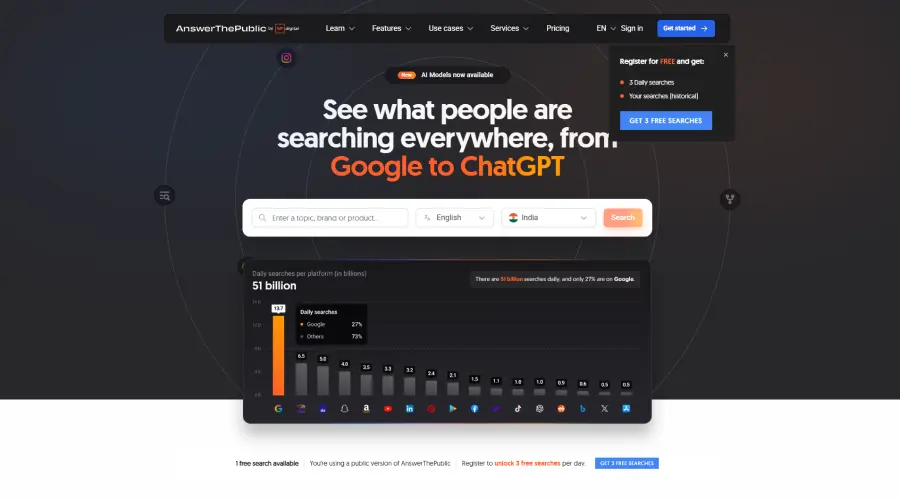
RespondThePublic turns keyword research into a visual investigation of real search terms. The platform arranges recommendations according to prepositions (for, with, without), comparisons (versus, like, and), and question structures (how, what, why, when, and where).
➢Core Capabilities
With color-coded volume and CPC indications, the signature visualization wheels show linked questions radiating from primary subjects. Compared to conventional list formats, these visual aids enable content strategists to find topic clusters and question patterns more quickly.
➢Ideal Users
Marketing teams organizing content calendars, SEO experts researching keywords for clients, and content producers looking for blog post ideas.
➢Limitations
Compared to specialized tools, search volume data is less exact. Only three search engines are allowed. Users that prefer conventional data tables are not suited to visual interfaces.
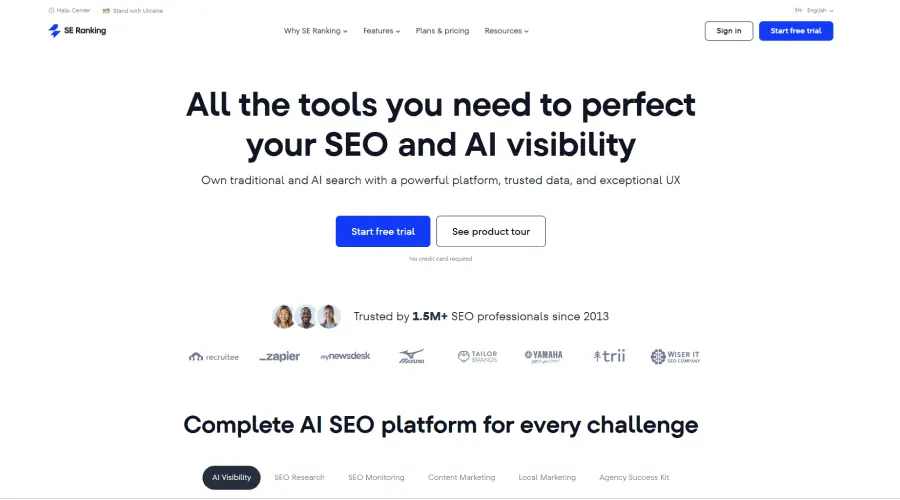
3. SE Ranking: Local SEO and Multi-Location Tracking
SE Ranking maintains extensive rank tracking tools while focusing on local search optimization. The software allows for unlimited keyword monitoring and tracking over more than 100,000 places globally.
➢Key Features
The Local Marketing Dashboard compiles location-specific ranking information, review tracking, and Google Business Profile analytics into a single display. From a single interface, users oversee several company locations.
Google, Facebook, Yelp, Foursquare, and Tripadvisor reviews are gathered into a single inbox via the Review Management tool.
➢Ideal Users
Local SEO agencies, franchise operations monitoring performance across areas, and local service businesses with several locations.
➢Limitations
With so many options, the UI appears cluttered. Beyond the base subscription, some features require paid add-ons. Compared to category leaders, international keyword data is less complete.
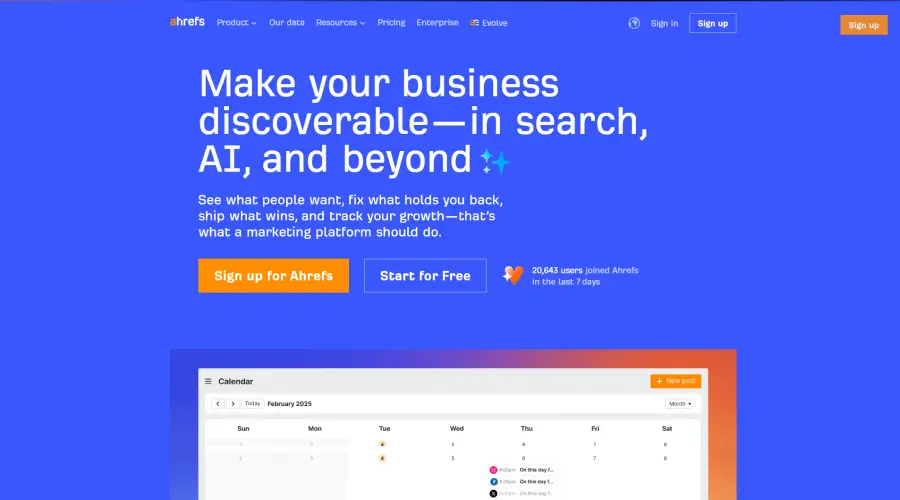
4. Ahrefs: Superior Backlink Database and Competitor Analysis
Ahrefs’ bot processes 8 billion pages per day, making it the second-largest crawling operation on the internet after Google. This architecture provides thorough competitor insights and outstanding backlink data accuracy.
➢Key Features
The Site Explorer tool offers comprehensive analyses of the backlink profile of any domain, including referring domains, anchor text distribution, and link acquisition velocity. The Content Gap function finds keywords that are absent from your content strategy but are generating traffic to competitors.
➢Ideal Users
Technical SEO experts needing comprehensive crawl data, content marketers concentrating on competitor research, and SEO agencies emphasizing backlink analysis.
➢Limitations
The precision of rank tracking is not as good as that of specialized tools. There are times when traffic estimates differ from first-party analytics. Small companies and individual creators on a low budget are not eligible for the premium rate.
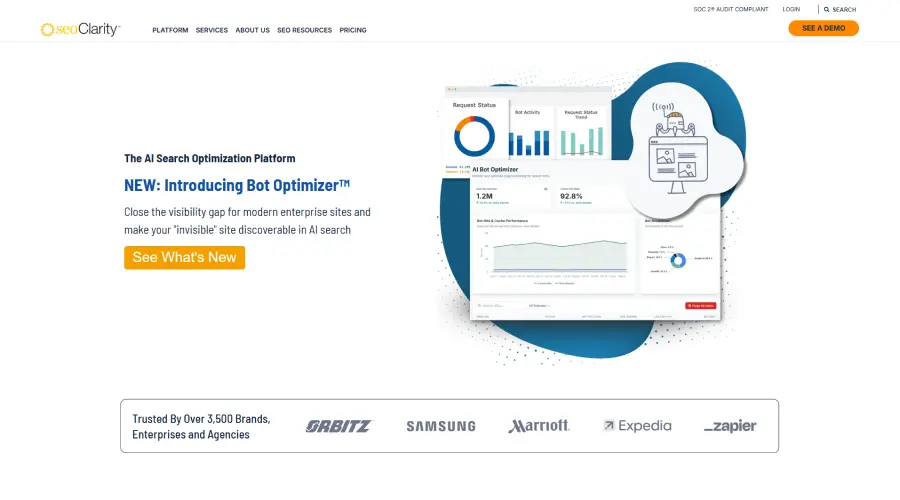
5. seoClarity: AI-Powered Enterprise SEO Platform
Unlike rivals that retrofit AI elements onto pre-existing technologies, seoClarity includes native generative AI across the platform. GPT-4 is used by the Sia (seoClarity Intelligent Assistant) tool to automate bulk optimization, keyword clustering, and content creation.
➢Core Capabilities
The Content Fusion module integrates procedures for content generation with keyword research. With Sia, users can write complete articles, produce SEO-optimized briefs, and post straight to content management systems. Based on SERP analysis, the AI automatically creates optimum titles, meta descriptions, and header structures.
➢Ideal Users
Businesses in need of white-label SEO reporting solutions, firms serving Fortune 500 clients, and enterprise organizations managing several domains.
➢Limitations
Small and mid-sized enterprises are not included in the expensive pricing. Functionality takes precedence over aesthetics in the interface. Prior to evaluation, sales discussions are necessary for custom pricing.
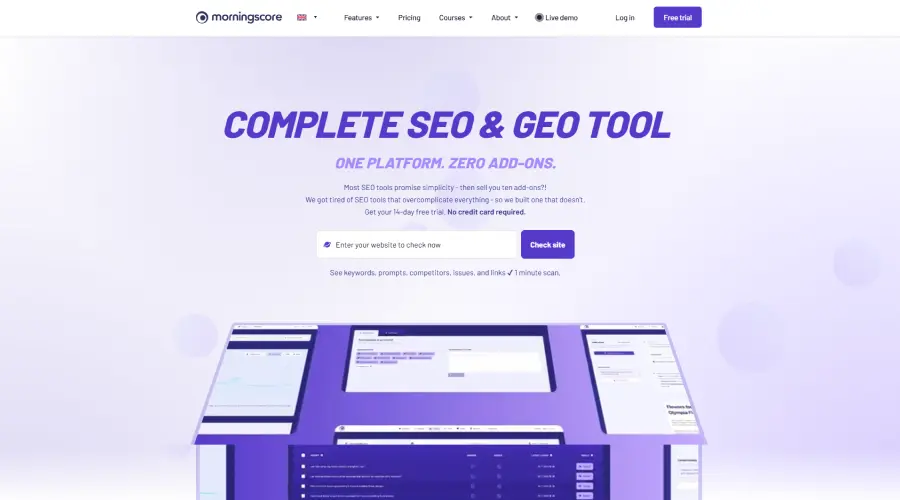
6. Morningscore: Gamified SEO for Accessible Analytics
Morningscore integrates game mechanics with SEO data, converting intricate metrics into clear visuals and objectives that can be taken action on. The software helps non-technical stakeholders comprehend SEO ROI by giving organic traffic dollar numbers.
➢Core Capabilities
To measure overall search performance, the dashboard shows an SEO Score and a GEO Score (AI visibility index). By completing optimization tasks, users earn experience points, generating engagement loops that motivate regular SEO efforts.
➢Ideal Users
Startup content marketers, small business owners who are new to SEO, and agencies looking for transparent client reporting tools.
➢Limitations
Business users may find the gamification to be immature. Specialized tools are more comprehensive than advanced technical SEO elements. Compared to industry leaders, international keyword data covers fewer nations.
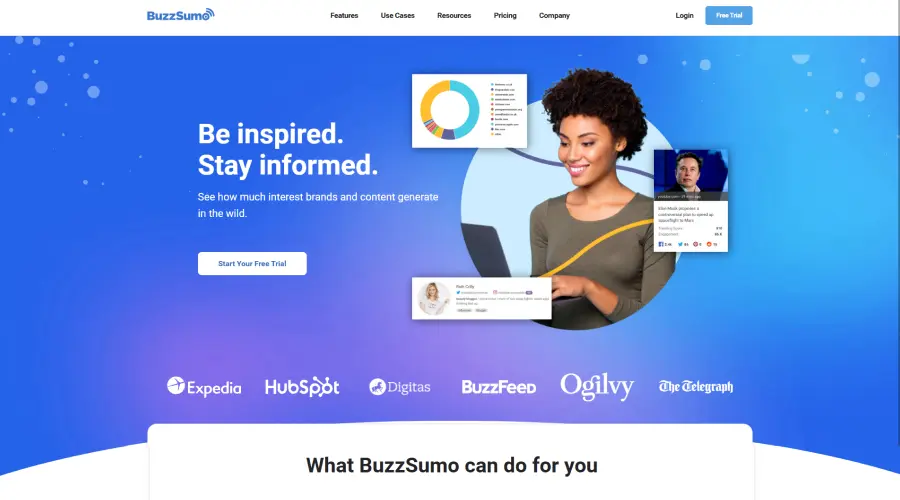
7. BuzzSumo: Content Research with Social Engagement Data
By combining keyword research with content performance statistics, BuzzSumo displays the subjects that lead to backlinks and social media sharing. Finding content opportunities with both search demand and viral potential is made easier by this dual viewpoint.
➢Core Functions
The Content Generator examines the best-performing content for target keywords and offers comprehensive suggestions on the ideal word count, content structure (listicle, how-to, what post), and recommended publishing times.
Using information from forums, Q&A websites, and search recommendations, the Question Analyzer displays frequently asked questions about various subjects. FAQ sections, blog outlines, and article organization are informed by this data.
➢Ideal Users
PR specialists keeping an eye on company mentions, content marketing teams emphasizing viral potential, and agencies in need of thorough content information.
➢Limitations
The cost of premium pricing is higher than that of a basic keyword research tool. Search success is not closely correlated with social interaction measures.
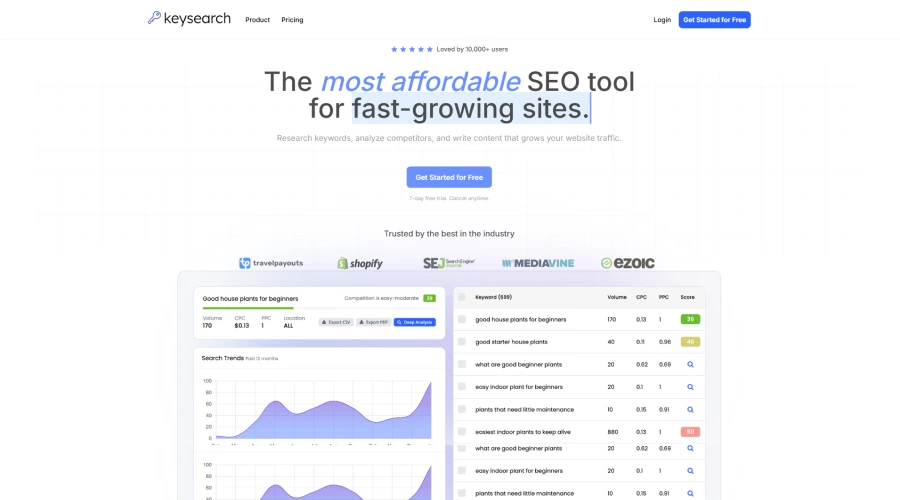
8. KeySearch: Budget-Friendly All-in-One Alternative
For less than 20% of the price, KeySearch offers 70% of the capability of a premium all-in-one solution. The software employs proprietary algorithms for keyword analytics and the Moz API for backlink data.
➢Key Features
For millions of keywords, the Keyword Research tool offers trend data, search traffic, and keyword difficulty. Domain authority, page authority, and on-page elements of ranking competitors are all taken into consideration by the difficulty score.
Depending on the plan tier, the Rank Tracker tracks rankings for 80–200 keywords on desktop and mobile devices. Users are notified via email when their positions change significantly.
➢Ideal Users
Budget-conscious bloggers and affiliate marketers, small business owners managing their own SEO, and novices learning the principles of search optimization.
➢Limitations
Performance is slower than with high-end instruments. The user interface seems out of date. sporadic delays in data synchronization.
9. Screaming Frog SEO Spider: Comprehensive Technical Analysis
With desktop software that crawls websites to find implementation problems, Screaming Frog continues to be the gold standard for technical SEO audits. The tool offers a wide range of data export choices and fine-grained control over crawling parameters.
➢Core Capabilities
Four different crawling modes are available to meet various auditing requirements. Spider mode conducts routine website crawls while examining headers, status codes, and metadata. List mode conducts targeted analysis audits of particular URL lists. For supplied lists, SERP mode verifies the character lengths of the title and description. Compare mode is crucial for debugging migration issues because it detects changes between two crawls.
➢Ideal Users
The ones who can make the most out of the tool include developers putting SEO standards into practice, agencies reviewing huge client websites, and technical SEO professionals performing thorough audits.
➢Limitations
Installation is necessary for desktop-only applications. steep learning curve for novices. The interface design is a bit outdated, occasionally producing false positive errors that need to be manually verified.
10. Surfer: AI-Powered On-Page Optimization
Surfer offers data-driven content recommendations by evaluating top-ranking pages and combining content optimization with AI writing capabilities. When producing search-optimized content, the platform minimizes guesswork.
➢Key Features
The Content Editor provides immediate feedback on keyword usage, content length, heading structure, and semantic significance by scoring material in real-time as writers create articles. Opportunities to raise content scores are highlighted by the interface.
➢Ideal Users
In-house teams expanding content production, agencies producing optimized pieces for customers, and content marketers regularly producing blog content.
➢Limitations
Unused capacity is not carried forward by the monthly credit scheme. On lower tiers, AI article generation is costly per article. Sometimes, keyword stuffing takes precedence over natural writing in optimization recommendations.
Conclusion
Alongside search engines, search optimization is still developing. The tools examined in this thorough analysis are both strong competitors and market leaders at all price ranges and specializations. Matching tool capabilities to your unique requirements, financial limits, and technical proficiency levels is essential to choosing the best combination.
The market for SEO software will keep growing as new tools appear on a regular basis and well-established platforms add new functionality. Optimization efficiency in the ever-changing search field is maintained by keeping up with tool capabilities, trying new choices through free trials, and modifying your toolset as needs change.