Connected devices have become a new norm in this era. These devices make everyday life more convenient and easier for people. From smartwatches that track our health to smart speakers that respond to voice commands, technology has become an integral part of human existence. Most of these devices work on the most popular technology known as the Internet of Things, or IoT. Apart from this, industries like manufacturing, energy, transportation and logistics are also using connected devices to improve efficiency and productivity. The connected technology used in industries is known as the Industrial Internet of Things (IIoT). Both IoT and IIoT sound almost similar; however, they are designed to serve different purposes. Understanding these differences can help both businesses and end users to learn how these technologies are changing everyday life and industries. In this post, we have explored some of the key differences between these two technologies. So, without any further ado, let’s get started…
Understanding IoT – What is it?
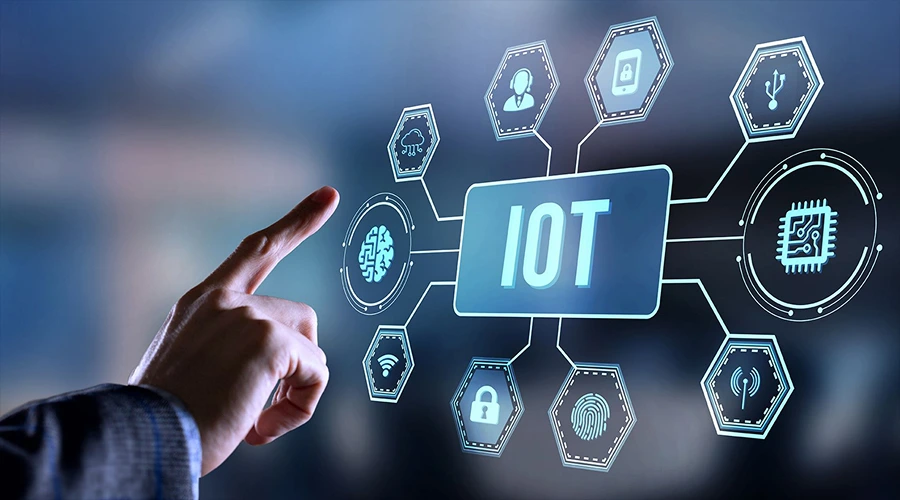
Image Source Nawakara Security Solutions
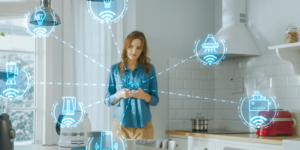
The Internet of Things or IoT, refers to a network of physical devices connected to the internet that can collect, share and process data. These devices often include sensors, software and communication tools to interact with users or other devices. IoT is designed to make everyday tasks easier, more efficient and more convenient for users.
IoT is mainly used in:
Smart Home Speakers
Smart TVs
Smart Thermostats
Fitness Trackers
Smart Home Appliances
Connected Security Cameras.
Example:
A smart watch helps users track their health metrics, such as heart rate, sleep patterns and so on, whereas, a smart home speaker can help you with smart home control, communication, entertainment and daily organization. All in all, IoT focuses on improving convenience, comfort and user experience and is mainly used in homes, offices, healthcare, retail and other consumer-focused environments.
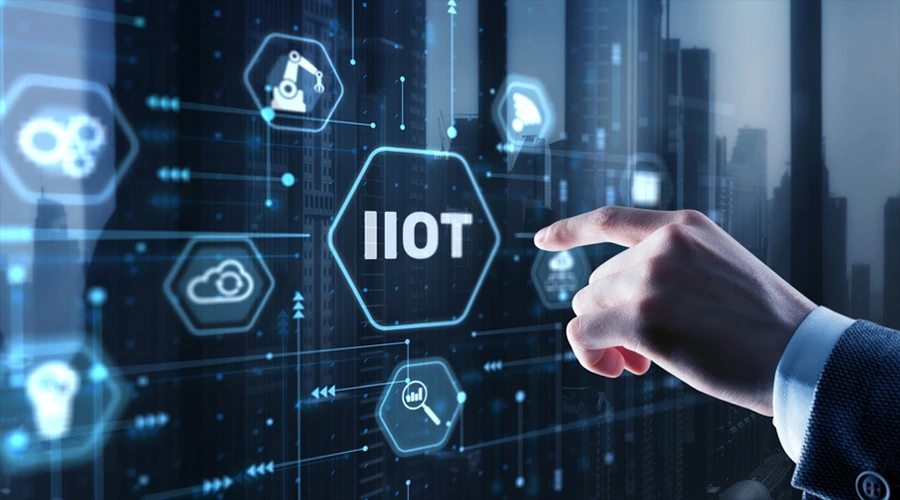
The Industrial Internet of Things or IIoT is used mainly in industrial sectors. It applies similar connected technology principles but in industrial environments. Like IoT connects household gadgets, IIoT is used for connecting machines, equipment, sensors and systems that are used in industries. IIoT can be used in several industries, including manufacturing, oil and gas, healthcare, transportation, agriculture and utilities. IIoT improve operational efficiency, reduce downtime, increase safety and optimize production processes.
It is mainly used for:
Monitoring factory machines in real time
Predicting equipment failures before they occur
Automating production lines
Tracking industrial assets
Managing energy consumption
Monitoring pipelines and power grids.
Example:
Sensors installed on factory equipment can continuously monitor temperature, vibration and performance. Monitoring allows teams to detect unusual activities in real-time and instantly fix the machines before it becomes worse. It helps prevent costly downtime and disruptions.
IoT vs. IIoT – How Do They Differ
Both IoT and IIoT involve connected devices collecting and sharing data. However, the two differ significantly based on where and how they are used. IoT is mainly designed to serve consumers and everyday users, while IIoT is created for businesses and industrial operations.
Home appliances, smart speakers, smart watches, smart thermostats, smart doorbells, and many other connected gadgets are examples of IoT-powered consumer devices. While, a network of sensors monitoring an entire manufacturing plant is perfectly explains the use of IIoT in industries. Both IoT and IIoT are built on similar technologies, but they are designed for different needs and requirements.
➢Purpose and Goals
Then comes the objective and the goals of both the technologies. They differ greatly on these two. IoT is designed to improve convenience, entertainment and personal productivity. The goal is to provide improved user experience; hence, success is often measured by user satisfaction and ease of use.
IIoT, on the other hand, focuses on business outcomes such as productivity, efficiency, reliability and cost savings. The goal of IIoT is to improve performance; hence, success is usually measured by better performance and the financial benefits it brings to industries.
➢Scale of Operations
Image Source Startup Mentor
These two technologies also differ on scale of operation as they operate on different scales. For instance, IoT devices are often used on a smaller scale, such as a smart home with connected devices, like lights, cameras, speakers and appliances.
IIoT is designed to operate in larger and more complex environments. For instance, a manufacturing unit having thousands of connected sensors, machines and monitoring systems operating simultaneously. IIoT ensures seamless large-scale deployments.
➢Reliability Requirements
Reliability requirements for both technologies differ too because the stakes are much higher in industrial environments. If a smart home device temporarily loses connection, the impact is usually minor as these issues are easier to fix with simple reconnection. But in industrial settings, a communication failure could halt production, affect worker safety and can even cause significant financial losses to the business. That’s the reason, IIoT systems are built with stronger reliability standards and backup measures to minimize disruptions.
➢Security Considerations
Image Source National Retail Federation
Security is important for all connected devices, whether they are consumer smart devices or industrial machines equipped with sensors. Consumer IoT devices handle personal information such as health data, home security footage or location information, whereas, IIoT handles essential operations and infrastructure which are comparatively more critical. A security breach in an industrial setting can lead to severe consequences, including production delays, equipment damage, financial losses and even safety risks for workers. Protecting both environments is very important.
➢Data Usage
Both IoT and IIoT generate large amounts of data; however, they use that data differently. IoT devices collect information to improve user experiences. For example, smartwatches track fitness activities, while smart speakers respond to user commands.
Whereas, IIoT systems use data to support operational decisions. For instance, detecting machine wear and tear or improving production efficiency and so on. The data collected from these technologies influence user experience and decision-making.
➢Real-Time Decision Making
Both IoT and IIoT are designed to help users make decisions in real time. However, these decisions can be very different because they serve different purposes and environments. Also, the urgency in case of consumer IoT applications is generally lower compared to IIoT connected devices. A delay of a few seconds in a smart home system is often acceptable, but in industrial systems, decision must happen almost instantly.
Using IoT, users can adjust home settings or monitor personal devices. IIoT, on the other hand, comes in handy in industrial environments. It allows businesses improve operations, increase efficiency and prevent equipment failures. For example, if a sensor detects that a machine is overheating, the system can respond immediately to help prevent damage or safety issues.
Both IoT and IIoT are expected to grow in the coming years. As more businesses adopt connected devices, the use of IIoT will continue to increase to improve efficiency, reduce costs and support better real-time decision-making.
The same trend is happening with IoT. More people are choosing smart homes, wearable devices and other connected products. At the same time, advances in artificial intelligence, automation, and data analytics will make both IoT and IIoT even more useful in the future.
The Bottom Line
So, there you have it: the differences between IoT vs. IIoT. Of course, these two technologies may sound almost similar. However, the two vary greatly based on their goals, purposes and scale. IoT focuses on improving daily life through connected consumer devices, while IIoT focuses on enhancing industrial operations, productivity, and efficiency. As connected technology continues to grow, both IoT and IIoT will play an important role in the way people live, work and interact with the world. Understanding the differences between them can help both businesses and consumers to know how these technologies are transforming homes, businesses and industries.