Cover all the fundamentals of Infrastructure as Code (IaC) in this starter guide. Learn how code driven infrastructure works, why teams adopt and key concepts, along with the top challenges faced during adoption.
Modern infrastructure moves too fast for manual control. Cloud platforms spin up resources in seconds and deployment cycles can run multiple times a day. Modern teams are operating across regions, providers, and environments. In this landscape, clicking through dashboards and running ad hoc commands breaks the system faster than it builds them. This pressure gave rise to Infrastructure as Code (IaC).
So what is Infrastructure as Code (IaC)? IaC treats infrastructure the same way teams treat software. Engineers define servers, networks, storage, and permissions in code. Automation tools read that code to build the environment exactly as described. This process replaces manual configuration with repeatable execution. The results stay predictable, testable, and auditable.
This guide explains Infrastructure as Code (IaC) from the ground up. It focuses on how it works, why teams adopt it, and where beginners often struggle.
The core idea behind Infrastructure as Code (IaC)
Image Source freepik
IaC means managing infrastructure through machine readable definitions instead of human actions. Engineers describe the desired environment in configuration files and the tools interpret those files and apply the changes automatically.
The code becomes the source of truth meaning if the code changes, the infrastructure changes. If the code stays the same, the infrastructure remains stable. This approach eliminates undocumented tweaks, forgotten fixes, and configuration differences between environments.
IaC works because infrastructure now behaves like software. Cloud resources expose APIs. Virtual machines replace physical servers. Networks exist as programmable objects. IaC simply formalises control over these components.
Why manual infrastructure fails at scale
Manual infrastructure management breaks under pressure. Engineers provision servers differently each time and these small deviations accumulate. Production drifts away from testing. Failures become hard to reproduce and harder to fix.
Scaling multiplies the problem even further as clean environments introduce hundreds of components per application. Teams deploy more frequently. Infrastructure changes happen constantly. Manual workflows cannot keep pace without introducing risk.
Infrastructure as Code (IaC) fixes these failure modes by enforcing consistency. The same definition is what builds development, testing, and production environments. Automation executes the same way every time with version control recording every modification.
How does Infrastructure as Code (IaC) actually work
IaC starts with the basic configuration files. These are the files that describe resources such as virtual machines, load balancers, datasets, and networks. The definitions specify properties like size, region, permissions, and dependencies.
An IaC tool will read the files and compare them to the existing environment. If differences exist, the tool calculates the required actions and then creates, updates, or removes resources to match the defined state.
This process repeats safely. Running the same code again does not rebuild everything necessarily. The tools simply check current conditions and apply only what changed.
Declarative and imperative models explained
Image Source Yahya Gok Medium
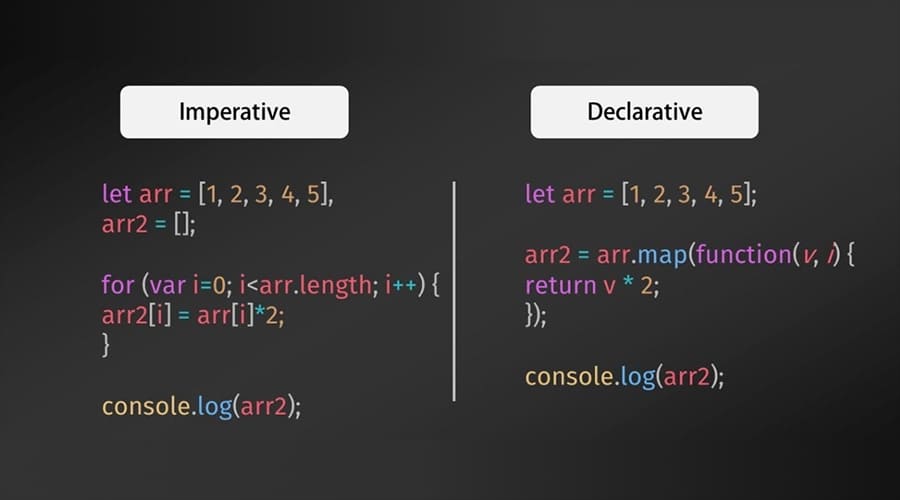
IaC supports two execution models. These include declarative and imperative models.
Declarative model: This model describes the end result. The code states what the environment should look like and the tool decides how to reach that state. This approach reduces complexity since engineers focus on the outcomes and not the execution steps.
Imperative model: In this model, the code explains how to build the environment step by step by listing explicit commands. The execution order matters. The responsibility stays with the engineer to manage sequencing and dependencies.
Most modern IaC workflows are going to favour declarative definitions. They simply update, reduce human error, and allow tools to manage state intelligently. Imperative approaches still exist, especially in scripting and configuration management, but they will require much stricter discipline.
Idempotency: The safety net of IaC
Idempotency forms the backbone of IaC. An idempotent system produces the same result no matter how many times you run it. If the infrastructure already matches the desired definition, the tool will do nothing If a resource differs, the tool corrects only that difference. This behaviour is what prevents duplication, accidental overwrites, and unpredictable changes.
Idempotency allows teams to reapply infrastructure code with zero fear. It supports recovery, automation, and continuous delivery workflows.
Immutable and mutable infrastructure models
Traditional infrastructure follows a mutable model. Teams create servers and modify them over time. They apply patches, install software, and adjust configurations directly. Over months, each server becomes unique.
IaC encourages immutability. Teams replace infrastructure instead of modifying it. When changes occur, automation builds new instances with updated definitions and removes the old ones.
Thanks to this model, you are able to eliminate configuration drift. It simplifies rollback. It ensures every resource matches the declared state. When immutability requires discipline, it dramatically improves reliability.
Infrastructure as Code (IaC) and version control
Version control makes infrastructure into a collaborative system. IaC files live in repos alongside application code. So every change creates a commit. Every commit documents intent. Teams review infrastructure changes before deployment. They test them automatically. They roll back safely when problems arise. Auditors track who changed what and why.
This workflow aligns infrastructure management with modern development practices. It removes guesswork and replaces it with transparency.
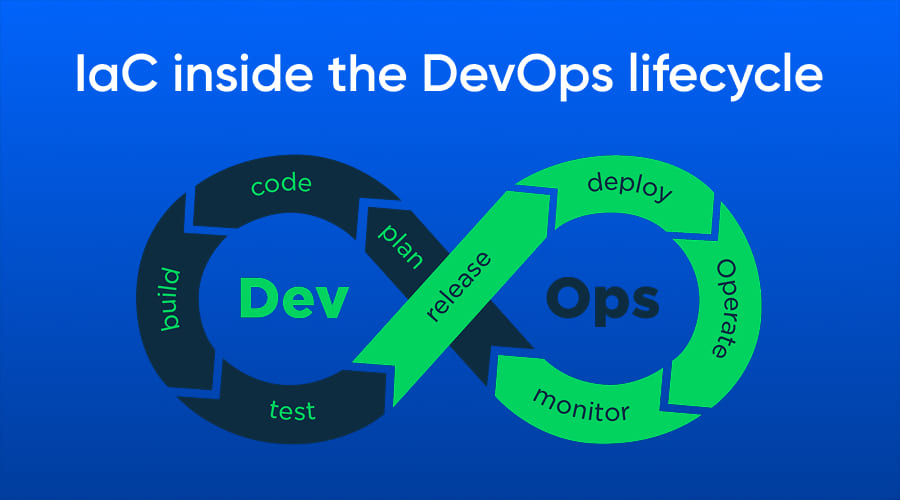
IaC inside the DevOps lifecycle
Infrastructure as Code (IaC) plays a very central role inDevOps. It removes infrastructure as a bottleneck. Devs no longer need to wait for manual provisioning. Pipelines create environments automatically. CI/CD systems trigger infrastructure updates alongside application deployments.
Testing environments appear on demand and teams destroy them after use. Production stays consistent with earlier stages.
IaC also breaks down silos. Developers and operations teams work from the same definition. Shared ownership improves understanding and reduces conflict.
Common tools used for infrastructure as code
IaC tools fall into overlapping categories and each category solves a different problem. Infrastructure provisioning tools create and manage foundational resources. They define networks, compute instances, and storage. These tools excel at lifecycle control and dependency management.
Configuration management tools focus on software and system state inside servers. They install packages, manage services, and enforce configuration rules. They complement provisioning tools rather than replacing them. Container orchestration platforms extend IaC concepts to application runtime and they manage container placement, scaling, and networking through declarative definitions. Most real-world systems combine tools. Teams choose based on scale, cloud provider, and operational maturity.
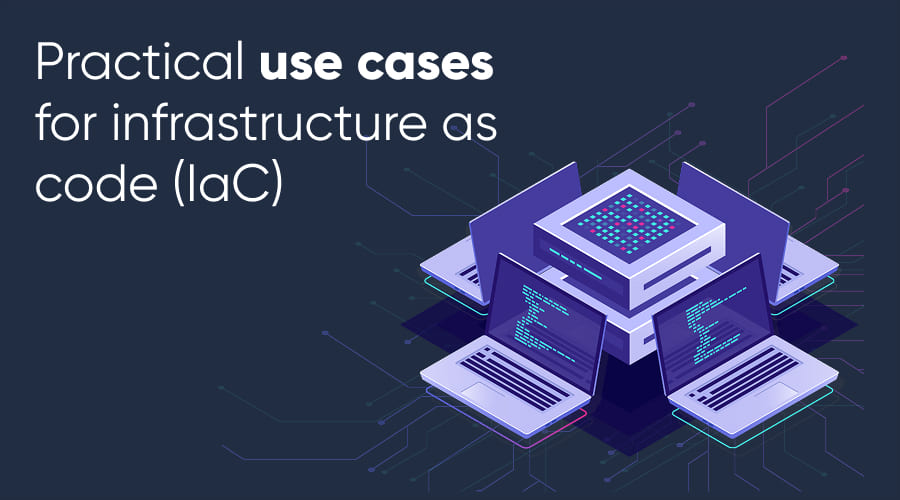
Practical use cases for infrastructure as code (IaC)
Infrastructure as Code supports a wide range of scenarios. Teams deploy full stack applications automatically by provisioning compute, databases, networking, and security controls together. This allows environments to remain identical across stages. Cloud operations benefit heavily from IaC. Teams manage resources across regions and providers with consistent definitions. Scaling becomes predictable instead of reactive.
Disaster recovery improves significantly. IaC allows rapid reconstruction of environments in new locations. Recovery time drops because infrastructure no longer requires manual rebuilding.
Security and compliance workflows also benefit. IaC embeds policies directly into infrastructure definitions. Systems enforce rules automatically during deployment.
Configuration drift and why IaC fights it
Configuration drift occurs when live systems diverge from intended design. Manual changes often cause it. Emergency fixes bypass automation, and over time, no one remembers the original configuration. IaC restores control. The code defines the desired state. Automation reconciles the differences. Immutable models prevent drift entirely by replacing altered resources. Teams that respect IaC discipline regain predictability.
Challenges beginners face with infrastructure as code
IaC introduces a learning curve. Engineers must be able to think declaratively and understand cloud primitives and dependencies. This shift challenges teams accustomed to manual workflows. State management also requires high care. Many tools track infrastructure state explicitly. Losing or corrupting that state complicates recovery. Teams must secure and back up state data properly.
Tool selection adds more complexity to this. No single tool will solve all of your problems. Combining tools increases power but coordination overhead.
Another huge challenge is legacy environments. Existing systems often lack clean definitions. Migrating them into IaC requires high patience and careful planning.
Best practices for getting started with IaC
Successful IaC adoption always needs to start small. Teams choose a limited scope and define clear goals. They automate one environment before expanding.
Testing infrastructure codes prevents costly mistakes down the line. Automated checks validate changes before deployment. Review these processes to catch errors early.
Most importantly, teams enforce discipline. They treat infrastructure code as authoritative by avoiding manual changes. They let automation do its job.
IaC continues to evolve as Git-centric workflows push automation much further. Systems now monitor repos and reconcile live infrastructure continuously.
AI enters here too that detects failures early and triggers automated remediation that triggers infrastructure changes without needing any human intervention.
Despite all these advantages, the foundation of it all remains unchanged.
Infrastructure as Code (IaC) replaces those fragile manual workflows with repeatable systems. IaC turns architecture into a predictable, testable asset. Teams that adopt it gain speed without ever having to sacrifice control.
For beginners, the learning curve will feel super real but remember the payoff will justify all the effort. IaC does not remove complexity, it just helps expose it. Then documents and manages it through code. This is the shift that defines modern infrastructure engineering.