Explore real world AI supercomputing deployments across national labs, cloud platforms, enterprises, and desktops, showing how purpose-built systems power scientific research, industry transformation, and the growing shift towards localised, high-performance artificial intelligence.
AI supercomputing has seeped into our daily lives. From powering national security systems, accelerating scientific discovery, fueling commercial AI platforms, and pushing intelligence closer to where data originates, AI supercomputing is all around us. But this shift demands changing workloads. Modern AI workloads demand scale, speed, and constant data movement.
Traditional computing models failed to keep up. So in response, governments, cloud providers,chipmakers, and enterprises built purpose driven AI supercomputers tailored to real world demands. And now these systems shape how industries work and innovate.
National AI supercomputers and strategic research
Image Source Peoples Daily
Exascale systems as national assets
Governments have learned to treat AI supercomputing platforms as strategic infrastructure. These machines support national security and technological independence. Their design is a reflection of long term objectives rather than commercial efficiency.
El Capitan
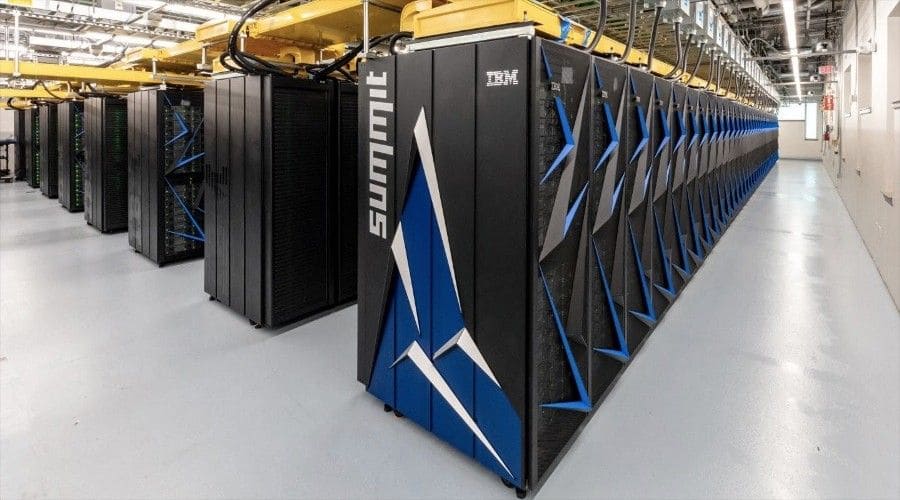
El Capitan operates at Lawrence Livermore National Laboratory and represents the most powerful class of AI-enabled supercomputing. The primary mission is to focus on the nuclear stockpile. Engineers use it to simulate complex physical phenomena that cannot undergo real world testing. This system is a combination of traditional high performance simulation with AI driven analysis. Machine learning models accelerate pattern recognition with massive datasets generated by these simulations. Thanks to this hybrid approach, computation time is reduced massively.
Frontier
Frontier runs at Oak Ridge National Laboratory and marked the first verified leap into exascale computing. Frontier has helped researchers to study climate, materials, nuclear physics, and biomedical processes. AI plays a critical role inside this machine.
Machine learning models analyse simulation outputs, identify anomalies, and refine experimental parameters automatically. This workflow is what allows the research cycles to be compressed into months which once took years.
Aurora
Aurora works at Argonne National Laboratory with a focus on complex systems research. Super helpful for scientists doing brain mapping, material science and even fusion energy modelling.
AI workloads run alongside physics based simulations and the models learn from simulation data and guide the subsequent runs. The continuous feedback loop improves the accuracy over time.
AI supercomputing in global research ecosystems
Fugaku
Japan’s Fugaku supercomputer supports a broad range of research, including public health, disaster prevention, and AI development. During global health crises, researchers used Fugaku to model virus transformation and evaluate intervention strategies.
Fugaku also supports the development of domestic AI language models and vision systems. Japan’s investment in a strategic push towards technological sovereignty.
LUMI
Europe’s LUMI supercomputer operates in Finland under the EuroHPC initiative which was designed for raw performance with high energy efficiency. LUMI supports AI workloads across climate science, industrial optimisation and a plethora of other domains. It runs on renewable energy too so it aligns its computational growth with environmental responsibility.
Commercial AI supercomputing at an industrial scale
Image Source igor sLAB
NVIDIA Eos
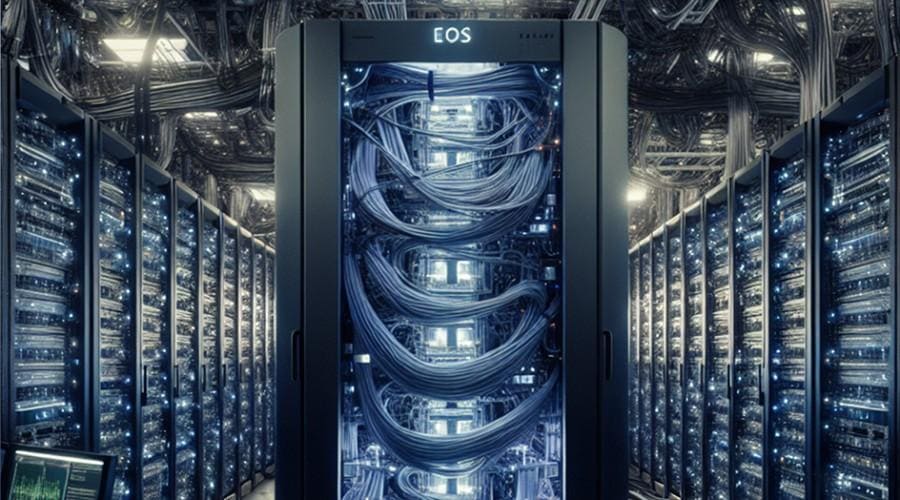
NVIDIA built Eos as an internal AI supercomputer to support chip design, digital biology, and large scale AI research. Thousands of high end GPUs are being put to work to accelerate simulation driven design and train complex AI models that can be later deployed across NVIDIA’s own product ecosystem. The system helps to shorten the development cycle a lot to improve architectural experimentation.
DGX SuperPOD
The DGX SuperPOD is NVIDIA’s standardised approach to AI supercomputing. It combines multiple DGX systems into a tightly integrated cluster optimised for training large models. Organisations deploy DGX SuperPODs for language models, recommendation systems, and more advanced simulations. The architecture emphasises predictable performance and fast deployment.
DGX SuperPODs bring supercomputing capabilities into enterprise environments without introducing the complexity of custom built systems.
Cloud based AI supercomputers
Microsoft Azure AI supercomputer
Cloud providers have really reshaped AI supercomputing by abstracting infrastructure ownership. Microsoft Azure operates one of the largest distributed AI supercomputers in collaboration with OpenAI.
This system trains large language models that serve millions of users so engineers need to scale compute dynamically based on the training demands. They iterate fast without having to manage physical infrastructure.
Cloud based AI supercomputing lowers barriers to entry while concentrating immense computational power behind service platforms.
Colossus
xAI’s Colossus supercomputer supports training for large conversational models and related ventures. The system reflects a trend where every relatively young company invest in dedicated AI supercomputing infrastructure.
Colossus provides access to large-scale compute, which increasingly determines who can train frontier models. It serves as a stark example of how competitive pressure drives rapid infrastructure deployment across enterprise and industry-specific applications.
Manufacturing and industrial AI
Image Source freepik
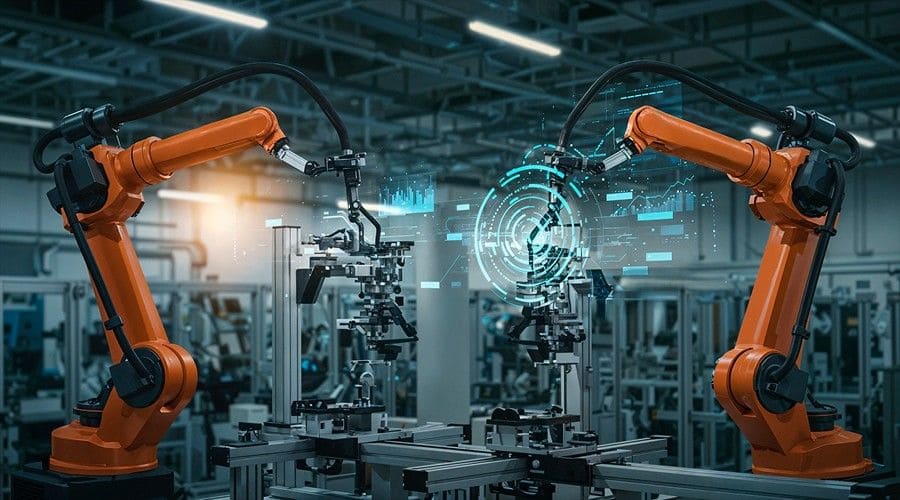
With supercomputing increasingly moving closer to production environments, manufacturers are using localised AI systems to optimise processes in real time.
Low latency processing enables immediate decision-making on factory floors. Engineers analyse sensor data without routing it through distant cloud servers. It is this shift that has helped reduce downtime and improve operational resilience.
Finance and real time analytics
Financial institutions rely heavily on AI supercomputing for risk analysis and fraud detection, and these are the workloads that need instant data processing and strict data control. On-premise oredge-based AI supercomputing platforms allow companies to process sensitive information without external exposure. High speed inference supports rapid market responses. The result combines speed with regulatory compliance.
Healthcare and biomedical research
Image Source freepik
Healthcare organisations are now using AI supercomputing to accelerate diagnostics, imaging analysis, and drug discovery. Models analyse massive datasets drawn from scans, genetics data, and even clinical records. Training and inference benefit from localised compute that reduces latency and preserves patient privacy. AI supercomputing platforms shorten the development timelines and improve diagnostic accuracy.
The rise of desktop AI supercomputing
Image Source freepik
Project DIGITS
Tons of innovation and evolution have helped AI supercomputing reach a new milestone with the introduction of desktop scale systems that are capable of running massive models. NVIDIA’s Project DIGITS brings petaflop-level AI performance into a compact form factor. The system supports models with hundreds of billions of parameters. Devs train, test, and refine models locally before deploying them to any larger environment.
Why local AI compute matters so much
Latency drives many real world applications. Edge deployments need immediate responses. And that too without having to rely on network connectivity. Security concerns also push organisations more towards local processing.
Academic research and agentic AI
Universities are increasingly relying on AI supercomputing to explore advanced concepts like agentic systems. These systems manage multi level objectives instead of single tasks. AI supercomputers support experimentation with autonomous decision making at scale. Researchers test how models plan and execute complex workflows.
Cost, accessibility, and the future
AI supercomputing continues to drop in cost relative to performance. Advances in chip design and manufacturing improve efficiency while reducing barriers. Specialised models reduce computational waste. Systems learn to select the right model for each task. Not by relying on brute force approaches.
A new infrastructure layer
AI supercomputing platforms are now forming the foundational layer across sectors. Governments use it for security. Scientists use it for discovery. Companies use it for the competitive advantage it offers. Even individual users now can access it directly. These systems are successful because they align architecture with workload reality. They move computation closer to data and scale learning more efficiently. AI supercomputing has become less about the size and more about placement and integration.