In this era of unsparing competition, having access to the most reliable tools and resources is more than important. Producing a good product alone is not enough for the companies, having high-performing employees is again essential. But the question is how to ensure that employees are performing their best? Of course, this is critical and crucial too. That’s when Performance Management Tools come in handy. These tools help companies manage how employees perform their work. These tools not only help track goals, give feedback, review performance, but also make sure employees grow in the job.
In 2026, there are many outstanding tools already available that make performance management easy for HR teams, managers and employees. So, if you are also looking for the best performance management tool, then this article is the perfect read for you. In this article, we have compiled a list of the top 20 performance management tools that most businesses are choosing in 2026. So, let’s get started…
First off, let’s understand what performance management tools are and how they help organizations in aligning people, goals and results.
Performance management tools are software platforms that are designed specifically for businesses. These tools are highly structured and are available for all kinds of businesses, including small, mid and large-sized organizations. Performance management software helps businesses track, measure and improve employee performance over time.
These tools are not ordinary. They help create a continuous performance cycle that includes goal setting, regular feedback, performance reviews, skill development and recognition. They allow managers and employees to have real-time visibility into goals and progress. Additionally, these tools help organizations clearly define expectations, monitor outcomes and identify performance gaps early on and take appropriate measures in favour of both employees and business.
Top 20 Performance Management Tools in 2026 & Beyond
Here is our list of the 20 best performance management tools that most companies are choosing in 2026 and are expected to be chosen in future as well. Take a look…
1. Lattice
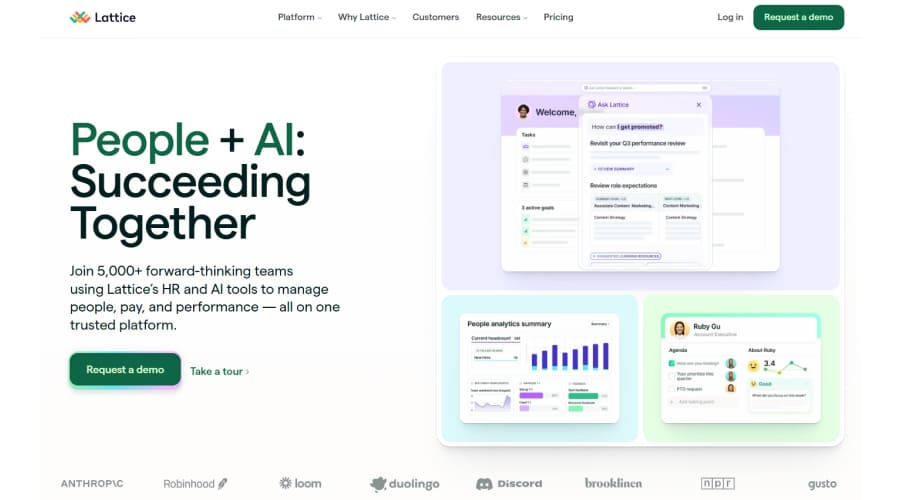
At number 1, we have Lattice. It is one of the most popularly used performance management platforms in 2026. It helps businesses set goals, give feedback, run performance reviews and track progress effortlessly. Also, managers can take advantage of its insights and analytics features to make data-driven decisions.
Key Features:
Goal setting and tracking
Continuous feedback
Performance reviews
Analytics dashboard
Pros:
Strong performance management features
Intuitive and user-friendly interface
Easily integrates HR and productivity tools
Ongoing feedback and development
Cons:
Expensive
Limited customization and reporting
Mobile app limitations
Suitable For: Small, medium and large business organizations.
2. Engagedly
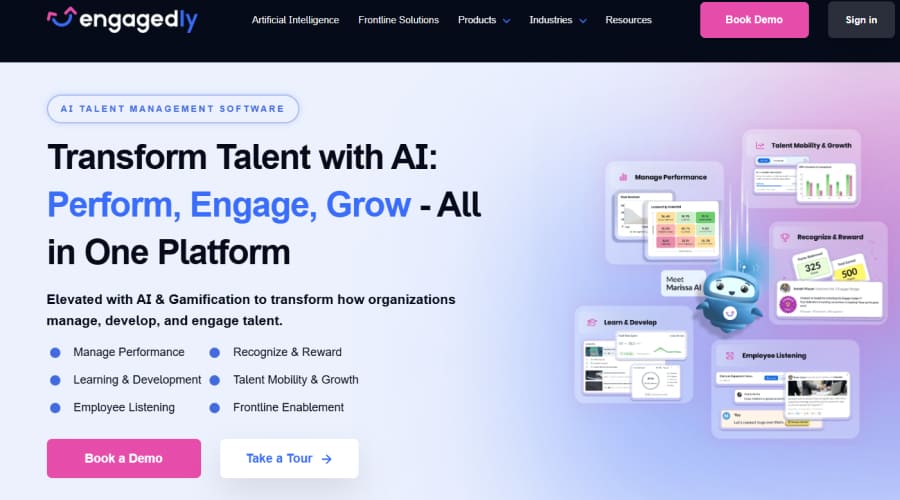
Here is another outstanding performance management tool Engagedly that has become pretty popular among businesses. Engagedly is not an ordinary tool; it in fact, brings amazing features to the table. It combines performance reviews with fun features like awards, badges and recognition for good work. Moreover, it supports continuous feedback and monthly performance surveys.
Key Features:
Solid performance reviews
Feedback and coaching
Reward and recognition system
Built-in surveys
Pros:
Robust performance management & goal tracking
User-friendly interface
Engagement and recognition
AI-powered capabilities
Cons:
Basic reporting features
Steeper learning curve
Limited customization
Suitable For: Companies that are looking for a tool that offers both performance and engagement together.
3. Workday Performance
At number 3, we have Workday Performance. Many big organizations are already using Workday Performance for streamlining their HR and finance functions. It is used for performance reviews, goals and real-time feedback, making performance part of everyday work.
Key Features:
Unified HR and performance
Easy goal setting and tracking
Feedback tools
Real-time updates
Pros:
Solid goal alignment and tracking
360-degree feedback system
Continuous feedback
Robust performance tracking
Cons:
Steep learning curve
Resource-intensive
A bit complex
Suitable For: Large enterprises with complex HR needs.
4. Betterworks
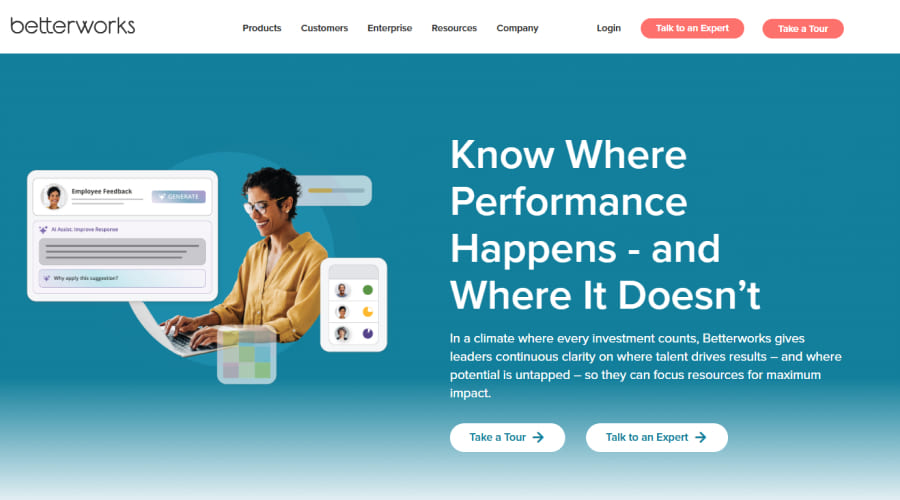
Betterworks is yet another wonderful performance management tool. It mainly focuses on goals and continuous improvement. Companies can use this tool to set OKRs (Objectives and Key Results), track progress and run performance reviews.
Key Features:
OKR tracking
Continuous performance coaching
Integrated feedback and review cycles
Goal alignment across teams
Pros:
Robust goal alignment and tracking
Continuous feedback and performance
User-friendly interface
Integrates customizable surveys
Cons:
Limited advanced customizations
Steep learning curve
Basic mobile capabilities
Suitable For: Businesses that wish to align goals at every level.
5. 15Five
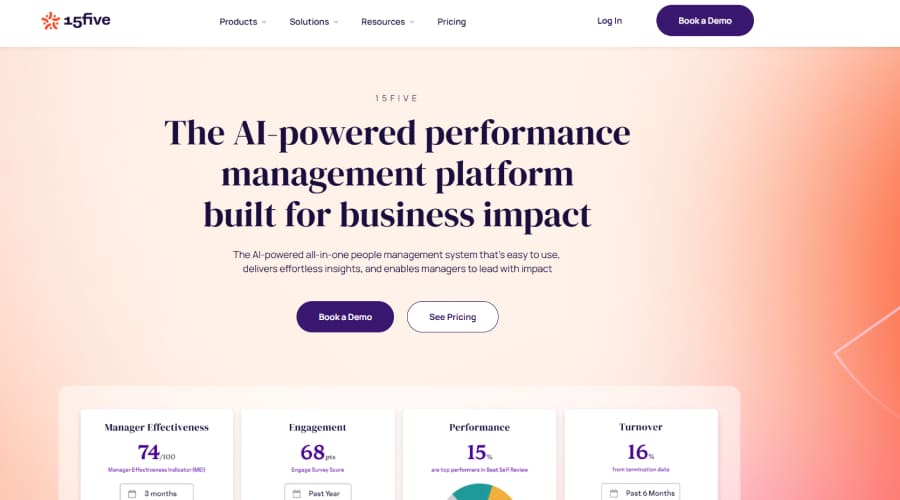
15Five is one of the best tools that mainly focus on ongoing feedback and employee development. This tool supports weekly check-ins, performance reviews and coaching between managers and employees. It is a perfect tool for businesses that want to encourage communication and continuous improvement across all departments.
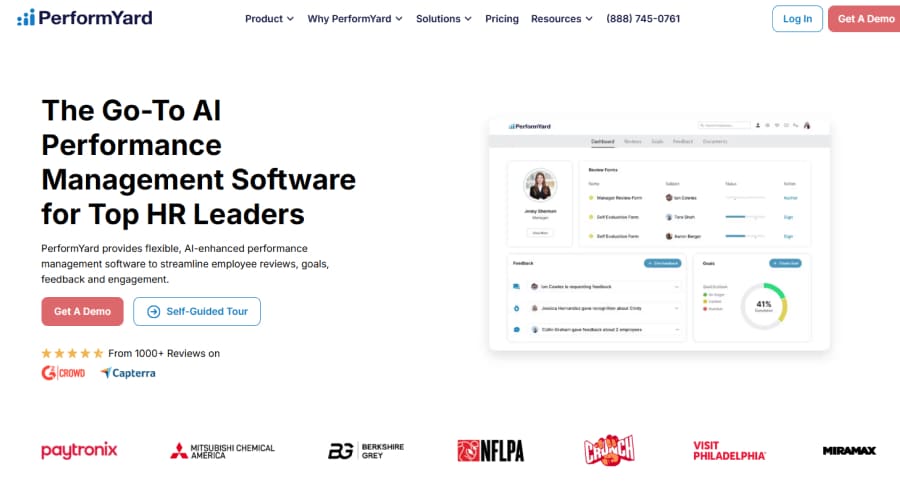
The next tool on the list is PerformYard. PerformYard is popular for its flexible review workflows and detailed reporting system. Also, it allows companies to build performance forms and processes fitting to their needs. Additionally, it also supports 360-degree feedback and goal tracking.
Suitable For: Companies with unique performance review needs.
7. Zoho People
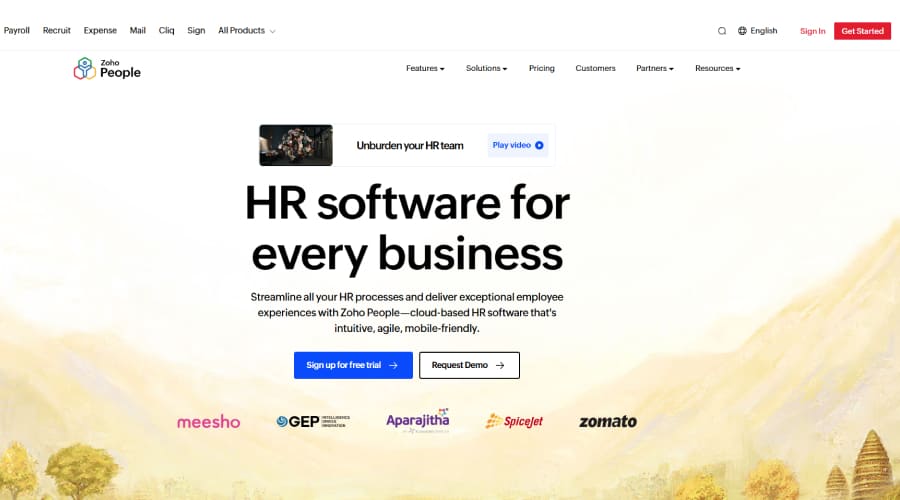
The next tool on the list is Zoho People. Zoho Tool is a product of the Zoho family and it is known for its HR and performance tracking. It allows employees to set goals, managers to run reviews and HR teams to track progress all in one place.
Key Features:
HR & performance integration
Centralized HR management
Integrations with other Zoho apps
Easy leave, attendance & time tracking
Pros:
Goal setting
Performance reviews
Strong feedback tools
Affordable and scalable pricing
Cons:
Basic reporting
Mobile app limitations
Limited payroll and recruitment features
Suitable For: For small businesses and companies already using Zoho apps.
8. Peoplebox
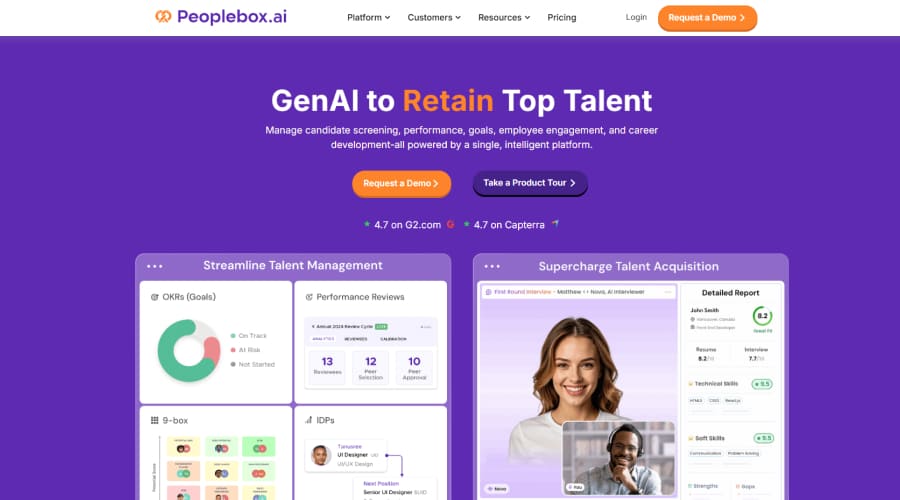
Peoplebox is another renowned performance management platform that companies are using in 2026. This tool is primarily known for connecting performance with company goals (OKRs). It integrates features for real-time insights and regular feedback so as to allow employees and teams to stay aligned with company strategy.
Key Features:
Strong goal and OKR tracking
Continuous feedback and performance tracking
Very intuitive user interface
Integrates easily with collaboration tools, including Slack, Microsoft Teams, Jira and so on.
Pros:
Feedback loops
Performance analytics
Alignment tools
User-friendly
Cons:
Limited customization
Lacks advanced features & automation
Limited mobile functionality
Suitable For:Teams that mainly focus on OKRs want to have a transparent performance management system.
9. Teamflect
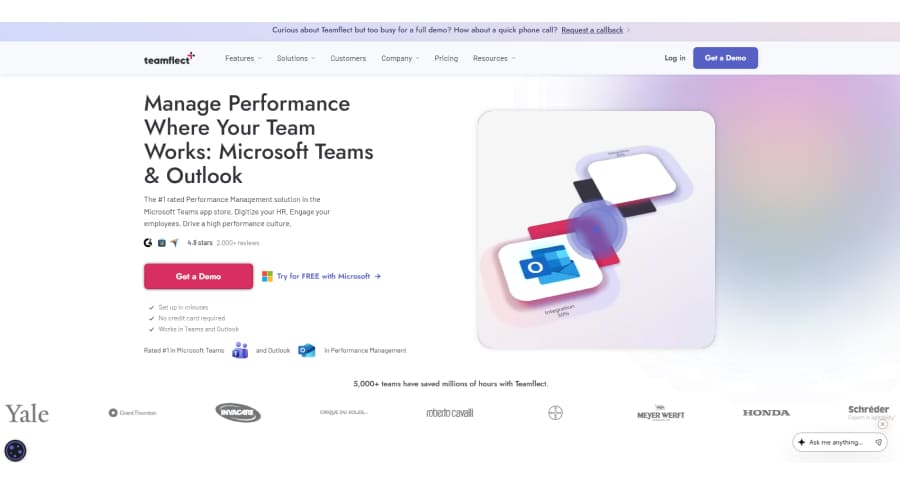
The next tool that companies are using in 2026 is Teamflect. Teamflect is built to work inside Microsoft Teams and Outlook. This means that you don’t need to log into it separately. Teams can run performance reviews, set goals and collect feedback easily.
Key Features:
Robust Microsoft Teams integration
Goal tracking and performance alignment
Comprehensive performance features
Seamless integration and adoption
Pros:
Goal management
Easy reviews and feedback
Integrates Outlook
Easy adoption for teams
Cons:
Limited reporting and customization
Dependency on Microsoft ecosystem
Does not connect with other tools
Suitable For: Organizations that rely heavily on Microsoft Teams.
10. Culture Amp
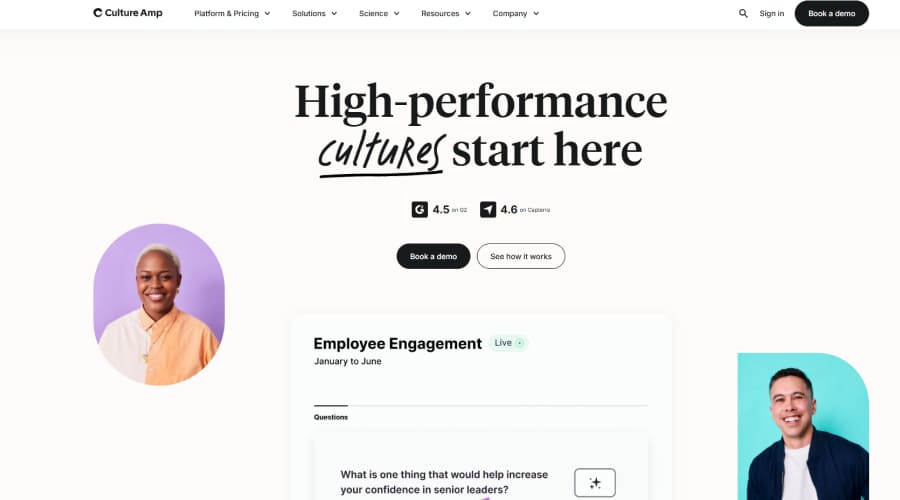
Another platform for managing performance is Culture Amp. Culture Amp emphasize both performance management and employee engagement. Yes, it not only helps manager to track employee performance, but also allows them to know how employees feel. Using these analytics managers can take effective steps towards employee development and growth.
Key Features:
Customizable engagement surveys & templates
360-degree feedback
Performance reviews
Detailed analytics and insights
Pros:
Actionable reporting and analytics
Integrates engagement and survey tools
User-friendly interface
Strong customer support
Cons:
A bit pricey
Lacks proper mobile features
Integration takes time
Suitable For: Medium to large companies focused on culture
11. BambooHR
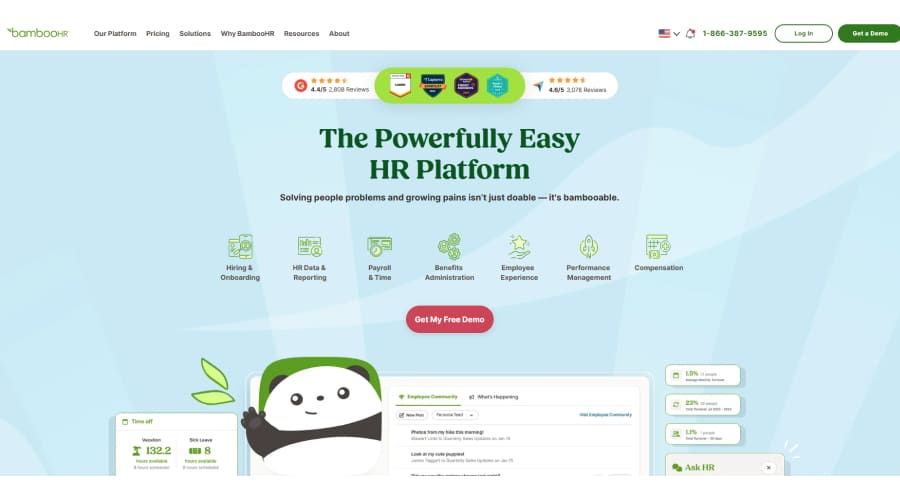
Companies looking for comprehensive HR systems, then BambooHR is your best bet. The best thing about this performance management tool is that it is easy to use. It works well for smaller companies as it helps them set goals, create personalized performance review forms and track employee progress.
Key Features:
Integrates custom review templates
Continuous performance and goal tracking
Robust reporting tools
Smooth onboarding and offboarding workflows
Pros:
Dedicated mobile app
Easy interface
Performance tracking
Customer support
Cons:
Expensive
Limited customization
Basic payroll and benefits tools
Suitable For:Small and medium-sized businesses
12. Oracle HCM
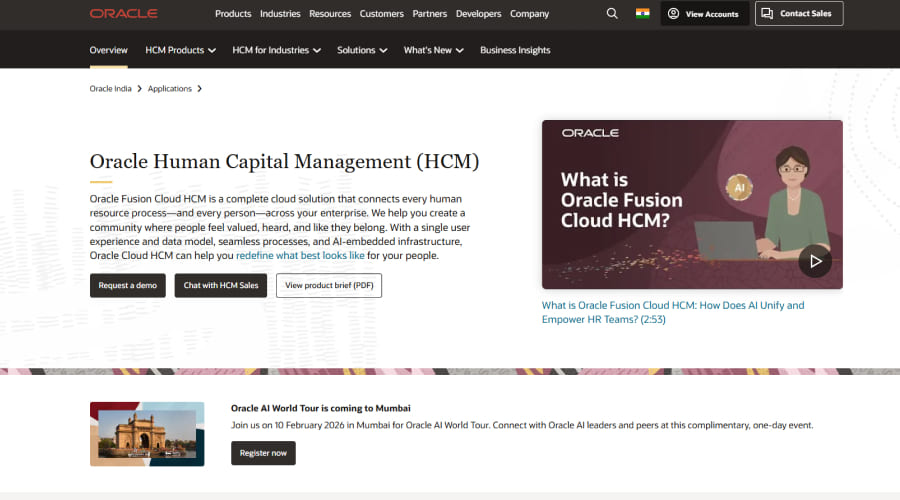
Oracle HCM, or Oracle Human Capital Management is yet another wonderful performance management platform known for its outstanding HR functionalities. This cloud-based tool allows organizations to manage all major HR functions in one place, including recruitment, payroll, benefits, performance reviews, learning & development and so on.
Key Features:
Unified Cloud-Based HR Platform
Integrates AI and Machine Learning tools
Strong security controls
Support multi-country companies
Pros:
Easy and intuitive interface
Comprehensive HR tool
Cloud-based solution
Advanced analytics and reporting
Cons:
Expensive
Resource-intensive integration
Implementation is long and a bit tricky
Suitable For: Medium to large scale companies.
13. Connecteam
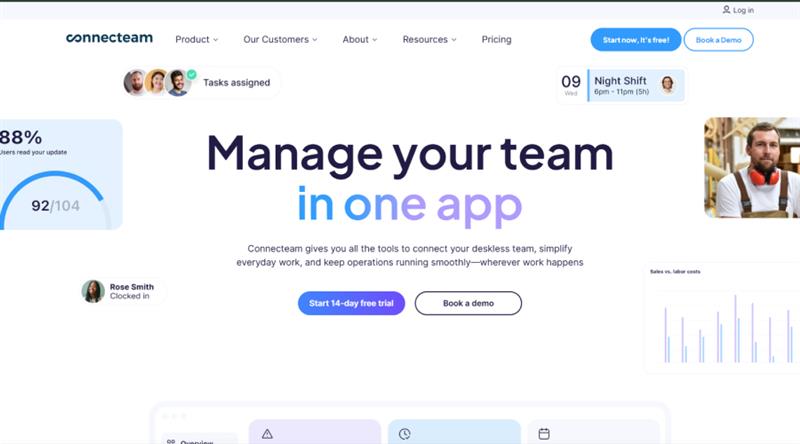
The next tool on the list is Connecteam, an all-in-one employee management tool. It is designed for companies with deskless and mobile teams, such as field workers, sales people and more. This tool makes scheduling, time tracking, communication, task management, training and basic HR processes a breeze.
Key Features:
Makes internal communication a breeze
Helps with people management
Single app for both mobile and desktop
Centralized knowledge base
Pros:
User-friendly and intuitive
Continuous tracking and performance
Easy implementation
Eliminates paper processes
Cons:
Costly implementation
Steep learning curve
Implementation is resource intensive
Suitable For: Companies with deskless or field employees.
14. Keka
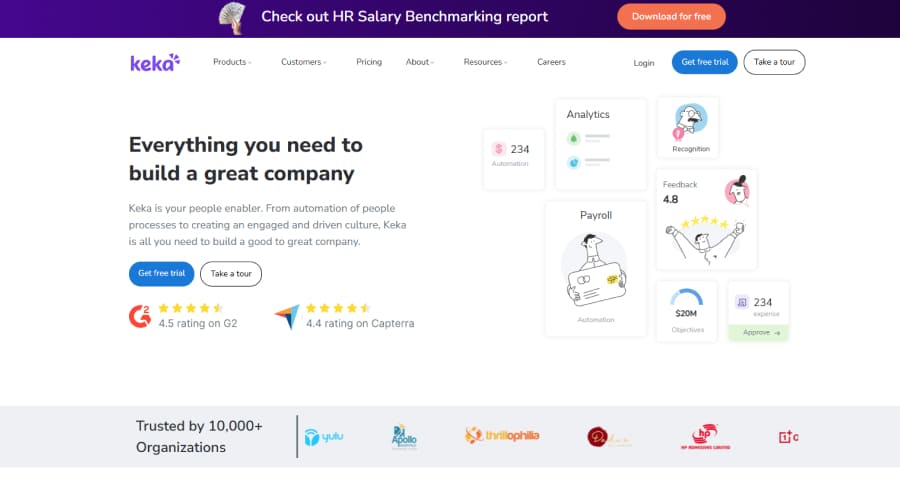
Keka is a very popular performance management tool in 2026. More and more companies are using Keka. It is a cloud-based HR and payroll platform. It helps companies manage HR tasks, such as payroll, attendance, performance, hiring and employee engagement in one place.
Key Features:
Automated payroll calculations and salary disbursements
Seamless leave management
Data insights and analytics
Centralized data hub
Pros:
Easy integration
Seamless progress tracking
Integrates tools for employee engagement, training and learning
User-friendly interface
Cons:
Mobile app limitation
Pricey solution
Limited third-party integration
Suitable For:Small and mid-sized companies looking for a unified HR system.
15. Workhuman
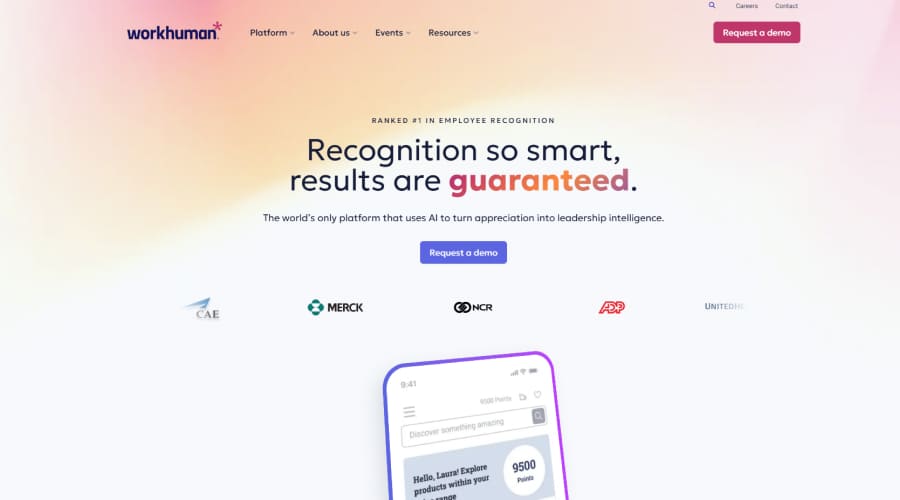
Here is another cloud-based performance management platform that help companies with employee recognition and performance tracking. Continuous feedback and performance become a breeze with Workhuman.
Key Features:
Robust performance & reporting
Customizable recognition programs
AI-powered analytics and insights
User-friendly interface
Pros:
Real-time feedback and analytics
Integrate tools for setting goals and tracking performance
Boosts employee recognition and culture
AI-driven capabilities
Cons:
Costly endeavour for small teams
Limited customization option
Reward items are overly priced
Suitable For: Medium, large and enterprise-level companies with hundreds to thousands of employees.
16. Effy AI
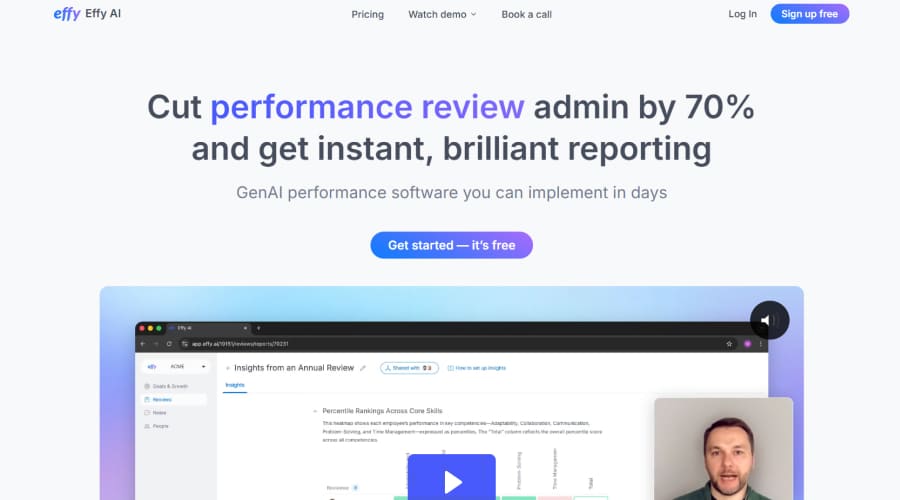
The next tool on the list is Effy AI. Effy AI is an AI-first platform. It helps businesses automate and improve performance reviews and employee feedback. This AI-powered tool helps managers generate and review forms, summarize feedback and give insights. Also, it supports SMART goals and Objectives and Key Results (OKRs).
Key Features:
AI‑Powered Performance Reviews
Supports 360‑degree feedback
Integrates with workplace tools, such as Slack and Teams
Automated workflows & reminders
Pros:
Integrates workplace tools
Easy to use and integrate
Supports 360 feedback
Customizable pre-built templates
Cons:
Expensive
Limited analytics & reporting
No dedicated mobile app
Suitable For: Small and mid-sized organization planning to create a culture where employees feel valued, engaged and empowered.
17. PeopleGoal
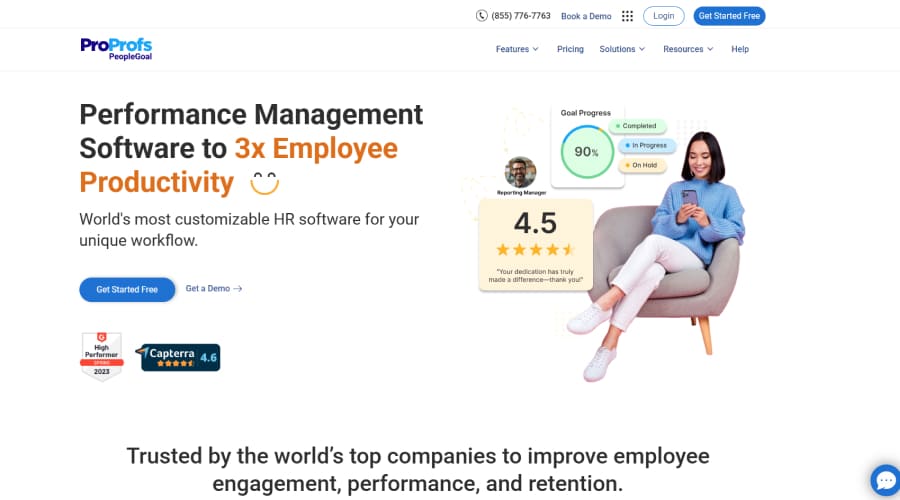
PeopleGoal is yet another performance management and HR solution. It helps companies manage employee performance, engagement, feedback and growth. It integrates goals, reviews, check‑ins, surveys and feedback management, offering teams an all-in-one platform for managing all aspects of performance.
Key Features:
Automated onboarding & core HR support
Supports SMART Goals and OKRs
Continuous feedback and check-ins
Role-based access controls
Pros:
Custom reporting
Easy to integrate
Custom workflows and automation
Highly customizable
Cons:
Limited mobile functionality
Third-party integration limitations
Steeper learning curve
Suitable For: Companies that require transparent OKRs or KPI tracking.
18. Leapsome
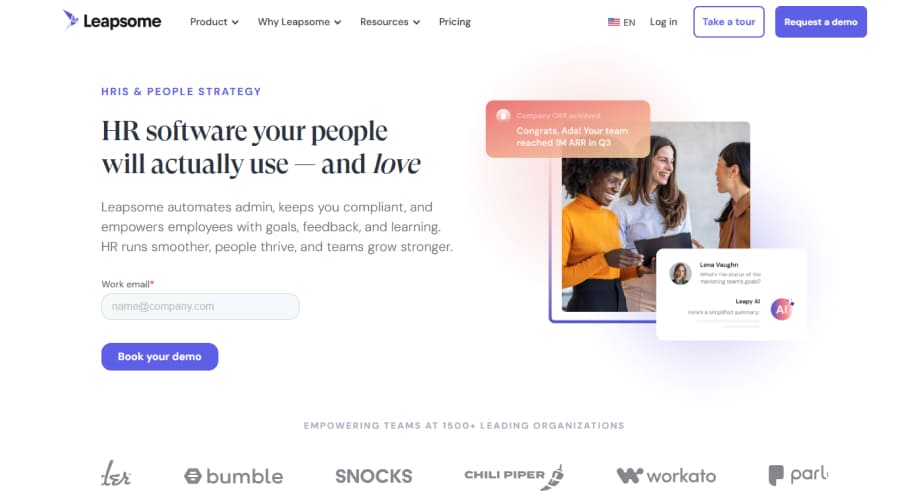
Leapsome is an excellent performance management solution for companies looking for a comprehensive people enablement and performance management tool. It helps HR teams to encourage employees grow, stay engaged and perform better. It includes performance reviews, goal setting, feedback, surveys, learning and employee development.
Key Features:
Customizable performance review
360° evaluations and anonymous feedback
Customizable learning paths and training modules
AI-powered analytics
Pros:
Comprehensive performance management
Excellent engagement features
Robust reporting and analytics
Solid goal and OKR tracking
Cons:
Lacks customizability
Steeper learning curve
A bit pricy
Suitable For:Mid-sized to fast-growing companies.
19. Performance Pro
The next platform is again for HR teams, especially the ones looking for individual competencies’ evaluation methods. It supports growth through clear metrics and helps HR teams save a lot of time. It makes creating review forms based on role-specific competencies a breeze for HR managers.
Key Features:
Competency-driven templates
Helps set measurable individual or team goals
Supports 360° feedback and multi-appraisers
Learning and compensation linkage
Pros:
Strong goal alignment and tracking
Customizable templates and performance analytics
Visual goal tracking
Customisable and flexible review forms
Cons:
Limited advanced functionality
Less extensive advanced analytics
Support and notification limitations
Suitable For: Small- to mid-sized organisations focused on structured development.
20. ThriveSparrow
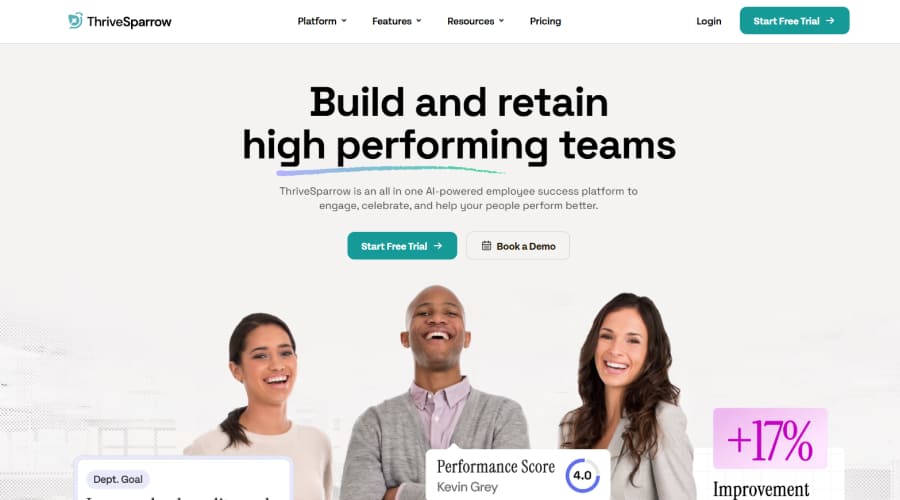
Last but not least in the list of the best performance management tools in 2026 is ThriveSparrow. ThriveSparrow is designed for HR teams and managers. It helps HR teams to turn employee feedback into actionable performance insights. It includes surveys, recognition and performance reviews.
Key Features:
AI-driven insights and analytics
Can collect feedback in more than 100 languages
Robust goal and OKR tracking system
Continuous performance and feedback tracking
Pros:
Helps manager to turn qualitative feedback into simple, actionable steps
Intuitive performance and engagement tools
AI-driven analytics
Customization option
Cons:
Limited feature for large enterprises
Steep learning curve for advanced customization
Requires consistent data input
Why Performance Management Tools Matter?
Performance management software matters a lot, especially in 2026. This is because these tools helps both businesses and employees. Businesses can track and manage employee performance using these tools. Using performance management platforms businesses can drive productivity, consistency and transparency. In addition, they help businesses with data-driven decision-making as they replace subjective evaluations with measurable insights.
Employees, on the other hand, clearly know what is expected of them, how their work contributes to company objectives and where they can improve. This understanding from the beginning lead to higher employee engagement and accountability. Moreover, HR teams can immediately spot high performers, underperformers and so on. Accordingly, they can address underperformance, plan training programs and align individual goals with broader business strategies.
Additionally, in fast-growing or distributed workplaces, performance management tools again come in handy. They help maintain alignment across teams, support remote or hybrid work models and ensure that feedback and recognition are consistent within the organization. In a nutshell, performance management tools help organizations build stronger teams, develop talent and grow steadily by making performance discussions ongoing not just a once-a-year task. Read ahead for the best performance management tools list. Here we go…
The Bottom Line
So, these are the top 20 performance management tools in 2026. Whether you are a small-scale company or a well-established organization, there is a tool for organizations of all kinds and sizes. From AI-powered platforms like Effy and ThriveSparrow to large enterprise systems like Oracle HCM, Workday Performance and Lattice, the list has it all. You can choose a tool that fits your unique goals and help you with seamless workflows.
Having the right performance management tool is a MUST in this era of ruthless competition. These tools will help you improve productivity and build a culture that values continuous performance and growth. A good performance management tool can help you tremendously to manage reviews, feedback and goal tracking all while encouraging engagement, recognition and employee growth. With the right tool, you can support teams, develop talents, promote growth and create a high performance and productivity culture in your organization.
Pro Tip: Consider features, ease of use, scalability and the size of your organization before choosing the right tool.